Waste Shredder
Industrial Waste Shredder for Efficient Waste Reduction and Recycling
What is Waste Shredder?

Waste Shredder is a machine that reduces the size of waste materials through cutting, tearing, or shearing. These machines are widely used in various industries, including waste management, recycling, and manufacturing, to process a range of materials such as plastics, paper, wood, and metals.
How Waste Shredder Machines Work?
Waste Shredder follow a systematic process to transform large waste items into smaller, more manageable pieces:
Material Feeding: Waste is loaded into the shredder via conveyor belt, hopper, or manual loading depending on the machine size and application.
Initial Size Reduction: Rotating shafts with cutting teeth or blades grab and tear materials apart in the primary shredding chamber.
Secondary Processing: Some shredders include additional grinding or milling stages for finer particle size reduction.
Material Separation: Screens or grates filter output by size, with oversized pieces recirculated for further shredding.
Discharge: Processed material exits the machine via conveyor, chute, or collection bin.
Key Components of Waste Shredders
Cutting Rotors
The heart of the shredder consisting of one or more rotating shafts with hardened steel cutting teeth or blades that perform the actual shredding.
Drive System
High-torque electric motors or diesel engines power the cutting rotors through heavy-duty gearboxes designed to handle variable loads.
Shredding Chamber
A reinforced enclosure containing the cutting mechanism, designed to contain shredded material and protect operators.
Control System
Electronic controls manage operation parameters like speed, torque, and emergency stops for safe functioning.
The Mechanics Behind Shredding
Waste shredders utilize several mechanical principles to break down materials:
Shear force: Parallel cutting blades moving at different speeds slice materials
Tear force: Hooked teeth grab and rip materials apart
Impact force: High-speed hammers or flails strike materials
Compression: Materials crushed between rollers or against chamber walls
The combination and configuration of these forces varies by shredder type and application requirements.
Different Shredder Types and Their Operation
Shredder Type: Single-shaft
Working Mechanism: Single rotating shaft with cutting teeth pulls material against stationary bed knife
Typical Applications: Bulky waste, plastics, wood
Shredder Type: Dual-shaft
Working Mechanism: Two counter-rotating shafts with intermeshing teeth shear materials between them
Typical Applications: Tires, metals, industrial waste
Shredder Type: Granulators
Working Mechanism: High-speed rotating knives cut against stationary bed knives
Typical Applications: Plastics, small electronic waste
Shredder Type: Hammer mills
Working Mechanism: Swinging hammers impact materials against chamber walls
Typical Applications: Organic waste, paper, light materials
Choosing the Right Waste Shredding Machine
Selecting the appropriate waste shredding machine requires careful consideration of your material type, volume requirements, and operational goals.
Evaluate these essential factors when choosing your waste shredder:
Material Characteristics
Material type: Plastic, wood, metal, paper, or mixed waste
Size and shape: Bulkiness of input materials
Composition: Presence of contaminants or hazardous materials
Moisture content: Wet vs. dry materials
Abrasiveness: Potential wear on cutting components
Capacity Requirements
Input volume: Tons/hour or kg/hour processing needs
Output size: Required particle size after shredding
Operation schedule: Continuous vs. batch processing
Shredder Type Comparison
Shredder Type: Single-shaft
Best For: Bulky items, mixed waste
Output Size: 50-150mm
Capacity Range: 1-15 tons/hour
Shredder Type: Dual-shaft
Best For: Tough materials, metals
Output Size: 30-100mm
Capacity Range: 3-20 tons/hour
Shredder Type: Granulators
Best For: Plastics, e-waste
Output Size: 5-20mm
Capacity Range: 0.5-5 tons/hour
Shredder Type: Hammer mills
Best For: Organic waste, paper
Output Size: 10-50mm
Capacity Range: 5-30 tons/hour
Power and Drive Options
Consider these power configurations:
Electric Shredders
Most common for indoor/facility use
Available in various voltage options
Lower operating noise levels
Draulic Shredders
Mobile applications
Remote locations without power
Higher torque at low speeds
Budget Factors
Initial purchase price
Operating costs (power consumption)
Maintenance costs
Expected lifespan
Decision Flowchart
Follow this basic decision process:
Identify your primary material type
Determine your required throughput capacity
Establish your desired output size
Evaluate available power sources
Consider facility space constraints
Compare operational budgets
Technical Features and Innovations of Waste Shredder
Cutting-Edge Shredding Mechanisms
Advanced Cutting Systems
Interchangeable knife designs for different material types
Diamond-coated cutting teeth for extended wear life
Hydraulic adjustable gap control for precise output sizing
Counter-rotating dual shafts with staggered cutter placement
Drive Train Innovations
High-torque direct drives (up to 10,000 Nm)
Energy-efficient hybrid systems (electric/hydraulic)
Dynamic load balancing for consistent performance
Regenerative braking systems recovering kinetic energy
Intelligent Control Systems
Automation Features
AI-powered process optimization adjusting in real-time
Predictive maintenance algorithms based on vibration analysis
Remote monitoring capabilities via cloud connectivity
Automatic tool wear compensation for consistent output
Safety Technologies
Laser curtain protection at feed openings
Smart overload protection with auto-reverse
Explosion-proof designs for volatile materials
Integrated fire suppression systems
Material Handling Advancements
Feature: Pre-shredder Compaction
Technical Specification: 50-ton hydraulic pusher plate
Benefit: Increased bulk density
Feature: Smart Feeding System
Technical Specification: Load-cell equipped conveyor
Benefit: Optimal feed rate control
Feature: Air Separation
Technical Specification: Variable speed vortex chamber
Benefit: Improved material purity
Feature: Dust Control
Technical Specification: Nanofiber filtration system
Benefit: 99.9% particulate capture
Emerging Shredder Technologies
Smart Sensor Integration
Material composition analysis using hyperspectral imaging
Real-time particle size monitoring with laser scanners
Wear detection systems using ultrasonic measurement
Sustainability Innovations
Energy recovery systems converting waste heat to power
Waterless cleaning systems for cutting components
Self-lubricating bearings reducing maintenance needs
Performance Benchmark Data
Model Series: Standard Industrial
Throughput (t/h): 5-15
Power Consumption: 0.8-1.2 kWh/t
Noise Level: 85-90 dB
Availability: 96%
Model Series: Advanced Hybrid
Throughput (t/h): 15-30
Power Consumption: 0.6-0.9 kWh/t
Noise Level: 78-83 dB
Availability: 98%
Model Series: High-Tech System
Throughput (t/h): 25-50
Power Consumption: 0.5-0.7 kWh/t
Noise Level: 72-78 dB
Availability: 99%
Waste Shredding Industry Application Cases
Municipal Solid Waste Processing
Case Study: City Waste Management Facility
Location: Hamburg, Germany
Shredder Type: Dual-shaft 3000HP
Throughput: 45 tons/hour
Results: 85% volume reduction, 30% increased recycling rates
Innovation Highlight
The facility implemented AI-powered sorting post-shredding, achieving 95% material purity in output streams for recycling.
Industrial Waste Management
Case Study: Automotive Manufacturing
Company: Major European Auto Plant
Shredder Type: Heavy-duty single shaft
Materials: Production scrap, packaging, composites
Outcome: Zero-waste certification achieved
Technical Solution
Customized knife configuration handles mixed material streams while protecting valuable metal components for recovery.
Construction & Demolition Recycling
Case Study: Urban Renewal Project
Project: High-rise demolition
Equipment: Mobile shredder plant
Output: 85% reusable aggregate
Savings: \$1.2M in disposal costs
Operational Advantage
On-site shredding reduced trucking requirements by 60% and enabled immediate reuse of materials for new construction.
Hazardous Waste Treatment
Case Study: Medical Waste Processing
Facility: Regional treatment center
System: Closed-container shredder with sterilization
Capacity: 8 tons/day
Safety: 100% pathogen destruction
Technology Integration
Combined shredding and steam sterilization creates compact, sanitized waste suitable for safe landfill disposal.
E-Waste Recycling Operations
Case Study: National Recycling Program
Scope: 23 collection centers
Equipment: Specialized e-waste granulators
Recovery: 98% material separation
Value: \$4.3M/yr in recovered metals
Process Innovation
Multi-stage shredding with electrostatic separation maximizes recovery of precious metals from complex electronics.
Plastics Recycling Facilities
Case Study: Bottle-to-Flake Operation
Input: 120M bottles/year
System: Wet shredding line
Output: Food-grade PET flakes
Efficiency: 40% energy reduction vs dry process
Quality Achievement
Precision shredding combined with advanced washing produces recycled plastic meeting FDA standards for food contact.
Comparative Performance Analysis
Industry: Municipal
Shredder Type: Dual-shaft
Avg. Throughput: 35 t/h
Cost Savings: 28%
Recycling Rate: 78%
Industry: Industrial
Shredder Type: Single-shaft
Avg. Throughput: 22 t/h
Cost Savings: 42%
Recycling Rate: 85%
Industry: C&D
Shredder Type: Mobile
Avg. Throughput: 18 t/h
Cost Savings: 65%
Recycling Rate: 92%
Industry: E-Waste
Shredder Type: Granulator
Avg. Throughput: 3 t/h
Cost Savings: N/A
Recycling Rate: 97%
Maintenance and Care of Waste Shredder
Routine Maintenance Procedures
Daily Maintenance Checklist
Lubrication inspection: Verify all grease points are properly lubricated
Cutting tool examination: Check for wear/damage on knives and teeth
Belt tension check: Ensure proper tension on all drive belts
Hydraulic system: Inspect for leaks and proper fluid levels
Safety systems test: Verify emergency stops and guards function properly
Weekly Maintenance Tasks
Complete cleaning of shredding chamber
Bearing temperature checks
Electrical connection inspection
Screen/grate condition assessment
Drive alignment verification
Preventive Maintenance Schedule
| Component | 50 Hours | 250 Hours | 1000 Hours | 2000 Hours |
|---|---|---|---|---|
| Cutting Tools | Inspect | Rotate | Sharpen | Replace |
| Bearings | Lubricate | Inspect | Regrease | Replace |
| Hydraulic System | Check Levels | Filter Change | Fluid Analysis | Full Flush |
| Electrical | Visual Check | Terminal Tightening | Insulation Test | Full Inspection |
Common Operational Issues and Solutions
Vibration Problems
Cause: Unbalanced rotor or worn bearings
Solution: Rebalance cutting tools and inspect bearings
Prevention: Regular tool rotation and proper lubrication
Reduced Throughput
Cause: Dull cutting tools or improper gap setting
Solution: Sharpen/replace knives and adjust gaps
Prevention: Follow sharpening schedule and monitor output
Cutting Tool Maintenance
Sharpening Procedures
Disconnect power before tool access
Use proper grinding equipment and techniques
Maintain original cutting angles (±2° tolerance)
Balance check after sharpening
Proper storage when not in use
Replacement Guidelines
Replace when wear exceeds 15% of original dimension
Always replace in matched sets
Follow manufacturer's torque specifications
Run-in period after replacement (4-6 hours at reduced load)
Lubrication Requirements
| Component | Lubricant Type | Frequency | Quantity | Special Notes |
|---|---|---|---|---|
| Main Bearings | EP-2 Grease | 8 hours | 30g | Purge old grease |
| Gearbox | ISO 320 Gear Oil | 500 hours | Full | Check for metal particles |
| Hydraulic System | HVLP 46 | 2000 hours | System Capacity | Monitor water content |
| Guide Rails | Dry Lubricant | Daily | Light Coat | Avoid buildup |
Seasonal Maintenance Considerations
Winter Operation
Use low-temperature hydraulic fluids
Increase warm-up time before full load
Protect electrical components from moisture
More frequent lubrication intervals
Summer Operation
Monitor cooling systems closely
Check for overheating bearings
Increase hydraulic fluid checks
Ensure proper ventilation
Maintenance Safety Protocols
Lockout/Tagout procedures mandatory for all service
Wear appropriate PPE (cut-resistant gloves, eye protection)
Never clean or lubricate while machine is running
Use proper lifting equipment for heavy components
Maintain clear access paths around equipment
Double Shaft Shredder
Four Shaft Shredder
RDF Shredder
Single Shaft Shredder
Metal Shredder
Paper Shredder
Plastic Shredder
Textile Shredder
Pre Shredder
Fine Shredder
Solid Waste Shredder
E-waste Shredder
Wood Shredder
Tire Shredder
Soft Material Shredding Solutions
Hard Material Shredding Solutions
High Toughness Material Shredding Solutions
Composite Material Shredding Solutions
FLEXIBLE SORTING TECHNOLOGY AND SOLUTION
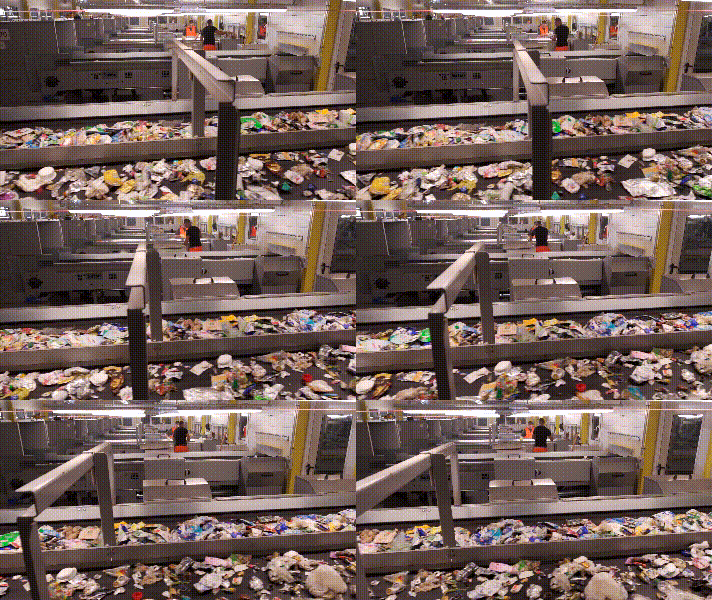
Manual Sorting Solutions
Belt ConveyorManual Sorting Room
For countries with low labor costs, a combination of mechanical and manual sorting can be used, which is a cost-effective waste sorting and recycling solution.
Read More
AI Robot Sorting Solutions
AI SortingSorting Robot
The artificial intelligence sorting robot with autonomous learning can practice and accumulate sorting data. It can effectively sort various high-value recyclables.
Read More
Optical Sorting Solutions
Optical Sorting
Optical sorter is a automatic sorting device based on sensors, high-speed ejector valve has large processing capacity. It is a good choice for bulk handling project of waste recycling.
Read More