WTS1 Waste Trommel Screen
By MSWsorting Systems
LEADING WASTE SORTING AND RECYCLING EQUIPMENTS PROVIDER
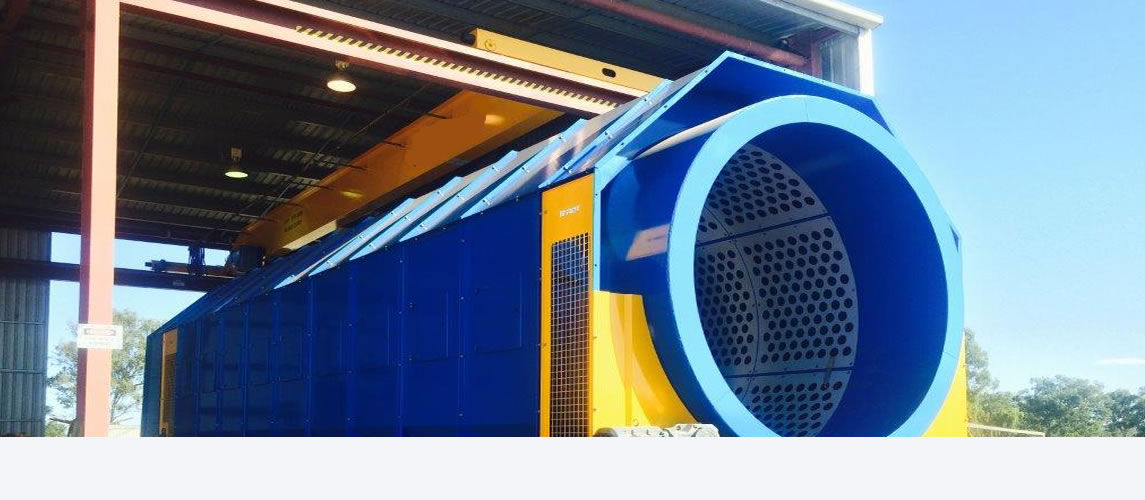
A waste trommel screen, often simply called a trommel, is a large, rotating cylindrical sieve used in material recovery facilities (MRFs) and other waste processing plants. Its primary job is to separate mixed waste into different size fractions. Imagine a giant, slightly tilted rolling drum with holes of various sizes punched into its metal shell. As the drum rotates, smaller pieces of waste fall through the holes, while larger items travel along the inside of the drum and are discharged at the far end. This simple yet effective mechanical process is a fundamental first step in organizing and preparing waste for further, more precise sorting.
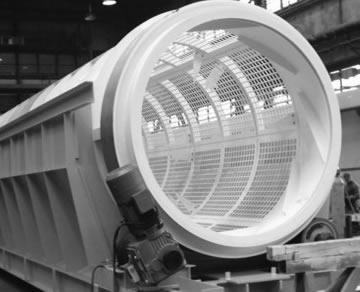
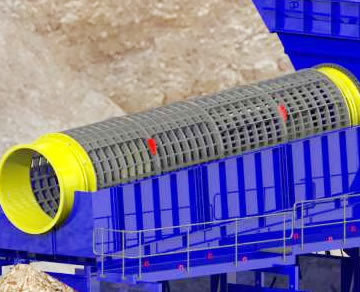
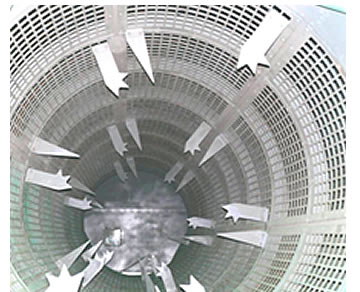
The design of a trommel screen is robust to handle the harsh and unpredictable nature of municipal solid waste. The cylindrical drum, or shell, is typically made from heavy-duty steel plates with precisely sized perforations or mesh. The entire structure is mounted on rollers and driven by a motor, allowing it to rotate at a controlled speed. The interior often features lifters or paddles that gently lift and tumble the waste as the drum turns. This tumbling action is crucial; it helps break apart loosely bound materials, prevents waste from simply sliding through, and exposes more material to the screening surface, ensuring efficient separation based on size.
A key feature of the trommel screen is its modularity and adaptability. The screens themselves are interchangeable, meaning operators can swap out drums with different hole sizes depending on the specific waste stream or desired output fractions. For instance, one configuration might separate fine organic material (like soil and food scraps) from larger recyclables, while another might isolate medium-sized containers. The angle of inclination and the rotation speed are also adjustable. A steeper angle makes material pass through faster but with less screening time, while a slower rotation provides more thorough separation but reduces overall throughput.
Another defining feature is its durability and low maintenance needs in the face of abrasive materials. Unlike some vibrating screens, the trommel's rotating motion is less prone to being jammed by stringy materials like wires or textiles, which can often wrap around the drum instead of causing a blockage. Modern trommels are also designed with ease of maintenance in mind, featuring easy-access panels for cleaning and inspection. Many are equipped with spray bars that use water to help clean the screens, prevent blinding (where holes get clogged), and in some cases, wash contaminants from materials like glass or aggregates, preparing them for cleaner recycling.
The operation of a waste trommel screen follows a continuous and logical flow. The process begins when the pre-shredded and opened waste stream is conveyed onto the feed end of the slightly inclined, rotating drum. As the trommel turns, the waste is lifted by internal lifters to a certain height before cascading down in a tumbling motion. This repeated lifting and dropping action serves multiple purposes: it breaks up clumps of material, aerates the waste, and exposes all pieces to the perforated surface of the drum. The smaller particles, which are smaller than the diameter of the holes, gradually sift through the screen as the material travels along the drum's length.
The separation is a result of both size and gravity. Particles small enough to fit through the holes fall directly onto a collection conveyor belt or chute located beneath the trommel. This "undersize" fraction typically includes fine organic matter, small pieces of glass, dirt, and small plastics. Meanwhile, the larger items that cannot pass through the holes continue to be carried forward by the drum's rotation and the incline. These "oversize" materials eventually exit at the discharge end of the trommel onto another conveyor. This effectively creates two or more distinct waste streams—one fine and one coarse—which are then sent to different downstream sorting stations for further processing, such as magnetic separation, optical sorting, or manual picking.
In Material Recovery Facilities (MRFs), trommel screens are indispensable for initial size classification. They are often the first major mechanical sorting step after waste enters the facility. Here, they efficiently separate the incoming waste into a fine fraction (which may go to composting or landfill) and a coarse fraction containing valuable recyclables like bottles, cans, and containers. This pre-sorting dramatically improves the efficiency of downstream equipment. For example, separating out small contaminants prevents them from interfering with optical sorters that target specific plastic types, and it ensures that eddy current separators receive a stream primarily containing larger non-ferrous metals like aluminum cans.
Beyond traditional recycling, trommel screens are vital in composting operations and Construction & Demolition (C&D) waste recycling. In composting, they are used to screen out finished, fine compost from larger, unfinished organic materials and contaminants like plastics, which are then sent back for further decomposition. In C&D waste plants, trommels excel at separating fine dirt, sand, and wood pieces from larger chunks of concrete, metals, and oversized debris. They are also a core component in Mechanical Biological Treatment (MBT) plants, where they help separate the organic fraction for biological treatment (like anaerobic digestion) from the high-calorific fraction meant for refuse-derived fuel (RDF) production.
The primary benefit of using a trommel screen is its high efficiency in performing a rough but critical size-based separation with relatively low energy consumption and operational complexity. Its tumbling action is gentle enough to avoid excessive breakage of materials like glass bottles, which is important for maintaining the quality of recyclables. By removing fines early in the process, it protects more sensitive and expensive downstream sorting equipment—such as air classifiers, optical sorters, and robots—from abrasion, dust, and clogging. This leads to lower maintenance costs, higher uptime for the entire sorting line, and more consistent input quality for advanced sorting technologies.
Furthermore, trommel screens offer great operational flexibility and reliability. Their ability to handle wet, dirty, and heterogeneous waste streams with minimal pre-processing makes them extremely robust. The adjustable parameters (speed, incline, screen size) allow plant operators to quickly adapt to changes in the waste composition or to target specific output fractions. This adaptability maximizes material recovery rates and the purity of output streams. From an economic and environmental standpoint, effective trommel screening directly contributes to higher recycling yields, reduced landfill costs, and the production of cleaner secondary raw materials and fuels, supporting the principles of a circular economy.
By MSWsorting Systems
By MSWsorting Systems
By MSWsorting Systems
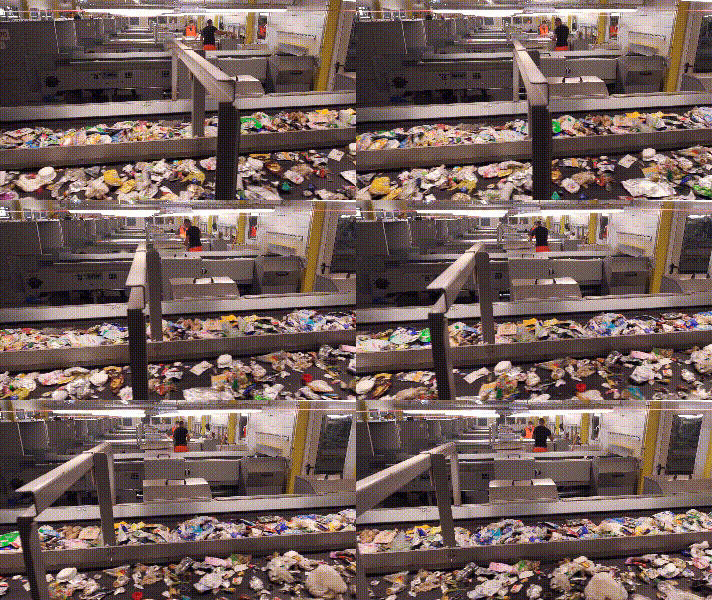
Belt ConveyorManual Sorting Room
For countries with low labor costs, a combination of mechanical and manual sorting can be used, which is a cost-effective waste sorting and recycling solution.
Read More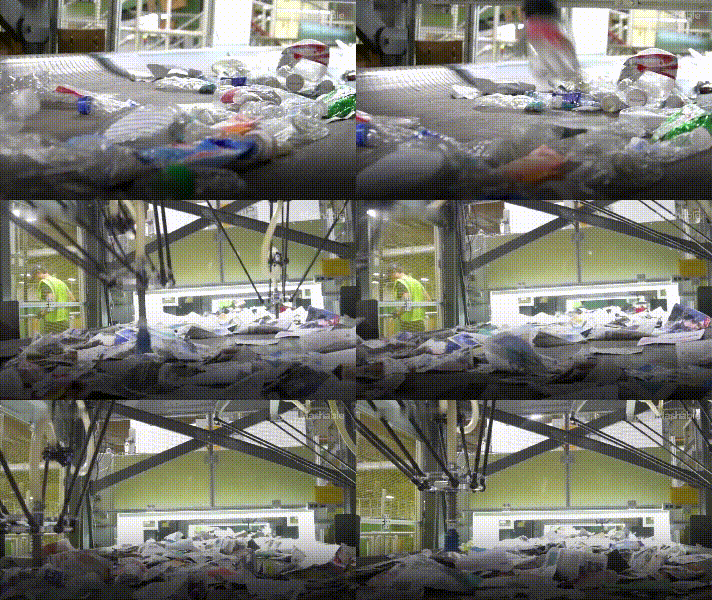
AI SortingSorting Robot
The artificial intelligence sorting robot with autonomous learning can practice and accumulate sorting data. It can effectively sort various high-value recyclables.
Read More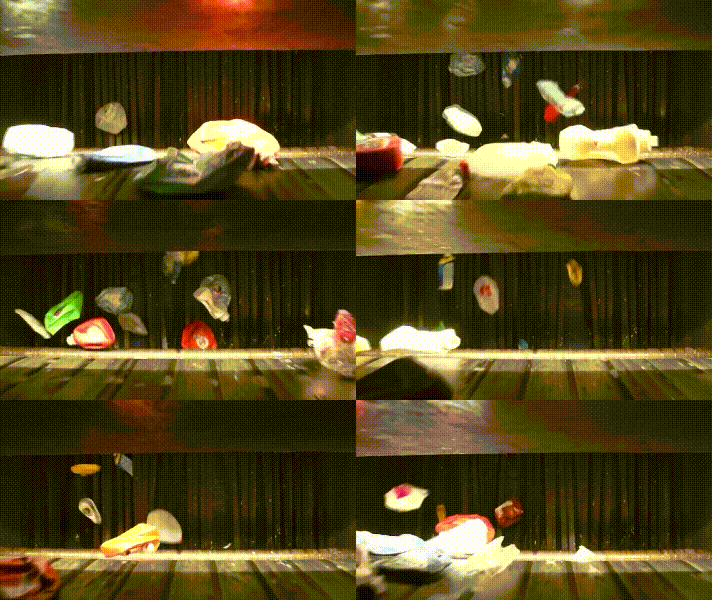
Optical Sorting
Optical sorter is a automatic sorting device based on sensors, high-speed ejector valve has large processing capacity. It is a good choice for bulk handling project of waste recycling.
Read More