AS1 Waste Air Separator
By MSWsorting Systems
LEADING WASTE SORTING AND RECYCLING EQUIPMENTS PROVIDER
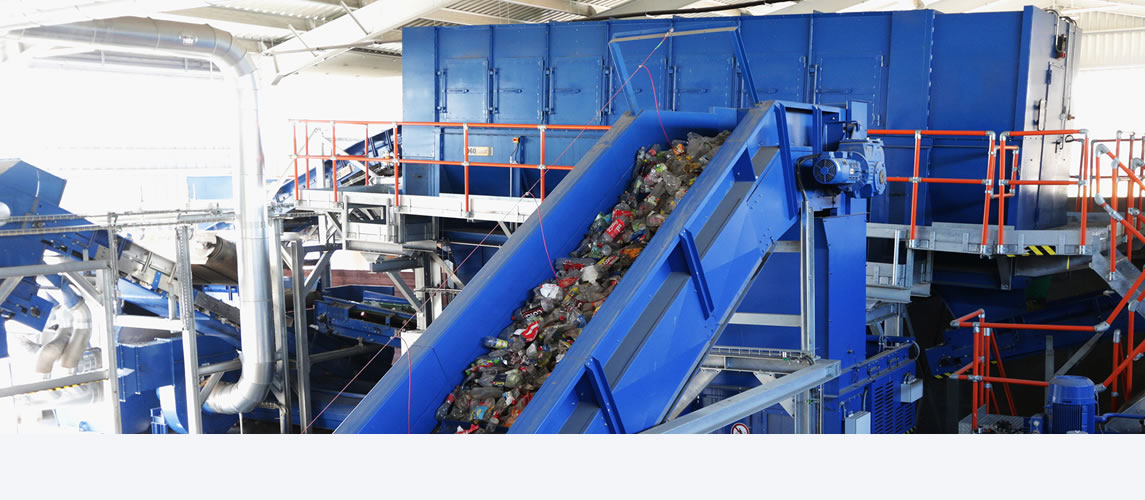
A Waste Air Separator is a crucial piece of equipment in modern recycling and waste management facilities. Its primary job is to use controlled streams of air to separate lighter materials from heavier ones based on their weight and aerodynamic properties. Imagine a powerful, intelligent fan that can pick out specific items from a moving pile of mixed waste. This technology is often a key component within larger systems known as Material Recovery Facilities (MRFs) or Mechanical Biological Treatment (MBT) plants, where it works alongside other machines like magnets, optical sorters, and screens to achieve high-purity material streams.
This device tackles one of the biggest challenges in recycling: efficiently separating materials that are similar in size but different in composition. For example, after waste passes through a screen that sorts by size, a stream might contain both flat pieces of paper and crushed plastic containers. A Waste Air Separator can lift and carry away the lightweight paper or film plastics, while allowing heavier materials like glass fragments or dense plastics to continue on a different path. This precise separation is essential for creating clean, marketable recycled commodities.
Modern Waste Air Separators are engineered for high efficiency and reliability. They typically feature adjustable air velocity and direction controls, allowing operators to fine-tune the system for different waste streams, such as municipal solid waste, commercial recycling, or construction and demolition debris. Many systems incorporate multiple separation stages within a single unit, with cascading air chambers that perform a series of separations to improve purity. Robust construction using wear-resistant materials is standard, as the equipment must handle abrasive and unpredictable materials continuously in an industrial setting.
Advanced integration is another key feature. These separators are designed to connect seamlessly with conveyor belts, screening decks, and other sorting machinery. Sophisticated models include integrated sensors and feedback loops that monitor material composition on the input belt and automatically adjust the air flow for optimal performance. This level of automation ensures consistent output quality and reduces the need for constant manual intervention, making the entire waste sorting process more efficient and less labor-intensive.
The operation of a Waste Air Separator is a brilliant application of basic physics. The process begins when a pre-sorted stream of waste is fed onto a conveyor belt that passes through the separation chamber. At a critical point, a precisely calibrated upward current of air is generated by a powerful fan system. This air current acts as a selective force. Lightweight materials with a large surface area relative to their mass, such as paper, cardboard, plastic films, and foams, are caught by the air stream. They are lifted and carried away from the heavier fraction.
The carried materials are then transported through an air duct to a collection point, often a cyclone separator or a large baghouse. In the cyclone, the air flow is forced into a circular motion, causing the separated materials to fall to the bottom due to centrifugal force, where they are discharged onto another conveyor for further processing or baling. Meanwhile, the heavier materials, which are unaffected by the air current, continue their journey on the original conveyor belt. This simple yet effective principle allows for continuous, high-volume separation of materials without any physical contact, minimizing wear and maintenance.
Waste Air Separators have become indispensable in municipal recycling centers. Here, they are primarily used to split a mixed stream of containers and fibers after initial screening. They effectively separate lightweight paper and cardboard (the fiber stream) from heavier plastic bottles, glass, and cans (the container stream). This initial separation is vital because paper and plastics are processed and recycled in fundamentally different ways. By creating these cleaner streams early in the process, the efficiency of downstream sorting equipment, like optical sorters for plastics, is significantly improved.
Beyond traditional recycling, these separators are widely used in processing commercial and industrial waste, where they can recover valuable paper and plastic scraps. They also play a key role in Mechanical Biological Treatment (MBT) plants, where they help remove light plastics and papers from organic waste before it undergoes composting or anaerobic digestion. Furthermore, in facilities handling Construction and Demolition (C&D) waste, air separators are effective at extracting lightweight insulation foams, wood splinters, and paper from heavier debris like concrete, bricks, and metals, enabling better material recovery and landfill diversion.
Incorporating a Waste Air Separator into a waste processing line offers substantial economic and operational benefits. The most direct benefit is the significant improvement in the purity and quality of recovered materials. Cleaner paper, cardboard, and plastic bales command much higher prices in the recycling market. By automating a separation task that would otherwise require manual picking, these systems drastically reduce labor costs and increase overall processing throughput. They allow facilities to handle larger volumes of waste more quickly and with greater consistency in output quality.
The environmental benefits are equally important. By enabling more efficient and higher-quality material recovery, Waste Air Separators directly contribute to increased recycling rates and reduced reliance on landfills and virgin material extraction. This leads to lower greenhouse gas emissions and conservation of natural resources. Additionally, their non-contact method of separation results in less wear and tear on the materials themselves compared to mechanical methods, potentially leading to higher-quality recycled feedstock for manufacturers. From a social perspective, they also create safer working environments by automating a dusty and potentially hazardous manual sorting task.
By MSWsorting Systems
By MSWsorting Systems

By MSWsorting Systems
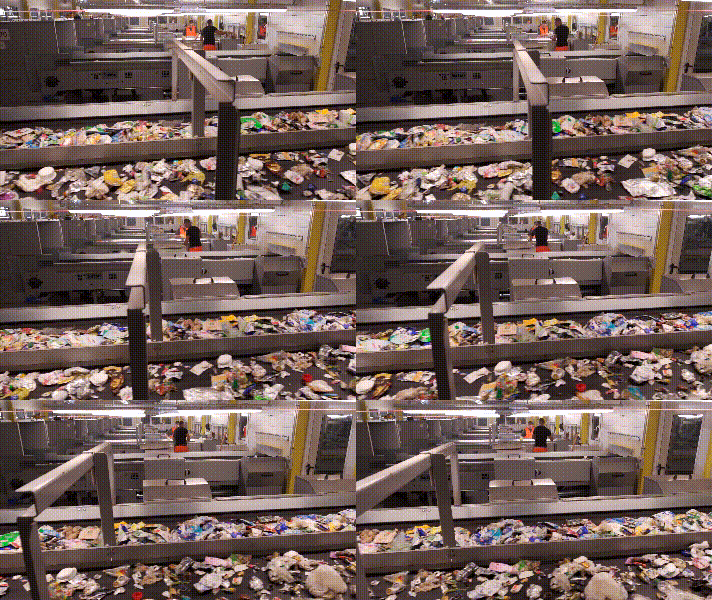
Belt ConveyorManual Sorting Room
For countries with low labor costs, a combination of mechanical and manual sorting can be used, which is a cost-effective waste sorting and recycling solution.
Read More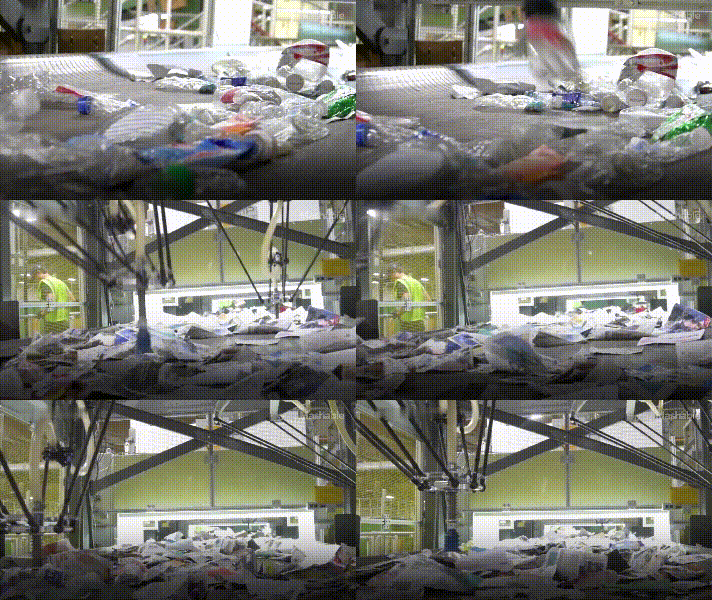
AI SortingSorting Robot
The artificial intelligence sorting robot with autonomous learning can practice and accumulate sorting data. It can effectively sort various high-value recyclables.
Read More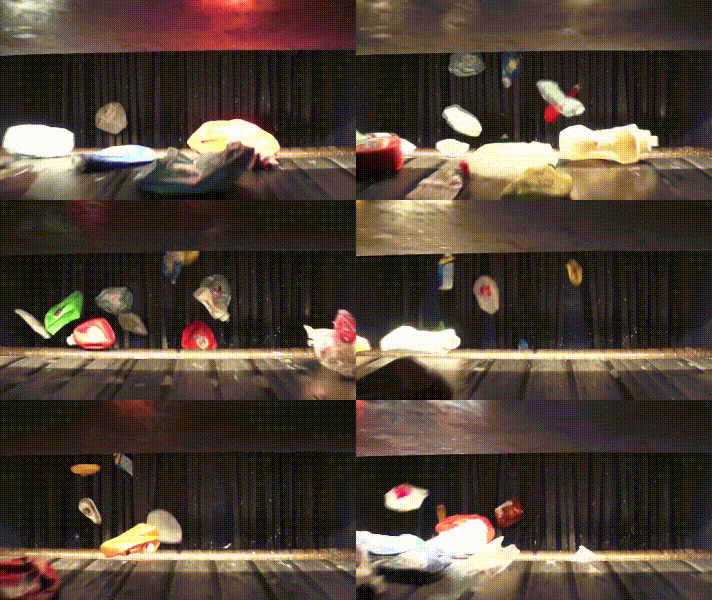
Optical Sorting
Optical sorter is a automatic sorting device based on sensors, high-speed ejector valve has large processing capacity. It is a good choice for bulk handling project of waste recycling.
Read More