Composite Material Shredding Solutions
LEADING WASTE SORTING AND RECYCLING EQUIPMENTS PROVIDER
What is a Composite Material Shredding Solution?
A composite material shredding solution is a specialized industrial system built to break down composite materials into smaller, more manageable fractions. Composites are engineered materials made by combining two or more substances, such as fibers embedded within a resin or polymer matrix, to create a product that is stronger or lighter than its individual components. Carbon fiber composites, fiberglass, and reinforced plastics are common examples, and they appear in everything from aircraft wings to wind turbine blades and automotive panels. Because these materials are designed to resist breaking, cutting, and abrasion, ordinary shredding equipment often struggles to process them. A dedicated composite shredding solution uses high-torque drives, reinforced cutting blades, and purpose-built mechanisms to handle these tough materials reliably.
The purpose of this technology goes beyond simply reducing the size of waste. Once a composite is shredded, the resulting pieces can be sorted and fed into secondary manufacturing processes, where they serve as reinforcement fillers, recycled fibers, or feedstock for new products. This makes the shredder a key link in the recycling chain for industries that depend heavily on high-performance materials. By turning bulky, difficult waste into a usable resource, a composite material shredding solution helps manufacturers recover value that would otherwise be lost to landfill, supporting both economic and environmental goals.
Key Features
The defining feature of a composite material shredder is its ability to withstand the abrasive and resistant nature of the materials it processes. To achieve this, these machines are equipped with wear-resistant cutting blades and reinforced housings that maintain performance even under continuous strain. High-torque motors allow the shredder to apply strong cutting force at slow speeds, which reduces stress on the blades and extends the life of the equipment. Many systems also offer adjustable output sizes, so operators can produce finely shredded particles for some applications or larger, uniform pieces for others, depending on the needs of the downstream recycling process.
Beyond raw cutting power, modern composite shredding solutions often integrate features that improve overall efficiency and material recovery. Energy-efficient drive systems help keep operational costs in check, an important consideration given how demanding composite shredding can be. Some advanced units include separation technologies that begin to divide fibers, plastics, and resins as the material passes through, which streamlines later stages of recycling. Different machine configurations, such as dual-shaft shredders, single-shaft shredders, granulators, and hammer mills, allow operators to match the equipment precisely to the type and volume of composite waste they handle.
How a Composite Material Shredding Solution Works?
The process begins when composite waste, such as offcuts from manufacturing, end-of-life components, or production scrap, is loaded into the shredder's feed system. The material then enters the cutting chamber, where the shredding mechanism does its work. In a dual-shaft shredder, two interlocking shafts rotate slowly in opposite directions, gripping and tearing the composite apart with high torque. This slow-speed, high-force approach is well suited to tough materials because it minimizes wear on the cutting components while still breaking down strong, fibrous structures. Single-shaft shredders, by contrast, use reinforced blades against a stationary screen to reduce lighter or medium-density composites like fiberglass into consistent fragments.
After the initial shredding stage, the material may pass through additional processing depending on the desired result. Granulators can refine smaller scraps into uniform granules suitable for secondary manufacturing, while hammer mills use rapidly rotating hammers to break composites into even finer particles. Some systems then apply separation technologies to extract individual components, such as recovering carbon or glass fibers from the surrounding resin. This staged approach allows industries to convert a complex, mixed material into clean, usable fractions. Throughout the process, the equipment is designed to operate with minimal energy consumption and reduced machine wear, which helps control costs and keeps the system running reliably over long production cycles.
Applications of Composite Material Shredding Solutions
Composite material shredding solutions serve a wide range of industries where high-performance materials are common. The aerospace sector relies on them to manage the carbon fiber-reinforced polymers used in aircraft structures, recovering valuable fibers that can be reprocessed rather than discarded. The automotive industry uses these systems to handle lightweight composite panels and components, which helps reduce production waste and supports the growing emphasis on sustainable vehicle manufacturing. In the wind energy field, where turbine blades are made largely from fiberglass and other composites, shredding solutions provide a practical way to deal with the large volumes of material generated at the end of a blade's service life.
The construction industry also benefits from composite shredding, since shredded fibers and reinforced plastics can be repurposed as fillers or building materials. Across all of these sectors, the shredded output finds new life in secondary manufacturing, where it might become reinforcement material in plastic molding or recycled fiber for other products. This versatility is what makes composite shredding so valuable: a single piece of equipment can support recycling efforts in many different settings, turning waste streams that were once difficult to manage into reliable sources of recovered raw material. As composite use continues to expand, the range of applications for these shredding systems grows alongside it.
Benefits of Using Composite Material Shredding Solutions
The most significant benefit of composite shredding is improved recycling and resource recovery. Composites are notoriously difficult to recycle because of their layered, fiber-reinforced structure, and without proper shredding technology they often end up accumulating in landfills. By breaking these materials into smaller, sortable pieces, shredding solutions allow industries to recover valuable fibers and resins and reintroduce them into manufacturing. This reduces dependence on virgin raw materials, lowers material costs, and supports a more circular approach to production where waste becomes feedstock rather than a disposal problem.
There are also clear operational and environmental advantages. Reducing the volume of composite waste lowers disposal costs and frees up space that would otherwise be taken by bulky offcuts and discarded components. Energy-efficient designs and wear-resistant construction help keep running costs down while extending the working life of the equipment, which improves the overall return on investment. On a broader level, efficient shredding contributes to sustainability goals by keeping difficult materials out of landfills and enabling their reuse. For industries facing increasing pressure to manage waste responsibly, a composite material shredding solution offers a practical way to boost productivity, cut costs, and reduce environmental impact all at once.
FLEXIBLE SORTING TECHNOLOGY AND SOLUTION
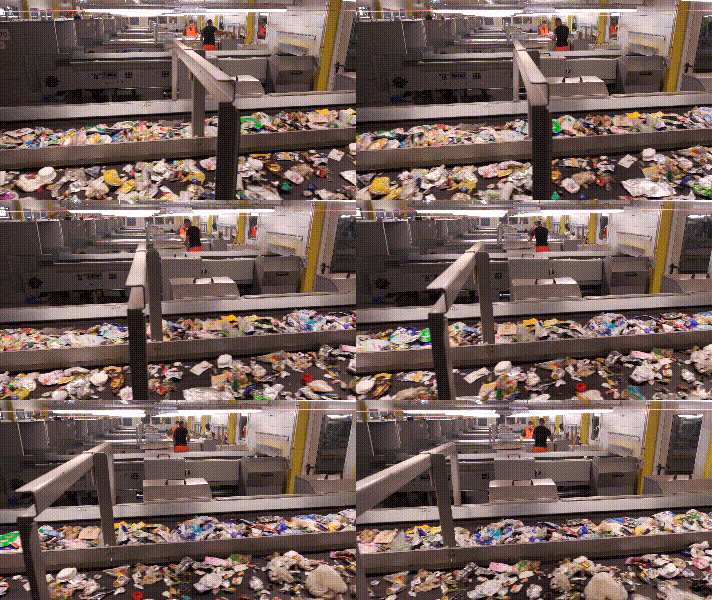
Manual Sorting Solutions
Belt ConveyorManual Sorting Room
For countries with low labor costs, a combination of mechanical and manual sorting can be used, which is a cost-effective waste sorting and recycling solution.
Read More
AI Robot Sorting Solutions
AI SortingSorting Robot
The artificial intelligence sorting robot with autonomous learning can practice and accumulate sorting data. It can effectively sort various high-value recyclables.
Read More
Optical Sorting Solutions
Optical Sorting
Optical sorter is a automatic sorting device based on sensors, high-speed ejector valve has large processing capacity. It is a good choice for bulk handling project of waste recycling.
Read More