Waste Recycling Plant
LEADING WASTE SORTING AND RECYCLING EQUIPMENTS PROVIDER
What is a Waste Recycling Plant?
A Waste Recycling Plant, often called a Material Recovery Facility (MRF), is a specialized industrial facility designed to sort, process, and prepare recyclable materials from the general waste stream. It acts as a central hub in modern waste management, transforming mixed municipal solid waste into valuable commodities like plastics, paper, metals, and glass. By automating the separation process, these plants significantly increase the volume and purity of materials that can be sent back to manufacturers to create new products, thereby conserving natural resources and reducing landfill dependency.
These facilities are far more complex than simple sorting centers. They integrate a series of mechanical, magnetic, optical, and sometimes even robotic systems to achieve high efficiency. The ultimate goal is to divert as much material as possible from disposal and into the circular economy. A modern recycling plant is a key component in achieving sustainability targets for cities and countries, turning what was once considered trash into a reliable source of raw materials for various industries.
Key Features
The core of a Waste Recycling Plant is its sophisticated sorting line, which typically begins with pre-processing equipment like bag openers and large drum screens to break apart waste bags and separate bulky items. Following this, a combination of technologies targets specific materials: powerful magnets effortlessly pull out ferrous metals like iron and steel, while eddy current separators repel non-ferrous metals such as aluminum cans. Air classifiers use precise jets of air to separate lightweight plastics and paper from heavier debris, and advanced optical sorters use sensors to identify and eject specific types of plastics or paper based on their polymer type or color.
Beyond common materials, specialized plants feature dedicated systems for complex waste streams. For instance, glass recycling systems often include crushers and cleaning processes to produce cullet, while Construction & Demolition (C&D) waste recycling lines employ heavy-duty shredders, screens, and magnets to recover wood, metals, and aggregates from rubble. The integration of artificial intelligence and robotic arms is a growing trend, where cameras and AI software guide robotic pickers to identify and select specific items with remarkable speed and accuracy, enhancing the plant's ability to handle contaminated or complex material flows.
How a Waste Recycling Plant Works?
The journey of waste inside a recycling plant is a fascinating sequence of automated processes. It starts when collection trucks dump mixed recyclables onto the tipping floor. A front-end loader then feeds this material onto a conveyor belt system that carries it into the plant's heart. The first stage usually involves manual pre-sorting to remove obvious contaminants and hazardous items, followed by mechanical pre-processing. A large, rotating drum screen, often the first major machine, sifts materials by size; small items like glass shards and organic matter fall through the screens, while larger containers and paper move forward.
As the stream progresses, it passes through a battery of targeted separators. A magnetic head pulley pulls steel cans onto a separate belt. An eddy current separator then induces a magnetic field that repels aluminum cans, launching them into a collection bin. The remaining mix of plastics and paper may travel under an air classifier, where a controlled upward wind carries lightweight films and paper away. Finally, the most advanced plants use near-infrared (NIR) optical sorters. These units scan each item on the fast-moving belt, and upon identifying a specific material type—like clear PET plastic or cardboard—a precise blast of air ejects it into the correct collection chute. The sorted, baled materials are then ready to be sold as feedstock to recycling manufacturers.
Applications of Waste Recycling Plants
The primary application of Waste Recycling Plants is processing Municipal Solid Waste (MSW) from households and businesses. They are the backbone of curbside recycling programs, ensuring that paper, cardboard, plastic bottles, and metal containers are recovered efficiently. Beyond standard MSW, these plants have specialized lines for single-stream recycling (where all recyclables are collected together) and dual-stream systems (where fibers like paper are kept separate from containers). This application directly supports local and national recycling goals and provides a steady supply of materials to the packaging, construction, and manufacturing sectors.
Specialized recycling plants cater to specific industrial or commercial waste streams. Construction & Demolition (C&D) recycling plants are crucial for the building industry, processing concrete, wood, metals, and drywall from demolition sites into reusable aggregates and materials. Similarly, dedicated facilities exist for processing electronic waste (e-waste) to recover precious metals and plastics, and for handling organic waste through composting or anaerobic digestion alongside material recovery, in systems known as Mechanical Biological Treatment (MBT). These targeted applications demonstrate the versatility of recycling plant technology in managing diverse waste challenges.
Benefits of Using a Waste Recycling Plant
Environmental benefits are the most compelling reason for using Waste Recycling Plants. They drastically reduce the amount of waste sent to landfills and incinerators, minimizing soil contamination, greenhouse gas emissions (like methane from decomposing organics), and the need for new landfill sites. By recovering materials, these plants conserve natural resources—recycling aluminum saves up to 95% of the energy required to make it from raw ore, and recycling paper saves trees and water. This process directly contributes to combating climate change and preserving ecosystems by reducing the demand for virgin material extraction and processing.
From an economic and social perspective, recycling plants create a circular economy model that generates significant value. They transform waste into a commodity, creating jobs in sorting, processing, logistics, and related manufacturing industries. Municipalities save on landfill tipping fees and can generate revenue from selling sorted materials. Furthermore, by providing a reliable source of secondary raw materials, these plants increase supply chain security for manufacturers and can reduce production costs. On a community level, they promote environmental awareness and provide a tangible solution for residents and businesses to participate in sustainable practices, fostering a sense of collective responsibility for the planet.
FLEXIBLE SORTING TECHNOLOGY AND SOLUTION
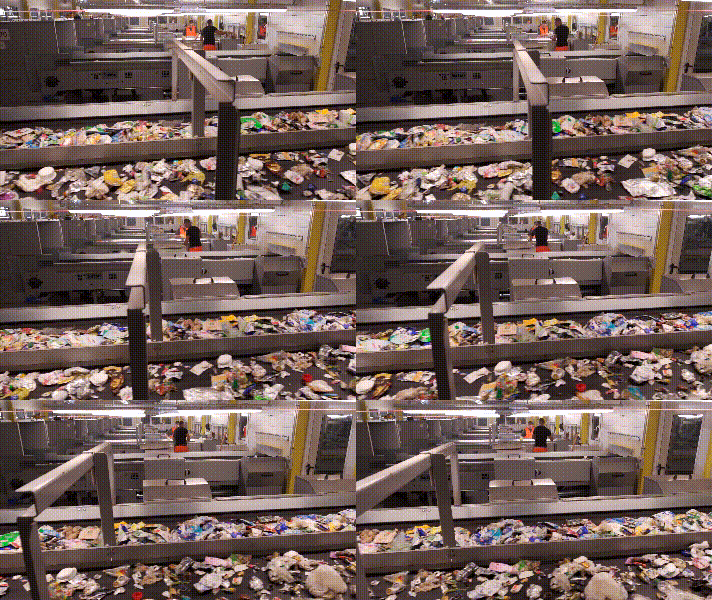
Manual Sorting Solutions
Belt ConveyorManual Sorting Room
For countries with low labor costs, a combination of mechanical and manual sorting can be used, which is a cost-effective waste sorting and recycling solution.
Read More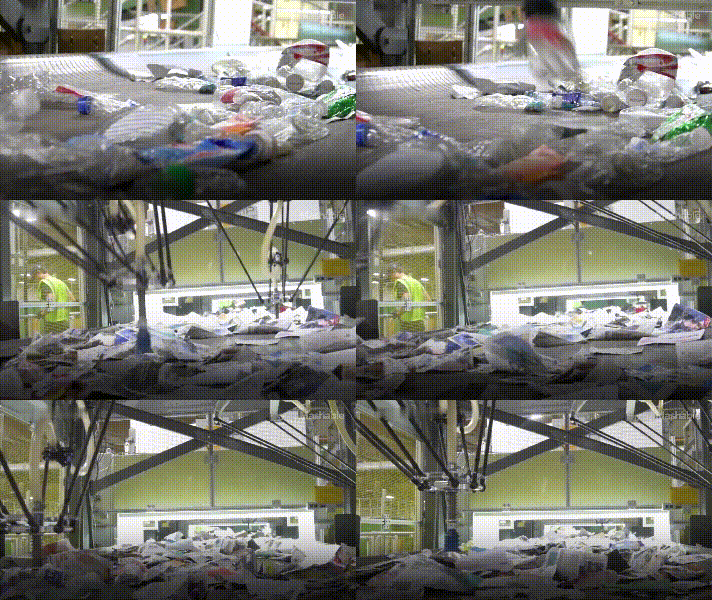
AI Robot Sorting Solutions
AI SortingSorting Robot
The artificial intelligence sorting robot with autonomous learning can practice and accumulate sorting data. It can effectively sort various high-value recyclables.
Read More
Optical Sorting Solutions
Optical Sorting
Optical sorter is a automatic sorting device based on sensors, high-speed ejector valve has large processing capacity. It is a good choice for bulk handling project of waste recycling.
Read More