Plastic Recycling Machine
Plastic recycling is the process of recovering and reprocessing plastic waste materials to create new products

Plastic recycling machines are innovative technologies designed to optimize the recycling process for plastic materials. These machines play a pivotal role in improving the efficiency and sustainability of waste management practices, particularly in the context of plastic recycling. With the escalating global concern over plastic pollution and the increasing demand for recycled materials, the need for effective recycling solutions has become more pressing. Plastic recycling machines address this need by automating the recycling process, maximizing material recovery rates, and reducing reliance on manual labor.
Benefits of Plastic Recycling Machines
The benefits of plastic recycling machines are manifold:
Increased Recycling Efficiency: Plastic recycling machines streamline the recycling process, leading to faster and more accurate recycling of plastic materials.
Maximized Material Recovery Rates: By accurately sorting and processing plastic materials, these machines maximize the recovery of valuable materials, reducing waste and conserving resources.
Reduction in Manual Labor: Automation of the recycling process reduces the need for manual labor, minimizing labor costs and improving workplace safety.
Improved Quality of Recycled Materials: The precise sorting and processing capabilities of these machines result in higher-quality recycled materials, suitable for a wide range of applications.
Environmental Benefits: Plastic recycling machines contribute to environmental sustainability by reducing energy consumption, greenhouse gas emissions, and environmental pollution associated with plastic production and disposal.
Functionality
Plastic recycling machines employ advanced technologies and mechanical processes to achieve efficient recycling:
Sensor Technology: Sophisticated sensors analyze the properties of plastic materials, enabling precise sorting and processing based on various attributes such as material type, color, and shape.
Sorting Algorithms: Powerful algorithms process sensor data and determine the appropriate recycling criteria for each type of plastic material, ensuring accurate sorting and processing.
Mechanical Processing Mechanisms: Mechanical components, such as shredders, granulators, and extruders, physically transform plastic materials into recycled pellets or flakes suitable for reuse in manufacturing processes.
Integration with Other Technologies: Plastic recycling machines are often integrated with other technologies, such as artificial intelligence and data analytics, to enhance efficiency and accuracy in the recycling process.
Scalability and Flexibility: These machines are designed to be scalable and adaptable to various waste management needs, from small-scale recycling facilities to large industrial operations.
Impact on Sustainability
The adoption of plastic recycling machines has a significant impact on sustainability and environmental conservation:
Reducing Plastic Pollution: By facilitating efficient recycling, these machines help prevent plastic from ending up in landfills, oceans, and waterways, reducing plastic pollution and environmental degradation.
Conserving Natural Resources: Maximizing material recovery rates reduces the demand for virgin plastic production, conserving valuable natural resources and reducing the environmental impact of plastic production.
Minimizing Landfill Waste: Effective recycling diverts plastic away from landfills, reducing the volume of waste and extending the lifespan of landfill sites.
Promoting Circular Economy Principles: Plastic recycling machines support the transition to a circular economy by enabling the efficient reuse and recycling of plastic materials, reducing dependency on finite resources and minimizing waste generation.
Public Awareness and Engagement: The implementation of plastic recycling machines often involves public education and awareness initiatives, encouraging individuals and communities to participate in recycling efforts and adopt sustainable behaviors.
Conclusion
Plastic recycling machines play a vital role in advancing the sustainability of waste management practices. By enabling the efficient recycling of plastic materials, these machines contribute to environmental conservation, resource preservation, and the promotion of circular economy principles. As the global demand for sustainable solutions continues to grow, the importance of plastic recycling machines in achieving these goals cannot be overstated. By embracing innovation and technology, we can build a more sustainable future for generations to come.
HDPE Plastic Sorting Machine
PET Plastic Sorting Machine
Plastic Bottle Sorting Machine
Plastic Color based Sorting Machine
Plastic Flake Sorting Machine
Plastic Pellet Sorting Machine
Plastic Shape based Sorting Machine
Plastic Sorting Machine
Plastic Type based Sorting Machine
PP Plastic Sorting Machine
PVC Plastic Sorting Machine
FLEXIBLE SORTING TECHNOLOGY AND SOLUTION
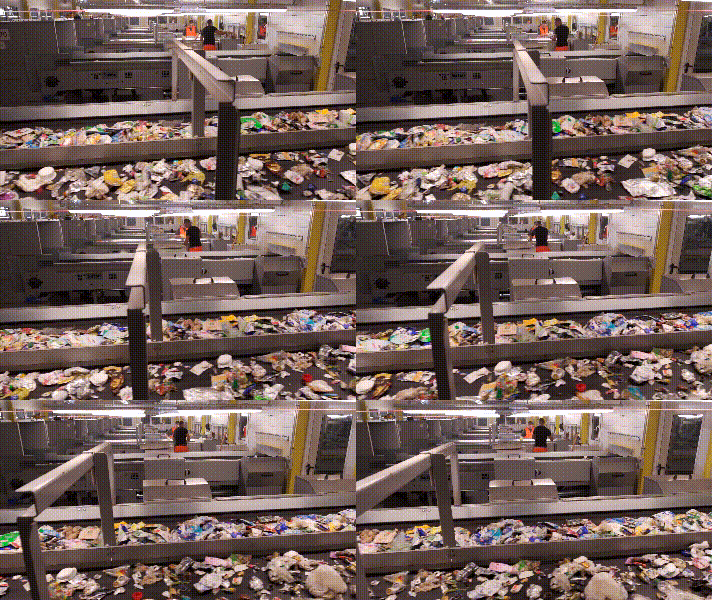
Manual Sorting Solutions
Belt ConveyorManual Sorting Room
For countries with low labor costs, a combination of mechanical and manual sorting can be used, which is a cost-effective waste sorting and recycling solution.
Read More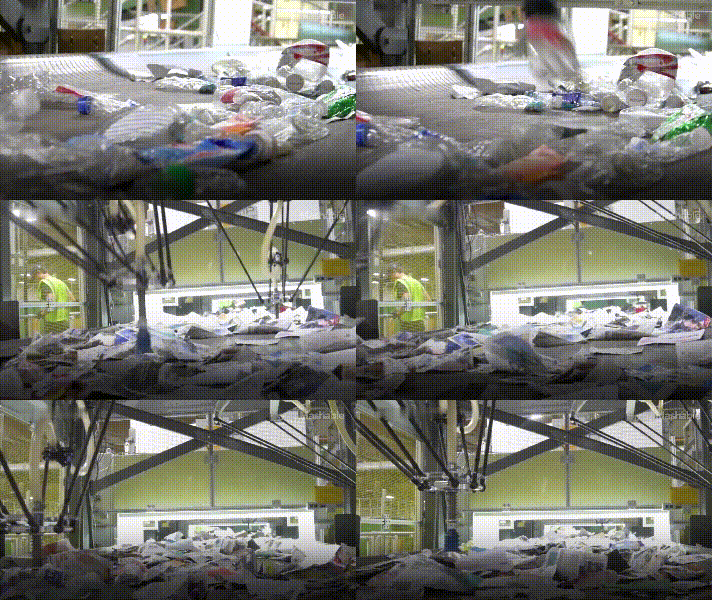
AI Robot Sorting Solutions
AI SortingSorting Robot
The artificial intelligence sorting robot with autonomous learning can practice and accumulate sorting data. It can effectively sort various high-value recyclables.
Read More
Optical Sorting Solutions
Optical Sorting
Optical sorter is a automatic sorting device based on sensors, high-speed ejector valve has large processing capacity. It is a good choice for bulk handling project of waste recycling.
Read More