Waste Sorting Plant
LEADING WASTE SORTING AND RECYCLING EQUIPMENTS PROVIDER
What is a Waste Sorting Plant?
A Waste Sorting Plant, also known as a Material Recovery Facility (MRF), is a specialized industrial facility designed to automate the process of separating and recovering valuable materials from mixed municipal solid waste. Think of it as a high-tech recycling factory where everyday trash is transformed into sorted piles of reusable resources like plastics, metals, paper, and glass. Instead of sending everything to a landfill, these plants act as a critical hub in the modern waste management chain, ensuring that recyclable materials are efficiently extracted and sent back into the manufacturing cycle.
These facilities are the backbone of a circular economy. They handle the complex mixture of waste that arrives from households and businesses. Using a combination of mechanical processes, advanced sensors, and sometimes even artificial intelligence, the plant systematically breaks down the waste stream. The ultimate goal is to maximize recovery rates, produce high-quality recyclables that industries can use, and significantly reduce the volume of waste requiring final disposal in landfills or incinerators.
Key Features
Modern waste sorting plants are equipped with a series of interconnected machines, each with a specific role. The process typically begins with a pre-treatment stage involving bag breakers and coarse shredders to open trash bags and reduce the size of large items. Following this, a cascade of screening equipment, such as trommel screens (rotating drums with holes) and ballistic separators, sorts waste based on size and weight. This initial separation is crucial for preparing the waste for more precise sorting technologies downstream.
The core sorting happens through an array of targeted technologies. Powerful magnets effortlessly pull out ferrous metals like iron and steel, while eddy current separators use magnetic fields to repel and eject non-ferrous metals such as aluminum cans. Air classifiers use controlled blasts of air to separate light materials (like plastic films) from heavier ones. The most advanced systems employ optical sorters and AI-powered robots that use cameras and near-infrared sensors to identify and pick specific types of plastics, paper, and other materials with remarkable speed and accuracy.
How a Waste Sorting Plant Works?
The journey of waste through a sorting plant is a fascinating sequence of mechanical and technological steps. It starts when collection trucks dump mixed municipal solid waste onto a large receiving floor. A front-end loader then feeds this waste onto a slow-moving conveyor belt, which carries it into the heart of the facility. The first stop is usually a pre-sorting area or a bag breaker, which rips open garbage bags to expose the contents for processing. This step is essential for the efficiency of all subsequent automated systems.
From there, the material travels through a trommel screen—a large, rotating, perforated drum. Smaller items fall through the holes, while larger items travel to the end. This separates "oversized" material (like large cardboard) from smaller, mixed waste. The remaining stream then passes under magnets to remove tin cans and other ferrous metals. Next, ballistic or star screens further separate materials by shape and elasticity. The final, most precise stage involves advanced separators: optical sorters use light beams to identify and eject specific polymer types of plastic, while eddy current separators launch aluminum and copper into separate collection bins. The sorted materials are baled and sold as raw materials to manufacturers.
Applications of Waste Sorting Plants
The primary application of waste sorting plants is within municipal solid waste management systems. Cities and regions use these facilities to meet recycling targets and comply with environmental regulations. They process the contents of residential recycling bins (single-stream or mixed-waste) to recover commodities. This application is fundamental for reducing landfill use, conserving natural resources, and lowering greenhouse gas emissions associated with producing new materials from virgin resources.
Beyond standard municipal waste, these plants are also adapted for specialized streams. Construction and Demolition (C&D) waste sorting plants recover wood, metals, and aggregates from building debris. Some facilities are integrated with Mechanical Biological Treatment (MBT) systems, where the organic fraction separated during sorting is composted or digested to produce biogas. Furthermore, they are increasingly used in commercial and industrial settings to manage waste from shopping malls, stadiums, and manufacturing complexes, ensuring corporate sustainability goals are met through efficient material recovery.
Benefits of Using a Waste Sorting Plant
The environmental benefits are profound. By systematically recovering recyclables, these plants drastically reduce the amount of waste sent to landfills, conserving valuable land space and preventing soil and water pollution. Recycling materials like aluminum, plastic, and paper requires far less energy than producing them from scratch, leading to significant reductions in carbon dioxide emissions and the conservation of finite natural resources like timber, ore, and petroleum.
From an economic and social perspective, waste sorting plants create a supply of secondary raw materials, stabilizing markets for recyclables and supporting manufacturing industries. They generate employment opportunities in green technology sectors, from plant operation to maintenance and engineering. For communities, they represent a tangible commitment to sustainability, educating the public about the value of resources and providing a reliable, engineered solution to the growing challenge of waste management in the modern world.
FLEXIBLE SORTING TECHNOLOGY AND SOLUTION
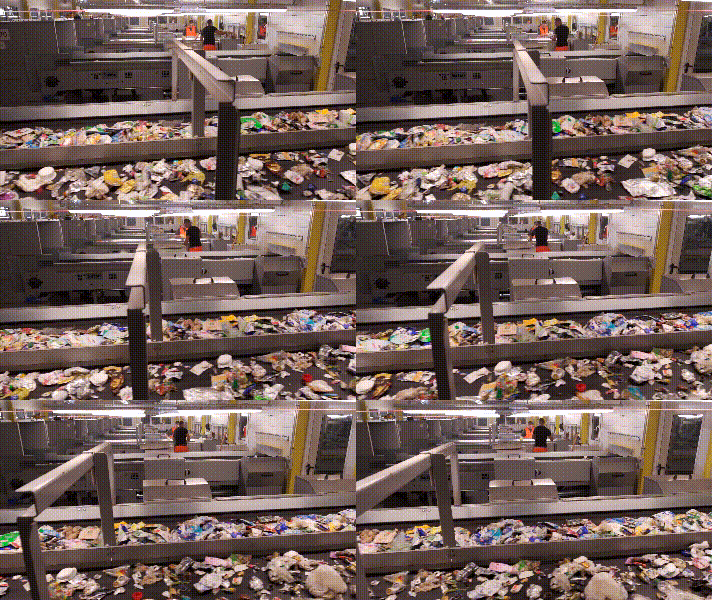
Manual Sorting Solutions
Belt ConveyorManual Sorting Room
For countries with low labor costs, a combination of mechanical and manual sorting can be used, which is a cost-effective waste sorting and recycling solution.
Read More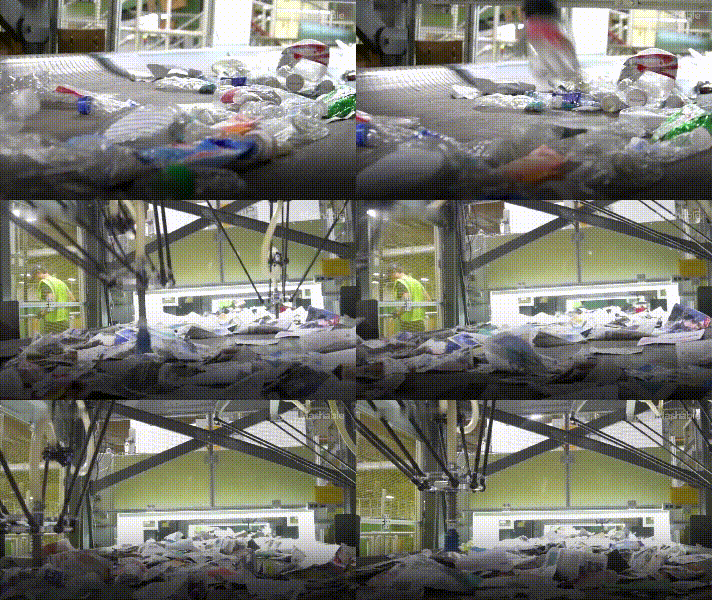
AI Robot Sorting Solutions
AI SortingSorting Robot
The artificial intelligence sorting robot with autonomous learning can practice and accumulate sorting data. It can effectively sort various high-value recyclables.
Read More
Optical Sorting Solutions
Optical Sorting
Optical sorter is a automatic sorting device based on sensors, high-speed ejector valve has large processing capacity. It is a good choice for bulk handling project of waste recycling.
Read More