E-waste Shredder
LEADING WASTE SORTING AND RECYCLING EQUIPMENTS PROVIDER
What is an E-waste Shredder?
An E-waste Shredder is a heavy-duty industrial machine built to break down discarded electronic equipment into smaller, more manageable fragments. Every year, the world generates enormous quantities of electronic waste, ranging from old computers and smartphones to printed circuit boards, cables, and household appliances. These items are complex by nature, combining metals, plastics, glass, and hazardous components within a single device. Without a way to reduce them in size, recovering the useful materials inside would be extremely difficult and inefficient. The E-waste Shredder solves this challenge by tearing apart these mixed materials, preparing them for the next stages of sorting and recycling.
Within a modern materials recovery facility, the shredder serves as one of the most important pieces of preprocessing equipment. By cutting electronics down to a uniform particle size, it allows downstream systems such as magnetic separators, eddy current separators, and optical sorters to do their work far more effectively. In this sense, the shredder is not just a destruction tool but the gateway that transforms tangled, end-of-life electronics into a steady stream of recoverable resources. It supports a circular economy where valuable metals and plastics are returned to manufacturing rather than ending up in landfills.
Key Features
An E-waste Shredder is designed around durability and cutting power, because electronics contain tough materials such as hardened metal casings and dense circuit boards. Most machines rely on high-torque, low-speed rotors fitted with robust cutting blades or hammers that can handle this resistance without jamming. The shredding chamber is typically reinforced to withstand constant impact, and the blades are made from wear-resistant alloy steel so they maintain their cutting edge over long periods of operation. Many units use a single-shaft or dual-shaft configuration, with dual-shaft designs offering stronger grip and tearing action for bulky items.
Beyond the core cutting system, these shredders often include intelligent safety and control features. Overload protection automatically reverses the rotors when a hard object becomes stuck, preventing damage to the motor and blades. Adjustable screens allow operators to control the final particle size, which is essential because different recycling processes require different output dimensions. Some advanced models also integrate dust suppression systems and noise reduction housings, making them safer and more comfortable to operate in an industrial environment. Together, these features ensure reliable performance even under the demanding conditions of continuous e-waste processing.
How an E-waste Shredder Works?
The operation of an E-waste Shredder begins when electronic waste is loaded into the feeding hopper, often by conveyor belt or directly by hand for smaller operations. Once inside, the material drops onto the rotating shafts, where the cutting blades engage and begin pulling the items downward. The high-torque rotors apply tremendous force to tear, crush, and rip the electronics apart, gradually reducing large objects into smaller chunks. Because the rotors turn slowly but with great power, they can manage rigid components without the violent vibration or excessive heat that faster machines might produce.
As the material is broken down, it passes through a screen positioned beneath the cutting chamber. Only particles small enough to fit through the screen openings are released, while larger pieces remain inside for further shredding until they reach the correct size. This screening step guarantees a consistent and uniform output, which is critical for the separation processes that follow. Once the shredded material exits the machine, it can be carried away to magnetic, eddy current, air, or optical separation systems, where the individual fractions of metal, plastic, and other materials are sorted and prepared for recovery.
Applications of E-waste Shredder
E-waste Shredders are widely used across electronic recycling plants, where they form the backbone of the material recovery process. In these facilities, the shredder handles a continuous flow of obsolete devices and breaks them into a form from which copper, aluminum, gold, and other valuable metals can be extracted. The recovered materials are then sold back into the supply chain, reducing the need for energy-intensive mining of virgin resources. This makes the shredder a key contributor to sustainable resource management and a cleaner manufacturing cycle.
The machine also plays a vital role in IT asset disposal and data destruction services. Many businesses and government organizations must dispose of old hard drives, servers, and storage devices that contain sensitive information. By physically shredding these items, the data they hold is permanently destroyed, eliminating the risk of recovery and protecting confidential records. Beyond recycling and data security, E-waste Shredders are found in industrial waste management operations and refurbishment centers, where they help process rejected or unusable electronics in a controlled and environmentally responsible manner.
Benefits of Using an E-waste Shredder
One of the greatest benefits of using an E-waste Shredder is the significant boost it provides to recycling efficiency. By reducing electronics to a uniform size, the machine makes it far easier to separate and recover the materials hidden inside complex devices. This not only increases the volume of metals and plastics that can be reclaimed but also improves the purity of those recovered fractions. As a result, recyclers can sell higher-quality material and operate more profitably, while less waste is sent to landfills or incinerators.
The environmental and security advantages are equally important. Properly shredding and recycling e-waste prevents hazardous substances such as lead, mercury, and other toxic elements from leaking into soil and water, protecting both ecosystems and human health. At the same time, the shredding process offers a dependable method of destroying sensitive data, giving organizations peace of mind that their private information cannot be retrieved. By combining strong material recovery, environmental protection, and data security in a single solution, the E-waste Shredder stands out as an essential machine for the modern recycling industry.
FLEXIBLE SORTING TECHNOLOGY AND SOLUTION
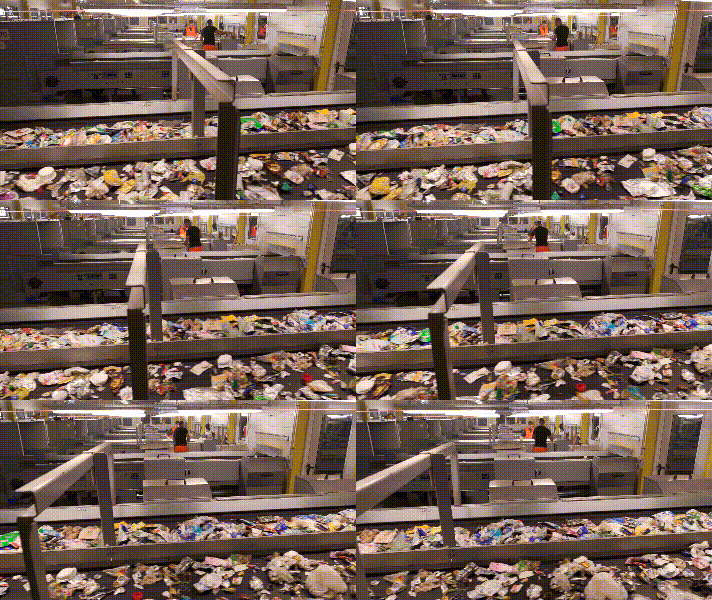
Manual Sorting Solutions
Belt ConveyorManual Sorting Room
For countries with low labor costs, a combination of mechanical and manual sorting can be used, which is a cost-effective waste sorting and recycling solution.
Read More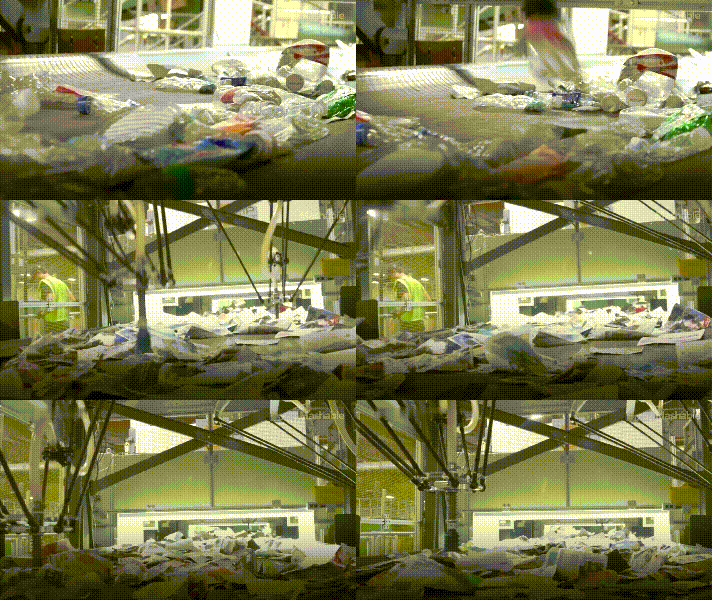
AI Robot Sorting Solutions
AI SortingSorting Robot
The artificial intelligence sorting robot with autonomous learning can practice and accumulate sorting data. It can effectively sort various high-value recyclables.
Read More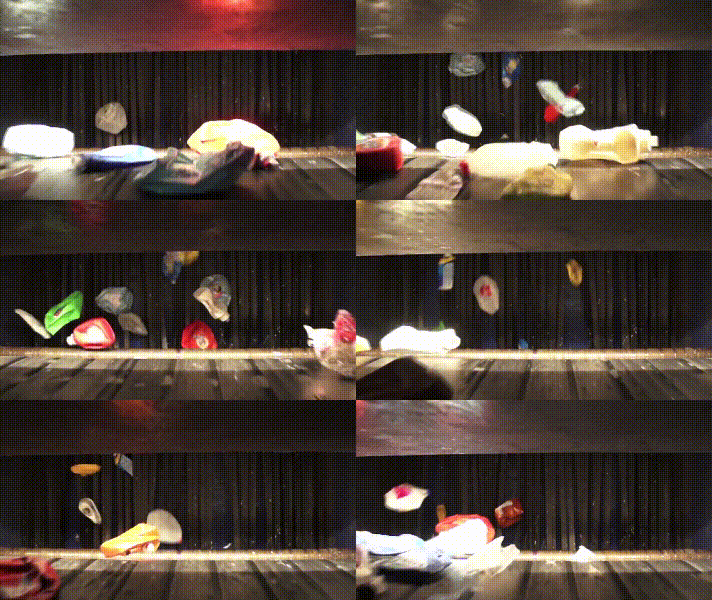
Optical Sorting Solutions
Optical Sorting
Optical sorter is a automatic sorting device based on sensors, high-speed ejector valve has large processing capacity. It is a good choice for bulk handling project of waste recycling.
Read More