Hard Material Shredding Solutions
LEADING WASTE SORTING AND RECYCLING EQUIPMENTS PROVIDER
What are Hard Material Shredding Solutions?
Hard Material Shredding Solutions are specialized industrial systems built to break down some of the toughest and densest materials found in waste streams. These include scrap metal, wood, concrete, glass, construction debris, and electronic waste. Unlike standard shredders that handle soft or lightweight materials, these machines are engineered with heavy-duty components that can withstand intense stress, impact, and abrasion while reducing rigid objects into smaller, uniform pieces. This makes them a cornerstone technology for industries that depend on efficient material processing and resource recovery.
Within a modern waste management or recycling operation, hard material shredders serve as the first major step in transforming bulky, awkward items into a manageable form. By cutting large materials into consistent fragments, they prepare the waste for downstream processes such as magnetic separation, screening, and optical sorting. In this way, hard material shredding bridges the gap between raw incoming waste and the clean, sorted streams of recyclable material that facilities aim to produce. The end result is a more streamlined operation that supports recycling, energy recovery, and reduced landfill dependence.
Key Features
The defining feature of hard material shredders is their robust construction. High-torque motors deliver the power needed to grind through metal and concrete, while reinforced cutting chambers and hardened blades resist the wear that comes from constant contact with abrasive surfaces. These machines are designed for durability, meaning they can run continuously in demanding industrial environments without frequent breakdowns. Many models also include protective mechanisms that automatically respond to overload conditions, helping to prevent damage when an unexpectedly tough object enters the system.
Beyond raw strength, these shredders are valued for their adaptability and ease of maintenance. They come in several configurations, such as single-shaft, dual-shaft, and high-speed hammer mills, allowing operators to match the right machine to the material at hand. Features like accessible internal parts and straightforward blade replacement reduce downtime and keep operating costs under control. Energy-efficient motors are another important aspect, since power consumption represents a significant share of the expense in any large-scale shredding operation. Together, these features make hard material shredders both powerful and practical.
How Do Hard Material Shredding Solutions Work?
The shredding process begins when hard materials are fed into the machine, often by a grab crane, conveyor, or front loader for larger operations. Once inside the cutting chamber, the material is gripped and pulled toward rotating shafts fitted with sturdy blades. Depending on the design, the shredder either tears the material apart using interlocking cutting teeth or smashes it through repeated high-speed impact. The goal at this stage is controlled size reduction, turning a large and irregular object into smaller fragments of a predictable size.
The exact mechanism varies with the type of shredder in use. Single-shaft shredders rely on one central rotor that presses material against a fixed screen, producing uniform output suited for wood, plastics, and construction waste. Dual-shaft shredders use two counter-rotating shafts that grip and tear tough items such as scrap metal, generating the high torque needed for heavy-duty work. High-speed hammer mills, by contrast, use rapidly spinning hammers to shatter brittle materials like concrete and glass into fine fragments. After shredding, the processed material exits the machine ready for sorting, separation, or further refinement, completing its journey toward becoming a usable secondary resource.
Applications of Hard Material Shredding Solutions
Hard material shredders are used across a wide range of industries, with metal recycling being one of the most prominent. In these facilities, shredders reduce scrap metal into smaller fragments, making it far easier to extract valuable materials such as aluminum and steel. The shredded output can then be sorted by magnetic and eddy current systems and ultimately returned to manufacturing as raw material. This not only conserves natural resources but also lowers the energy required to produce new metal from ore.
Construction and demolition is another major application area. Large quantities of concrete, brick, and wood are generated whenever buildings are torn down or renovated, and shredders break these bulky materials into smaller pieces that are easier to transport, dispose of, or recycle. Shredded concrete, for example, can be repurposed as aggregate in new construction projects. Wood and other organic debris are frequently processed into chips that become fuel for energy production or feedstock for composite products. From e-waste recovery to wood processing, hard material shredding plays a vital role wherever dense and durable materials must be transformed into something useful.
Benefits of Using Hard Material Shredding Solutions
The most significant benefit of hard material shredding is the boost it gives to recycling and resource recovery. By converting hard-to-handle materials into smaller, uniform pieces, these machines make it possible to reclaim valuable metals, reusable aggregates, and energy-rich wood waste that might otherwise end up in a landfill. This directly supports sustainability goals by keeping materials in circulation and reducing the demand for newly extracted raw resources. For many industries, efficient shredding is the difference between waste that is simply discarded and waste that becomes a profitable input for new production.
Hard material shredding also delivers clear operational and economic advantages. Reducing the size of bulky items lowers transportation and disposal costs, since compact material takes up less space and is easier to move. Well-designed shredders improve throughput, allowing facilities to process large volumes quickly and consistently, while durable components and energy-efficient motors help control long-term expenses. By producing output that meets the specifications required for downstream sorting and processing, these solutions improve the quality and reliability of the entire recycling chain. In short, investing in efficient hard material shredding strengthens both the environmental and financial performance of any operation that depends on tough materials.
FLEXIBLE SORTING TECHNOLOGY AND SOLUTION
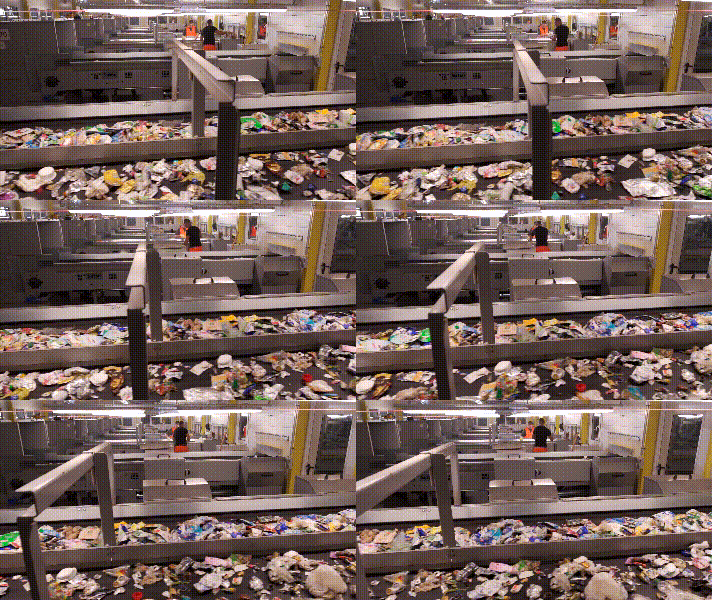
Manual Sorting Solutions
Belt ConveyorManual Sorting Room
For countries with low labor costs, a combination of mechanical and manual sorting can be used, which is a cost-effective waste sorting and recycling solution.
Read More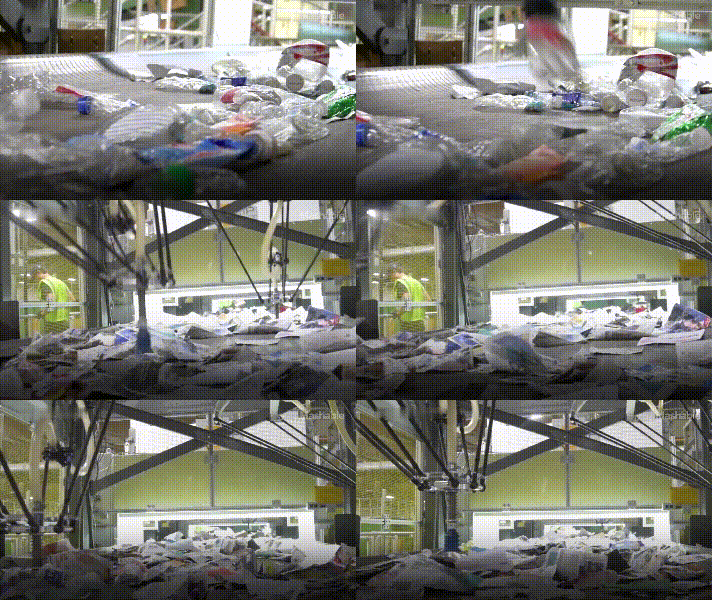
AI Robot Sorting Solutions
AI SortingSorting Robot
The artificial intelligence sorting robot with autonomous learning can practice and accumulate sorting data. It can effectively sort various high-value recyclables.
Read More
Optical Sorting Solutions
Optical Sorting
Optical sorter is a automatic sorting device based on sensors, high-speed ejector valve has large processing capacity. It is a good choice for bulk handling project of waste recycling.
Read More