High Toughness Material Shredding Solutions
LEADING WASTE SORTING AND RECYCLING EQUIPMENTS PROVIDER
What is a High Toughness Material Shredding Solution?
A High Toughness Material Shredding Solution is a specialized industrial system engineered to break down materials that resist conventional shredding methods. These materials, including carbon fiber composites, reinforced plastics, high-strength metals such as titanium and aluminum, and dense industrial rubber, are valued precisely because they are strong, rigid, and resistant to wear. That same strength, however, makes them difficult to process, which is why standard shredders often struggle or fail when faced with them. A high toughness shredding solution closes this gap by combining reinforced mechanical components, high-torque drive systems, and precision cutting tools built to endure extreme stress and abrasion.
The purpose of these systems extends well beyond simply cutting tough material into pieces. They are designed to reduce resilient feedstock into smaller, uniform particles that can re-enter the manufacturing stream or be recovered through recycling. In doing so, they help industries treat durable materials as renewable resources rather than waste destined for landfill. Sectors such as aerospace, automotive manufacturing, and advanced recycling rely on this capability to keep valuable materials in circulation while controlling processing costs and protecting their equipment from premature damage.
Key Features
High toughness material shredders are defined by their durability and raw processing power. Most are built around hardened steel blades, reinforced cutting chambers, and high-torque motors that deliver the force needed to fracture rigid materials without stalling. Many designs use multi-shaft configurations, where two or more rotating shafts work together to grip, tear, and crush dense feedstock that a single-shaft machine could not handle. Wear-resistant components are central to these systems, since tough materials are often abrasive and would otherwise degrade ordinary parts quickly.
Beyond brute strength, these shredders incorporate features that improve precision and efficiency. Adjustable screens and cutting geometries allow operators to control the final particle size, which matters because different recycling and manufacturing applications require different outputs. Energy-optimized drive systems help manage the high power demands that come with shredding tough materials, while protective controls guard against overload and reduce the risk of mechanical failure. Together, these features ensure consistent performance over long operating periods even under demanding conditions.
How High Toughness Material Shredding Works?
The process begins when high toughness material is fed into the shredding chamber, where rotating shafts equipped with sharp, durable cutting tools engage the feedstock. As the shafts turn, they grip the material and apply intense shearing and tearing forces that fracture it into progressively smaller fragments. The high torque generated by the drive system is essential here, because tough materials demand sustained force rather than speed alone. In hammer-based systems, rapidly spinning hammers strike the material with high impact energy, shattering hard substances like metals and rigid plastics into manageable pieces.
Once the material has been reduced, it typically passes through a screen that determines the size of the final output. Fragments small enough to fit through the screen openings exit the chamber, while larger pieces remain inside for further shredding until they reach the target dimension. This screening stage gives operators precise control over the consistency of the shredded product. For materials like carbon fiber composites, the process can separate valuable fibers from surrounding resin, while metal shredding helps isolate recoverable elements. The result is a uniform stream of particles ready for recycling, reprocessing, or reuse in new products.
Applications of High Toughness Material Shredding Solutions
High toughness shredding solutions serve a wide range of industries that work with strong and durable materials. In aerospace and automotive manufacturing, they process carbon fiber composites and reinforced plastics, recovering fibers and polymers that can be used to produce new components or serve as filler in other products. The recycling sector depends on these systems to break down high-strength metals such as aluminum and titanium, reducing the demand for newly mined raw materials and supporting a more circular flow of resources through the economy.
These solutions are equally valuable in the processing of industrial rubber, durable plastics, and other engineered materials that resist ordinary handling. Manufacturers use them to reclaim scrap and offcuts from their own production lines, turning waste back into usable feedstock. Across all of these applications, the common thread is the need to handle materials that are too tough for standard equipment while still producing a clean, consistent output. By making this possible, high toughness shredders allow industries to extract maximum value from materials that would otherwise be difficult or impossible to recycle.
Benefits of Using High Toughness Material Shredding Solutions
The most immediate benefit of these systems is their ability to process difficult materials reliably and cost-effectively. Tough feedstock can cause excessive wear, slow throughput, and frequent breakdowns in machines that are not built for it, all of which raise operational costs. Purpose-built high toughness shredders avoid these problems through reinforced construction and powerful drive systems, delivering consistent performance with minimal downtime. This reliability translates directly into higher productivity and lower long-term maintenance expenses for the facilities that depend on them.
Just as important is the contribution these solutions make to sustainability. By breaking down resilient materials into reusable particles, they keep valuable resources in circulation and reduce the need for new raw material extraction. Recovered metals, fibers, and plastics can be returned to manufacturing instead of ending up in landfill, lowering both waste volumes and environmental impact. For industries under growing pressure to improve recycling rates and operate more responsibly, high toughness material shredding solutions offer a practical path toward a more efficient and sustainable production cycle.
FLEXIBLE SORTING TECHNOLOGY AND SOLUTION
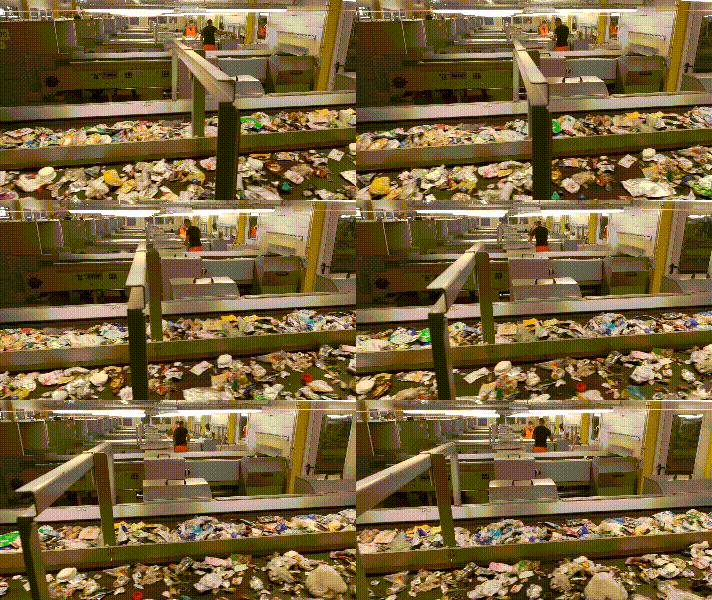
Manual Sorting Solutions
Belt ConveyorManual Sorting Room
For countries with low labor costs, a combination of mechanical and manual sorting can be used, which is a cost-effective waste sorting and recycling solution.
Read More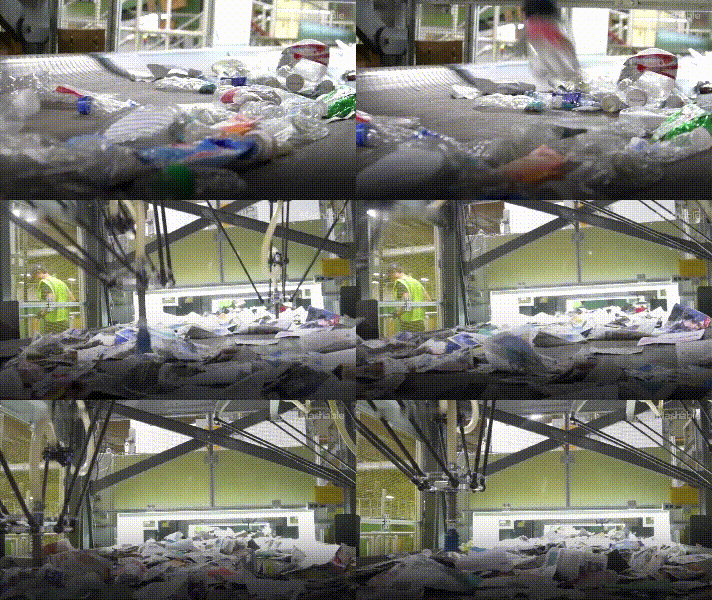
AI Robot Sorting Solutions
AI SortingSorting Robot
The artificial intelligence sorting robot with autonomous learning can practice and accumulate sorting data. It can effectively sort various high-value recyclables.
Read More
Optical Sorting Solutions
Optical Sorting
Optical sorter is a automatic sorting device based on sensors, high-speed ejector valve has large processing capacity. It is a good choice for bulk handling project of waste recycling.
Read More