Soft Material Shredding Solutions
LEADING WASTE SORTING AND RECYCLING EQUIPMENTS PROVIDER
What is Soft Material Shredding?
Soft material shredding refers to the process of breaking down flexible and lightweight materials into smaller, uniform pieces using specialized machinery. These materials include plastics, rubber, textiles, foam, and soft packaging waste. Unlike rigid materials such as metal or wood, soft materials behave differently when cut. They can stretch, fold, or wrap around moving parts, which means the equipment used to process them must be carefully engineered to handle this unique behavior without jamming or losing efficiency.
Within a modern waste sorting and recycling facility, soft material shredding serves as an important preparation step. Before materials can be sorted, cleaned, or transformed into new products, they often need to be reduced to a manageable and consistent size. A shredder designed for soft materials achieves this by using precisely shaped cutting blades and controlled processing speeds. The result is a stream of evenly sized fragments that flow smoothly into the next stage of recycling, whether that involves separation, pelletizing, or remanufacturing.
These shredding systems are widely used across industries that generate or process flexible waste, including plastic recycling plants, textile manufacturers, and packaging operations. By converting bulky and irregular soft waste into a uniform output, the technology helps facilities recover valuable resources that might otherwise end up in a landfill. In this way, soft material shredding forms a quiet but essential link in the broader effort to manage waste responsibly and support the circular economy.
Key Features
One of the defining features of soft material shredding equipment is its specialized cutting technology. Because soft materials tend to tangle and resist clean cuts, these machines rely on blades engineered for precision rather than brute force. They typically operate at lower torque than shredders built for hard materials, but they make up for this with sharp, well-positioned cutters and optimized rotation speeds. This combination allows the machine to slice through flexible material cleanly while reducing the risk of fiber entanglement, clogging, or excessive wear on internal components.
Another important characteristic is the variety of configurations available to match different materials and goals. Single-shaft shredders work well for soft plastics, textiles, and light foam, offering controlled particle sizing through a screen that determines the final output dimension. Dual-shaft shredders provide greater cutting force for tougher soft materials such as thick rubber sheets or dense foam, where two interlocking rotors tear material apart more aggressively. Granulators, on the other hand, act as fine grinders that reduce already-shredded material into small, consistent granules suitable for compounding and reprocessing. This range of options means a facility can select equipment tailored to its exact needs rather than forcing a single design to handle every task.
Modern soft material shredders also incorporate features aimed at efficiency and reliability. Many include dust control systems to capture airborne particles, energy-efficient motors with variable speed drives to reduce power consumption, and intelligent automation that monitors performance and adjusts operation in real time. Practical maintenance features such as easy-to-replace blades, self-cleaning functions, and automatic safety stops further reduce downtime and extend the working life of the machine. Together, these features make the equipment both productive and dependable over years of continuous use.
How Soft Material Shredding Works
The process begins when soft waste material is fed into the shredder, either manually or through an automated conveyor system. Controlled feeding is important here, because pushing too much material in at once can overwhelm the cutting chamber and cause jams. Once inside, the material encounters rotating shafts fitted with cutting blades. As these blades turn, they grip, pull, and slice the material into smaller pieces. The flexible nature of soft materials means the blades must work in a way that prevents stretching and wrapping, which is why blade geometry and rotation speed are carefully calibrated for each material type.
After the initial cutting, the shredded material often passes through a screen or sizing component that determines the final particle size. Pieces that are still too large remain in the cutting chamber for further processing, while properly sized fragments fall through and exit the machine. This screening step ensures that the output is uniform, which is critical for the stages that follow. A consistent particle size makes downstream sorting and separation far more effective, allowing recycling facilities to extract clean, high-purity materials and remove contaminants more easily.
Throughout the entire operation, supporting systems help maintain efficiency and safety. Dust control mechanisms capture fine particles released during shredding, protecting both equipment and the surrounding work environment. Energy-efficient motors keep power use in check, while automated controls monitor factors such as load and temperature to prevent overloading. When the process is complete, the shredded soft material is ready to be transformed into pellets, fibers, or powders, depending on its intended use. This smooth flow from raw waste to refined output is what makes shredding such a valuable step in modern recycling.
Applications of Soft Material Shredding
Soft material shredding finds use across a broad range of industries, each with its own specific needs. In plastic recycling, shredders break down soft plastic films, bags, and packaging into smaller pieces that can be washed, sorted, and eventually turned into pellets for manufacturing new plastic products. The textile industry relies on shredding to process fabric scraps, worn garments, and production offcuts, reducing them into strips or fibers that can be repurposed into insulation, padding, or new textile material. These applications demonstrate how shredding helps convert what would otherwise be waste into useful secondary raw materials.
Foam reprocessing is another important area where soft material shredders prove valuable. Foam from furniture, mattresses, packaging, and industrial uses can be bulky and difficult to handle in its original form. Shredding reduces this volume dramatically, making the material easier to transport and process. The resulting shredded foam can be reused in products such as carpet underlay or rebonded foam. Packaging waste management likewise benefits, as facilities process large volumes of soft packaging materials and prepare them for recycling streams that recover plastics and other reusable components.
Beyond these core industries, soft material shredding supports the wider goals of sustainability and resource recovery. By reducing the size and volume of flexible waste, shredding enables facilities to handle larger quantities of material more efficiently and to recover resources that would otherwise be lost. This capability is especially important as industries face growing pressure to reduce landfill dependence and meet environmental regulations. In nearly every sector that generates soft waste, shredding technology offers a practical path toward more responsible material management.
Benefits of Using Soft Material Shredding
The most immediate benefit of soft material shredding is the improvement it brings to operational efficiency. By reducing flexible waste into uniform, manageable pieces, shredders make every subsequent step in the recycling chain smoother and more productive. Material handling becomes easier, sorting and separation processes work more accurately, and the overall quality of recycled output improves. A well-designed shredding system minimizes common problems such as material tangling, excessive dust, and uneven particle sizes, all of which can slow down production and increase costs if left unaddressed.
Soft material shredding also delivers significant economic advantages. Modern machines are built with energy efficiency in mind, using variable speed drives and optimized cutting angles to keep power consumption low. Durable components and easy maintenance features reduce downtime and extend the working life of the equipment, which helps control long-term operating expenses. At the same time, the high-quality shredded output that these machines produce commands greater value in recycling markets, turning waste streams into a genuine source of revenue rather than a cost burden.
Perhaps the most far-reaching benefit lies in the contribution that soft material shredding makes to environmental sustainability. By converting flexible waste into reusable resources, shredding reduces the volume of material sent to landfills and supports recycling programs that keep valuable materials in circulation. This aligns directly with the principles of the circular economy, where products and materials are kept in use for as long as possible. For both individual businesses and society as a whole, investing in effective shredding technology represents a meaningful step toward a cleaner and more resource-efficient future.
FLEXIBLE SORTING TECHNOLOGY AND SOLUTION
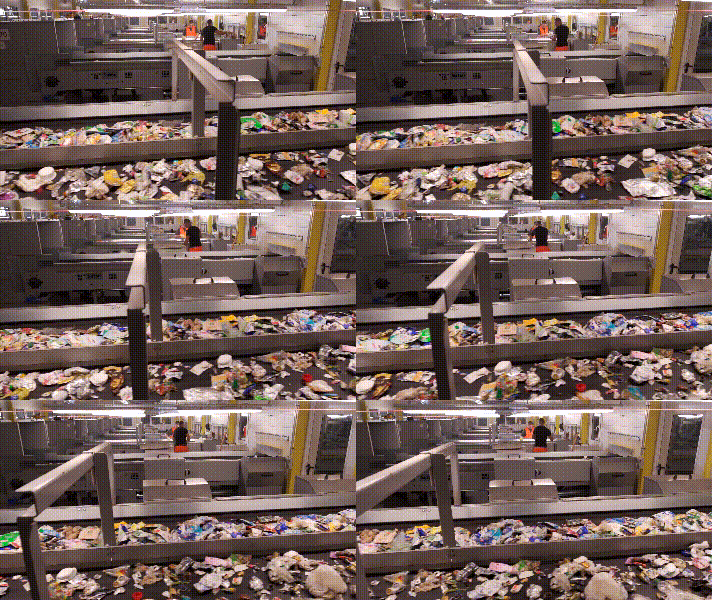
Manual Sorting Solutions
Belt ConveyorManual Sorting Room
For countries with low labor costs, a combination of mechanical and manual sorting can be used, which is a cost-effective waste sorting and recycling solution.
Read More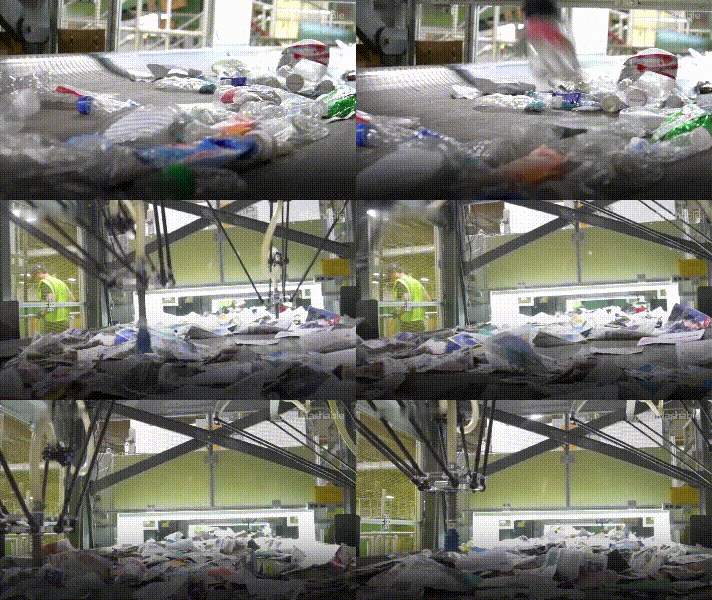
AI Robot Sorting Solutions
AI SortingSorting Robot
The artificial intelligence sorting robot with autonomous learning can practice and accumulate sorting data. It can effectively sort various high-value recyclables.
Read More
Optical Sorting Solutions
Optical Sorting
Optical sorter is a automatic sorting device based on sensors, high-speed ejector valve has large processing capacity. It is a good choice for bulk handling project of waste recycling.
Read More