Solid Waste Shredder
LEADING WASTE SORTING AND RECYCLING EQUIPMENTS PROVIDER
What is a Solid Waste Shredder?
A solid waste shredder is a heavy-duty industrial machine designed to break down large volumes of waste into smaller, more manageable pieces. As a core component of modern solid waste sorting systems and material recovery facilities, the shredder prepares incoming municipal and industrial waste for the downstream separation processes that recover valuable recyclables. By reducing bulky and irregular materials into a consistent particle size, the shredder makes it possible for screening, magnetic separation, and optical sorting equipment to operate accurately and efficiently.
The importance of the solid waste shredder lies in its position at the very front of the recycling chain. Mixed waste arriving at a facility is rarely uniform, containing everything from plastic bottles and cardboard to metal scraps, textiles, and construction debris. Without size reduction, this jumbled stream would be nearly impossible to sort. The shredder transforms this chaos into a steady, predictable flow of material, allowing the entire system to function as a coordinated whole. In doing so, it supports the broader goal of diverting waste from landfills and returning useful resources back into the economy.
Key Features
Most industrial solid waste shredders are built around high-torque, low-speed rotating shafts fitted with sharp cutters or blades. This combination allows the machine to tear and shear tough materials without jamming, while the slow rotation reduces noise, dust, and energy consumption compared with high-speed alternatives. Depending on the application, shredders are configured with single-shaft, double-shaft, or four-shaft designs. Single-shaft models deliver precise and uniform output, double-shaft units excel at crushing bulky and high-resistance waste, and four-shaft machines refine material into even finer particles for specialized recycling needs.
Beyond their cutting mechanisms, modern shredders incorporate intelligent features that protect both the equipment and the operator. Automatic sensors monitor the load on the blades and reverse the shafts when an obstruction is detected, preventing damage from overload. Many models also offer adjustable output sizes through interchangeable screens, giving operators the flexibility to tailor the shredding result to each task. Durable wear-resistant blades, robust steel housings, and accessible maintenance points round out a design that is engineered for continuous, demanding operation in waste processing environments.
How a Solid Waste Shredder Works?
The operation of a solid waste shredder begins when waste is fed into the machine, typically by a grab crane, conveyor, or front loader. Once inside the cutting chamber, the material is drawn between rotating shafts equipped with hardened blades. These blades tear, shear, and grind the waste through a series of cutting actions, gradually reducing it into smaller fragments. In double-shaft shredders, two counter-rotating shafts pull material inward and crush it between opposing cutters, a motion that is especially effective for handling thick, resistant, or interlocked items.
As the waste is processed, a screen positioned beneath the cutting chamber controls the final particle size. Only fragments small enough to pass through the screen openings exit the machine, while larger pieces remain inside for further shredding. This ensures a consistent and uniform output that is ready for subsequent sorting stages. Throughout the process, onboard control systems continuously monitor torque, temperature, and material flow, automatically adjusting speed or reversing the shafts when needed. This automated regulation keeps the shredder running smoothly and protects its critical components from sudden stress or blockage.
Applications of Solid Waste Shredder
Solid waste shredders serve a wide range of industries that depend on efficient waste reduction, recycling, and resource recovery. In municipal solid waste processing, they manage the everyday household and urban waste collected from cities, reducing the volume of mixed organic and inorganic materials so that disposal and recycling become far more efficient. Industrial waste management is another major application, where factories and manufacturing plants rely on shredders to break down plastic waste, metal scraps, and other production byproducts before they can be reused or responsibly discarded.
The role of the shredder extends deeper into the recycling chain as well. Recycling centers use these machines to reduce plastics, paper, rubber, and other recyclables into smaller pieces that are easier to clean, sort, and reprocess into new products. A particularly valuable application is the production of refuse-derived fuel, in which non-recyclable materials are shredded and converted into a fuel source for energy generation, turning what would otherwise be landfill waste into usable power. Specialized shredders are also designed for hazardous waste disposal, safely processing medical waste, chemical containers, and electronic waste in a controlled and compliant manner.
Benefits of Using a Solid Waste Shredder
The most immediate benefit of a solid waste shredder is the dramatic reduction in waste volume it achieves. By compressing bulky, irregular materials into compact, uniform pieces, the shredder lowers transportation and storage costs while extending the usable life of landfill space. This volume reduction also directly improves the performance of every machine that follows in the sorting system, since screens, magnets, and optical sorters all work best with material that has been reduced to a consistent size. In this way, a single shredder enhances the efficiency and accuracy of the entire recovery process.
Beyond efficiency, solid waste shredders deliver significant environmental and economic value. By preparing materials for recycling and refuse-derived fuel production, they help divert waste from landfills and incineration, conserving raw resources and reducing greenhouse gas emissions. Modern shredders are engineered for energy efficiency and equipped with safety systems and durable components that lower operational costs and minimize downtime. Together, these advantages make the shredder a foundational investment for any organization committed to sustainable waste management, transforming complex waste streams into recoverable resources that support a circular economy.
FLEXIBLE SORTING TECHNOLOGY AND SOLUTION
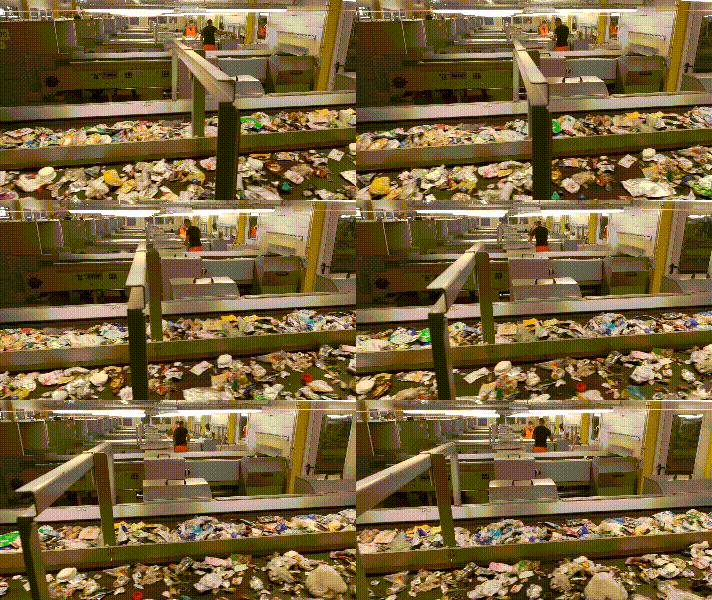
Manual Sorting Solutions
Belt ConveyorManual Sorting Room
For countries with low labor costs, a combination of mechanical and manual sorting can be used, which is a cost-effective waste sorting and recycling solution.
Read More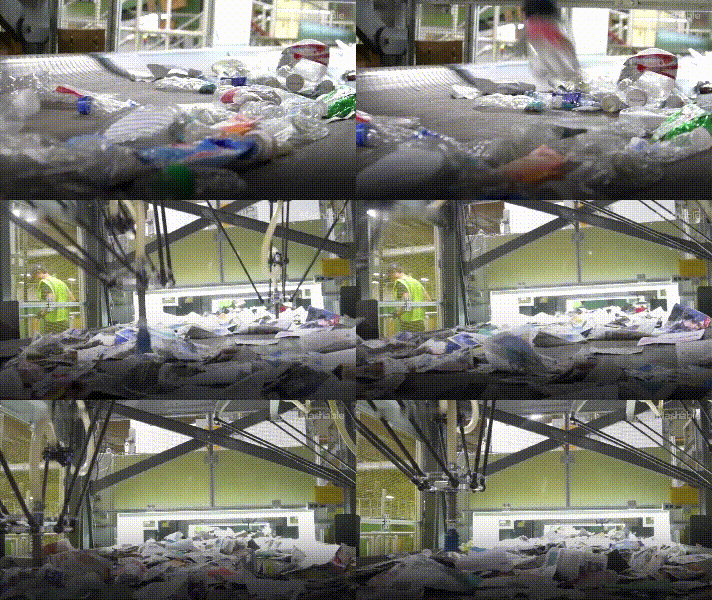
AI Robot Sorting Solutions
AI SortingSorting Robot
The artificial intelligence sorting robot with autonomous learning can practice and accumulate sorting data. It can effectively sort various high-value recyclables.
Read More
Optical Sorting Solutions
Optical Sorting
Optical sorter is a automatic sorting device based on sensors, high-speed ejector valve has large processing capacity. It is a good choice for bulk handling project of waste recycling.
Read More