Tire Shredder
LEADING WASTE SORTING AND RECYCLING EQUIPMENTS PROVIDER
What is a Tire Shredder?
A tire shredder is a specialized industrial machine engineered to break down used and discarded tires into smaller, more manageable pieces. As one of the most important tools in the tire recycling and solid waste management industry, it transforms bulky waste tires into shredded rubber that can be reused across a surprising range of applications, from fuel and construction materials to the soft infill found beneath playgrounds and athletic fields. By giving old tires a second life, the shredder sits at the heart of efforts to reduce landfill waste and move toward a more circular economy.
These machines are found in recycling facilities, waste management plants, and rubber processing operations all over the world. They come in many different types and sizes, ranging from compact units suited to light-duty work to large, high-capacity industrial systems capable of processing thousands of tires every hour. The right choice depends on how many tires need to be handled and what the shredded material will ultimately be used for, which makes the tire shredder a flexible solution for operations both large and small.
Key Features
The defining feature of any tire shredder is its powerful cutting mechanism, which is built to withstand the tough, reinforced structure of modern tires. Because tires contain steel belts and textile layers, the blades and cutters must be made from hardened, durable materials that can grip and tear through this resistance without dulling quickly. Many shredders operate at high torque and relatively low speed, an approach that delivers steady cutting force while keeping energy consumption and wear under control.
Beyond the cutting system itself, advanced tire shredders often incorporate screening and separation technology that removes steel wire and textile fibers from the rubber, producing a cleaner output ready for further recycling. Adjustable output sizing is another valuable feature, allowing operators to tailor the final product to a specific use, whether that means coarse chips for fuel or finer granules for surfacing. Built-in safety mechanisms and ease of maintenance round out the design, ensuring the machine remains both productive and reliable over a long service life.
How a Tire Shredder Works?
A tire shredder works by feeding whole or partial tires into a cutting chamber where rotating blades, shear cutters, or a combination of cutting and grinding elements break the material apart. As a tire enters the machine, the blades grip and pull it inward, gradually reducing it into pieces of the desired size. Some systems use a dual-shaft configuration in which two counter-rotating shafts tear the rubber apart between them, while others rely on slow-speed, high-torque cutting to process tires efficiently and with minimal strain on the components.
Once the rubber has been broken down, many shredders pass the material through screening systems that separate it from the embedded steel wires and textile reinforcement. This step produces a purer stream of shredded rubber and recovers valuable metal at the same time. The final output size can be adjusted to match the intended application, so the same fundamental process can yield material suitable for rubberized asphalt, playground surfaces, or tire-derived fuel simply by changing the settings and screening configuration.
Applications of Tire Shredder
Tire shredders serve a wide range of applications, with tire recycling and rubber repurposing leading the list. One of the most common uses is the production of crumb rubber, a granulated material that finds its way into playground surfaces, running tracks, and the infill used in synthetic turf. Shredded rubber is also widely used in civil engineering projects such as road construction and drainage systems, where it acts as a lightweight yet durable material that performs well under demanding conditions.
Energy recovery is another major application, as shredded rubber can be converted into tire-derived fuel and burned in industrial boilers and cement kilns as an alternative to traditional fuels. Beyond these uses, shredded tire material contributes to rubberized asphalt for road surfacing, eco-friendly construction products, molded rubber goods, and even insulation. In every one of these applications, the tire shredder plays a key part in reducing environmental pollution by ensuring that discarded tires are put to productive use rather than left to accumulate in landfills.
Benefits of Using a Tire Shredder
The most significant benefit of using a tire shredder is its contribution to sustainable waste management. Whole tires are notoriously difficult to dispose of because they take up large amounts of space and do not break down naturally for many years. By reducing them to manageable shredded material, the machine diverts enormous volumes of waste away from landfills and opens the door to recycling and reuse. This not only protects the environment but also helps recover valuable resources such as steel and reusable rubber.
From an operational standpoint, a tire shredder improves efficiency and lowers long-term costs. Properly shredded material is easier to transport, store, and process, which streamlines the entire recycling workflow. Investing in a high-quality machine and maintaining it well, by keeping the blades sharp, lubricating moving parts, and following the manufacturer's recommended service schedule, ensures consistent performance and a longer service life. The result is a productive, cost-effective operation that turns a challenging waste problem into a steady source of reusable material.
FLEXIBLE SORTING TECHNOLOGY AND SOLUTION
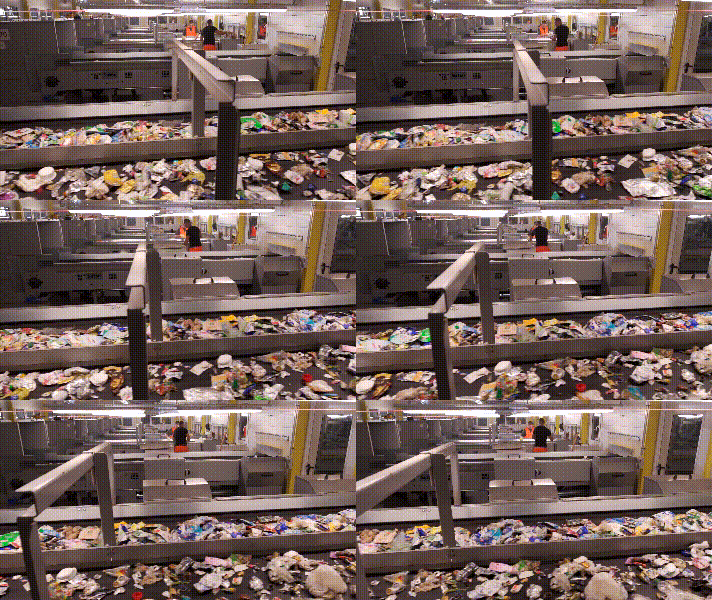
Manual Sorting Solutions
Belt ConveyorManual Sorting Room
For countries with low labor costs, a combination of mechanical and manual sorting can be used, which is a cost-effective waste sorting and recycling solution.
Read More
AI Robot Sorting Solutions
AI SortingSorting Robot
The artificial intelligence sorting robot with autonomous learning can practice and accumulate sorting data. It can effectively sort various high-value recyclables.
Read More
Optical Sorting Solutions
Optical Sorting
Optical sorter is a automatic sorting device based on sensors, high-speed ejector valve has large processing capacity. It is a good choice for bulk handling project of waste recycling.
Read More