Wood Shredder
LEADING WASTE SORTING AND RECYCLING EQUIPMENTS PROVIDER
What is a Wood Shredder?
A wood shredder is a powerful machine engineered to break down wood materials into smaller, more manageable pieces such as chips, flakes, or mulch. It serves as an essential tool across forestry, agriculture, and recycling industries, where it transforms branches, logs, pallets, and other forms of wood waste into useful output. By reducing bulky wood into a uniform size, the machine makes the material far easier to transport, store, and repurpose, which is why it has become a cornerstone of sustainable resource management.
At its core, a wood shredder addresses a common problem: wood waste takes up significant space and can be difficult to handle in its original form. Rather than sending this material to a landfill, a wood shredder converts it into valuable resources like biomass fuel, landscaping mulch, or raw feedstock for new wood-based products. For both businesses and individuals, this means lower disposal costs and a meaningful contribution to eco-friendly practices. Wood shredders are available in a wide range of sizes and designs, from compact electric units suited for home gardens to heavy-duty industrial machines capable of processing large volumes of bulk wood waste.
Key Features
The defining feature of a wood shredder is its robust cutting system, which typically relies on rotating blades, knives, or hammers driven by a high-powered motor. These components are built to withstand the considerable force needed to cut through dense wood fibers, and they are often made from hardened steel to maintain sharpness over extended periods of use. The motor power, blade configuration, and feeding mechanism work together to determine how quickly and efficiently the machine can process material of varying hardness and thickness.
Beyond the cutting mechanism, modern wood shredders include a variety of features that improve both performance and safety. Many models incorporate automatic feeding systems that draw material into the cutting chamber at a controlled rate, reducing the risk of jams and protecting the operator. Safety mechanisms such as automatic shutoff systems and overload protection guard against accidents and prevent damage when the machine encounters material it cannot handle. Adjustable output settings also allow operators to control the final size of the shredded material, making the equipment adaptable to a wide range of applications.
How a Wood Shredder Works?
A wood shredder operates through a straightforward yet powerful process. When wood materials are fed into the machine, a high-powered motor drives a system of rotating blades or hammers that cut, tear, and crush the material. As the wood passes through the cutting chamber, it is progressively reduced into smaller fragments, which are then expelled through an output chute. The continuous action of the rotating components ensures that even tough branches and logs are broken down into consistent, manageable pieces.
Different shredders use different cutting mechanisms to achieve this result. Drum-style machines feature sharp knives mounted on a rotating drum that slice cleanly through the wood, producing uniform chips. Disc and hammermill systems, by contrast, rely on hammers that repeatedly strike the wood to break it into finer particles. The choice of mechanism affects both the texture of the output and the type of material the machine handles best. Ultimately, the efficiency of any wood shredder depends on factors such as blade sharpness, motor power, and feeding speed, all of which must be balanced to deliver reliable performance.
Applications of Wood Shredder
Wood shredders are used across a broad spectrum of industries, each relying on the machine to process wood waste and create valuable byproducts. In the forestry sector, shredders break down branches, trimmings, and logs, dramatically reducing their volume so that the material can be transported and repurposed with ease. This not only streamlines waste handling but also turns what would otherwise be discarded into a usable resource. In landscaping and agriculture, shredded wood is commonly converted into mulch, which enriches soil quality, retains moisture, suppresses weed growth, and ultimately supports healthier plant development.
The role of wood shredders extends well beyond gardening and forestry. In the field of renewable energy, shredded wood serves as a key input for biomass fuel, which is processed and burned to generate heat and electricity. This provides a sustainable alternative to fossil fuels and helps close the loop on wood waste. Recycling facilities also depend on wood shredders to break down discarded pallets, furniture, and construction debris into raw materials that can be manufactured into new wood-based products. Across all of these applications, the common theme is the transformation of waste into something genuinely useful.
Benefits of Using Wood Shredder
The most immediate benefit of using a wood shredder is the significant reduction in waste volume it provides. Bulky wood waste that would otherwise occupy valuable space and incur high disposal fees is compressed into compact chips or mulch, lowering both storage and transportation costs. This efficiency translates into real financial savings for businesses and individuals alike, while also easing the burden on landfills and reducing the environmental footprint associated with waste disposal.
Equally important is the environmental and economic value created by repurposing the shredded material. Rather than treating wood waste as a liability, a shredder turns it into a resource that can be used as fuel, mulch, or raw material for manufacturing. This supports a circular economy in which materials are reused rather than discarded, promoting long-term sustainability. With proper maintenance, including regular blade sharpening, lubrication of moving parts, and routine inspection of the motor and belts, a wood shredder offers years of dependable service, making it a sound investment for anyone seeking to manage wood waste responsibly and efficiently.
FLEXIBLE SORTING TECHNOLOGY AND SOLUTION
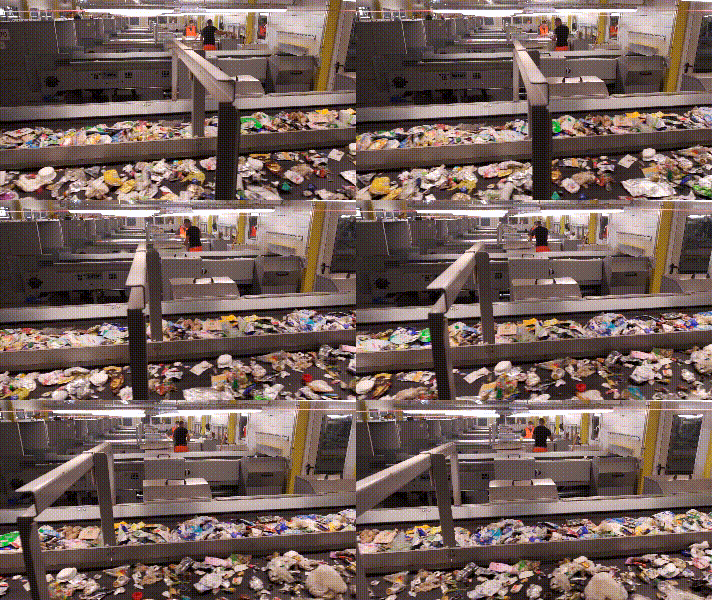
Manual Sorting Solutions
Belt ConveyorManual Sorting Room
For countries with low labor costs, a combination of mechanical and manual sorting can be used, which is a cost-effective waste sorting and recycling solution.
Read More
AI Robot Sorting Solutions
AI SortingSorting Robot
The artificial intelligence sorting robot with autonomous learning can practice and accumulate sorting data. It can effectively sort various high-value recyclables.
Read More
Optical Sorting Solutions
Optical Sorting
Optical sorter is a automatic sorting device based on sensors, high-speed ejector valve has large processing capacity. It is a good choice for bulk handling project of waste recycling.
Read More