RDF briquette and pellet machine
Based on MSWsorting sorting solutions
MUNICIPAL SOLID WASTE SORTING EQUIPMENT

The non-recyclable garbage with high calorific value, after crushing, the moisture content is controlled within a certain range, and the material is sent to the feed port of the RDF briquetting machine through the feeding conveyor, and the material is forced to be extruded from the mold into a block. RDF-5 type of pellets, square or round fuel rods.
An RDF Making Machine is a specialized piece of industrial equipment designed to transform non-recyclable waste materials into a usable fuel source. This process is known as Refuse-Derived Fuel (RDF) production. The machine takes waste that would otherwise be destined for landfill—typically materials with a high calorific value like certain plastics, paper, and textiles—and processes it into a dense, consistent, and energy-rich fuel product. This innovative technology represents a crucial step in the waste-to-energy chain, turning a disposal problem into a valuable resource for industries such as cement kilns and power plants.
The core function of the machine is to prepare and densify the waste. It processes mixed municipal solid waste that has already been through sorting systems to remove recyclables and inert materials. The remaining combustible fraction is then prepared to meet specific quality standards for fuel, making it a reliable alternative to traditional fossil fuels like coal. By doing so, RDF making machines play a pivotal role in advancing circular economy principles and reducing dependency on virgin resources.
Modern RDF Making Machines are engineered for high efficiency and durability. They are equipped with powerful crushers or shredders that reduce the size of the waste input, ensuring a homogeneous mixture. A critical feature is the integrated drying or moisture control system, which actively manages the water content of the material. Precise moisture control is essential, as it directly impacts the calorific value and combustion efficiency of the final RDF product, ensuring it burns cleanly and consistently.
Another defining feature is the high-pressure briquetting or pelletizing unit. This component is the heart of the machine, where the prepared waste is compressed under immense force. This process extrudes the material through a die, forming it into solid shapes such as pellets, cubes, or cylindrical rods. This densification not only increases the energy density of the fuel for easier transport and storage but also creates a uniform physical form that is ideal for automated feeding into industrial boilers and furnaces.
The operation of an RDF Making Machine is a continuous, multi-stage process. It begins with the feeding of pre-sorted, high-calorific waste onto a conveyor system. This waste, often called "fluff" at this stage, is first directed into a primary crusher or shredder. Here, large items are broken down into smaller, more manageable pieces to create a consistent feedstock. The shredded material then typically passes through a screening stage to remove any remaining fines or undesirable components, ensuring only the optimal fraction moves forward.
Following size reduction, the material enters a crucial phase: drying and conditioning. It may pass through a rotary dryer or a system that controls humidity to bring the moisture content down to a precise range, usually between 10% and 20%. The dry, shredded material is then conveyed to the core of the system—the briquetting press. Here, a powerful hydraulic or mechanical ram forces the material through a specially shaped die at high pressure. This extrusion process compacts the waste, generating heat through friction that partially binds the particles together, forming dense, solid blocks known as RDF-5, which can be square, round, or pellet-shaped.
The primary application of RDF Making Machines is within the waste management and energy sectors. They are a central component of Mechanical-Biological Treatment (MBT) plants and dedicated waste-to-energy facilities. The RDF pellets or briquettes produced are primarily used as a substitute fuel in energy-intensive industries. Cement manufacturing plants are major consumers, as RDF can be fired in cement kilns, providing the high temperatures needed for clinker production while reducing the plant's coal consumption and associated carbon footprint.
Beyond the cement industry, RDF finds application in dedicated power plants designed to generate electricity from waste. It is also used in district heating systems and in various industrial boilers across sectors like paper and pulp or steel manufacturing. Furthermore, by converting waste into a standardized fuel, these machines enable the long-distance transport of energy recovered from waste to regions that need it, optimizing resource recovery on a broader geographical scale and providing a sustainable disposal solution for municipalities.
Implementing an RDF Making Machine offers significant environmental benefits. Most notably, it dramatically reduces the volume of waste sent to landfills, conserving land space and mitigating harmful greenhouse gas emissions like methane that are produced by decomposing organic waste in landfills. By recovering energy from non-recyclable waste, it contributes to a reduction in the use of fossil fuels, aiding in the transition to a more sustainable energy mix and helping communities and nations meet their renewable energy and carbon reduction targets.
From an economic and operational perspective, these machines transform a cost center—waste disposal—into a potential revenue stream. The sale of RDF as an alternative fuel can offset operational costs of waste treatment facilities. The densified RDF product is also far easier and more cost-effective to handle, transport, and store compared to loose, untreated waste. For end-user industries, RDF provides a stable, often lower-cost fuel alternative that enhances energy security and supports corporate sustainability goals, creating a win-win scenario across the waste management value chain.

Based on MSWsorting sorting solutions

Based on MSWsorting sorting solutions

Based on MSWsorting sorting solutions
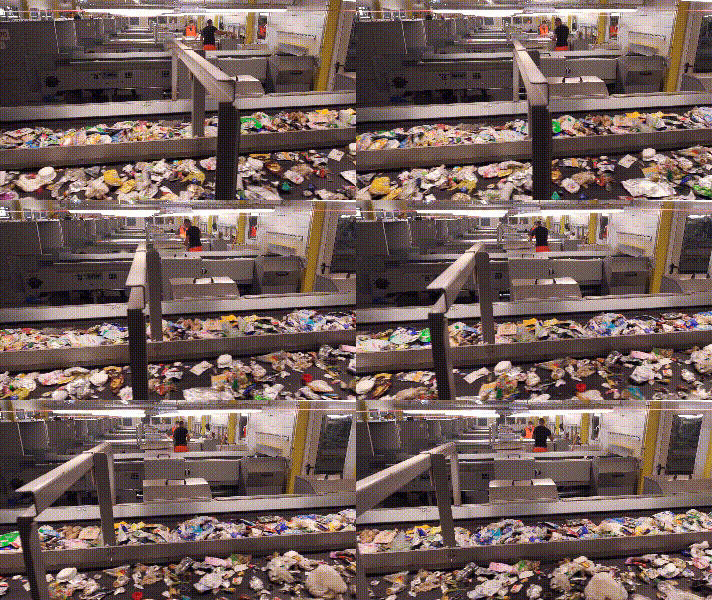
Belt ConveyorManual Sorting Room
For countries with low labor costs, a combination of mechanical and manual sorting can be used, which is a cost-effective waste sorting and recycling solution.
Read More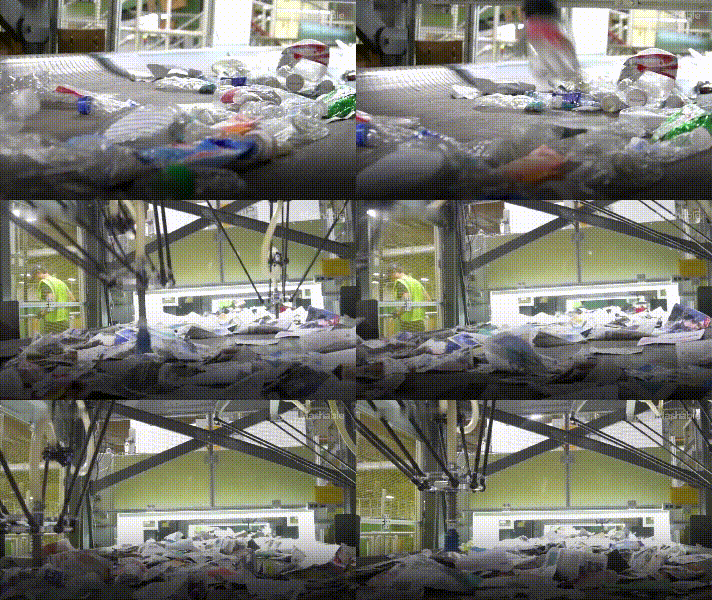
AI SortingSorting Robot
The artificial intelligence sorting robot with autonomous learning can practice and accumulate sorting data. It can effectively sort various high-value recyclables.
Read More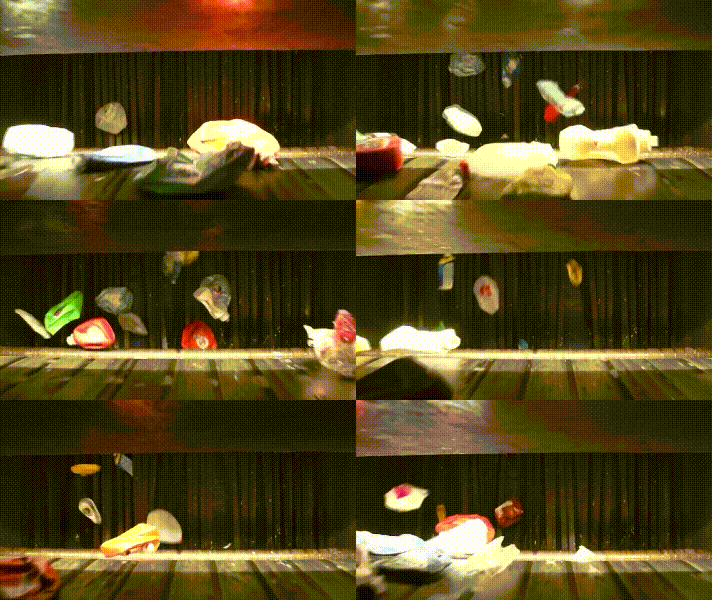
Optical Sorting
Optical sorter is a automatic sorting device based on sensors, high-speed ejector valve has large processing capacity. It is a good choice for bulk handling project of waste recycling.
Read More