Automatic Baler
LEADING WASTE SORTING AND RECYCLING EQUIPMENTS PROVIDER

What is an Automatic Baler?
An automatic baler is an advanced waste compaction machine that uses automated processes to compress recyclable materials into uniform bales. Unlike traditional manual balers, automatic balers can perform the entire baling process with minimal human intervention, making them highly efficient and cost-effective. These machines are typically used in industries with high volumes of recyclable materials such as cardboard, plastics, and paper.
How Does an Automatic Baler Work?
The working principle of an automatic baler is similar to other balers, but with the added benefit of automation. The process involves loading recyclable materials into the baling chamber. The machine's automated system then controls the entire baling process, including the compression of waste, the tying of bales, and the ejection of completed bales. The automated functions of the baler include:
Automatic Loading: Some models are equipped with an automatic conveyor system that feeds materials into the baler without the need for manual loading.
Compression: The machine uses a hydraulic or mechanical press to compact materials tightly into uniform bales.
Automatic Bale Tying: Once the material is compressed, the baler automatically ties the bale using wire, plastic, or twine.
Bale Ejection: After the bale is formed and tied, the machine automatically ejects it, making it ready for transport or storage.
This automated process not only saves time but also increases the consistency and quality of the bales, as human error is minimized.
Types of Automatic Balers
Automatic balers come in various types, designed to handle different materials and waste volumes. The most common types include:
Horizontal Automatic Balers: These are popular for handling large volumes of material, such as cardboard and plastics. The waste is loaded into a horizontal chamber, and the machine automatically compacts and ties the material into dense bales.
Vertical Automatic Balers: Ideal for businesses with limited space, vertical automatic balers are designed to compact materials such as cardboard and paper in a vertical orientation. They are typically more compact and are used in smaller-scale operations.
Closed-End Automatic Balers: These are fully automated machines that are ideal for handling multiple types of waste, including textiles, paper, plastics, and metals. They provide increased efficiency for mixed waste streams and are often used in high-capacity recycling facilities.
Benefits of Using an Automatic Baler
Automatic balers offer numerous advantages to businesses looking to improve waste management efficiency and sustainability. Key benefits include:
Increased Efficiency: With automation, the baling process is faster and requires less labor, reducing the overall operational time needed to handle waste.
Consistent Bale Quality: Automatic balers ensure consistent bale size and density, which helps improve storage, transportation, and recycling efficiency.
Reduced Labor Costs: By automating the baling process, businesses can reduce the need for manual labor, which in turn lowers labor costs and the risk of human error.
Space Saving: The compact design of automatic balers allows for more efficient use of space, both in terms of storage of recyclable materials and the bales produced.
Improved Safety: Automation reduces the risk of accidents and injuries associated with manual handling, improving overall workplace safety.
Energy Efficiency: Many automatic balers are designed to operate with minimal energy consumption, which helps lower energy costs and supports sustainability goals.
How to Choose the Right Automatic Baler
Selecting the right automatic baler depends on several factors. Here's what you should consider when choosing the ideal baler for your business:
Material Type: Different balers are optimized for different types of materials. Ensure that the baler you choose is suitable for the waste your business generates, whether that's cardboard, plastics, or a mix of materials.
Waste Volume: The volume of waste you need to process will determine the size and capacity of the baler. Smaller operations may need a low-capacity model, while larger operations will require a heavy-duty, high-volume machine.
Automation Features: Evaluate the level of automation you need. Some balers offer full automation (e.g., automatic loading, tying, and ejection), while others may require manual loading but still offer automatic compaction and bale ejection.
Available Space: Ensure that you have adequate space for the baler and its operations. Some automatic balers are larger and require more room for loading, compaction, and bale storage.
Budget: While automatic balers can be more expensive than manual models, they offer long-term savings in labor costs and operational efficiency. Factor in the initial investment, maintenance costs, and potential savings over time.
Maintenance and Care of Automatic Balers
Proper maintenance is essential to ensure your automatic baler operates smoothly and remains durable. Regular maintenance tasks include:
Hydraulic System Maintenance: Check hydraulic fluid levels and inspect for leaks. Hydraulic systems are crucial to the baling process, so proper maintenance will ensure optimal performance.
Cleaning and Lubrication: Regularly clean the machine to prevent material build-up, and lubricate moving parts to reduce wear and tear.
Monitor Electrical Components: Inspect the electrical system regularly to ensure all sensors, controls, and motors are functioning correctly.
Check Bale Tying System: Ensure that the automatic tying system is functioning properly, as improperly tied bales can cause operational issues.
Conclusion
Automatic balers are a game-changer for businesses that need to manage large quantities of recyclable materials. By automating the baling process, these machines increase efficiency, reduce labor costs, and ensure consistent, high-quality bales. Whether you're a small business or a large-scale recycling facility, an automatic baler can significantly streamline your waste management and recycling efforts, contributing to both operational success and sustainability goals.
Investing in an automatic baler is a smart choice for businesses looking to improve their waste management processes. With proper maintenance, these machines offer long-term value and can help your business reduce its environmental footprint while improving operational efficiency.
FLEXIBLE SORTING TECHNOLOGY AND SOLUTION
Manual Sorting Solutions
Belt ConveyorManual Sorting Room
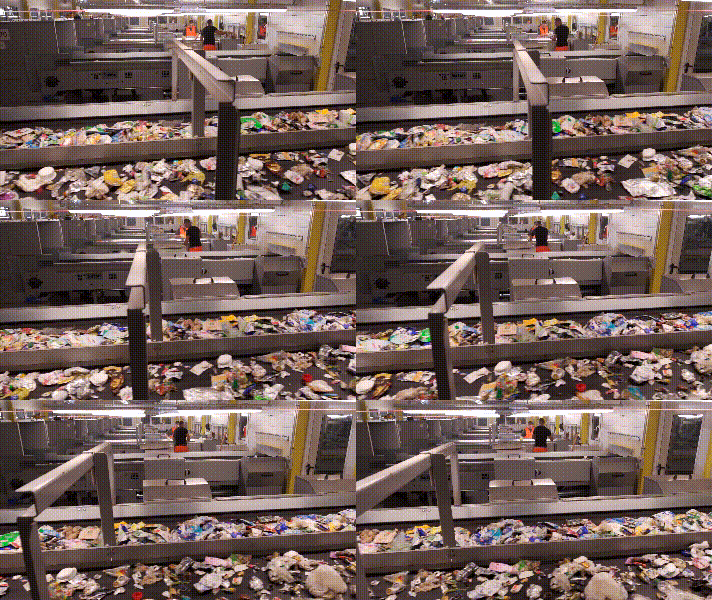
For countries with low labor costs, a combination of mechanical and manual sorting can be used, which is a cost-effective waste sorting and recycling solution.
Read More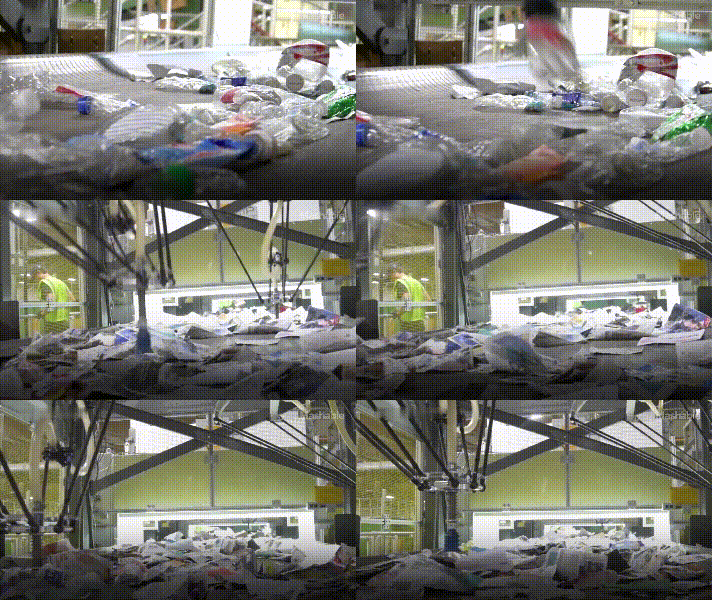
AI Robot Sorting Solutions
AI SortingSorting Robot
The artificial intelligence sorting robot with autonomous learning can practice and accumulate sorting data. It can effectively sort various high-value recyclables.
Read More
Optical Sorting Solutions
Optical Sorting
Optical sorter is a automatic sorting device based on sensors, high-speed ejector valve has large processing capacity. It is a good choice for bulk handling project of waste recycling.
Read More