WDS1 Waste Disc Screen
By MSWsorting Systems
LEADING WASTE SORTING AND RECYCLING EQUIPMENTS PROVIDER
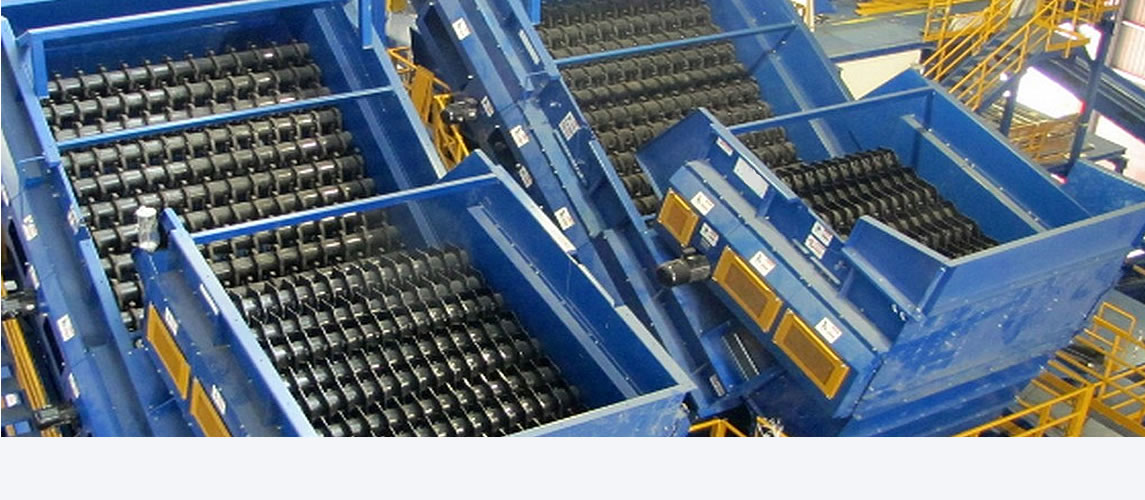
A Waste Disc Screen is a specialized piece of equipment used in Material Recovery Facilities (MRFs) and recycling plants to separate mixed waste streams based on the size and shape of the materials. It consists of a series of parallel, rotating shafts fitted with evenly spaced, interlocking steel discs. As waste travels across the rotating discs, smaller, flat, or flexible items like paper, films, and small containers fall through the gaps between the discs, while larger, bulky items like bottles, cans, and rigid plastics are carried over the top. This process creates two distinct material streams, which is a crucial first step in preparing waste for further, more precise sorting and recovery.
Often considered the workhorse of pre-sorting, the disc screen is highly valued for its robustness and ability to handle large volumes of unsorted municipal solid waste. Its design is particularly effective at removing "fines"—small, often organic materials like dirt, glass shards, and food residue—from the main waste flow. By efficiently separating materials by size early in the process, it significantly improves the efficiency and accuracy of downstream sorting technologies, such as optical sorters and eddy current separators, which perform better when fed with more uniform material streams.
The core feature of a disc screen is its modular and adjustable disc design. The shafts are mounted with hardened steel discs that can be configured with specific gaps between them to target different material sizes. Furthermore, the rotational speed and angle of the entire screen bed can be adjusted, allowing operators to fine-tune the separation process for varying waste compositions. This adaptability makes it suitable for different applications, from separating cardboard from commingled recycling to screening organic waste in composting facilities.
Another critical feature is its durability and low maintenance. Built to withstand abrasive and corrosive materials, the discs and shafts are engineered for long service life. The interlocking arrangement of the discs creates a continuous, rolling surface that is self-cleaning to a large degree, preventing materials like plastic films from wrapping around and jamming the mechanism. This reliability ensures continuous operation in demanding industrial environments, minimizing downtime and maintaining the steady flow of materials through the sorting plant.
The operation of a waste disc screen is a continuous mechanical process. Mixed waste is conveyed onto the infeed end of the screen, where it is distributed across the width of the rotating discs. As the shafts turn, the discs create a lifting and tumbling action, agitating the waste. Flat and small two-dimensional objects, such as sheets of paper, plastic bags, and small debris, quickly find their way through the gaps between the discs and drop onto a collection conveyor or bunker underneath. This stream is often called the "unders" or "fines."
Meanwhile, larger three-dimensional objects, like plastic bottles, aluminum cans, and milk jugs, cannot fit through the gaps. The rotating action of the discs propels these items forward along the length of the screen. The angle of the screen deck aids in this transportation, ensuring the "overs" or "rejects" are discharged at the end into a separate collection system. This simple yet effective principle of size-based separation is fundamental to organizing chaotic waste into manageable categories for the next stages of sorting, such as magnetic separation for metals or optical sorting for specific plastic types.
In traditional recycling facilities for municipal solid waste, disc screens are primarily used for size classification. A common application is separating large containers and bulky items from a stream of commingled recyclables like plastics, metals, and paper. They are also indispensable in single-stream recycling plants, where all recyclables arrive mixed together. Here, a disc screen often serves as a primary screen to remove containers (overs) from flat paper and cardboard (unders), sending each stream to dedicated sorting lines optimized for those material types.
Beyond standard recycling, disc screens have vital roles in specialized waste processing. In composting operations, they are used to screen out oversized, non-compostable materials from the finished compost product, ensuring purity and quality. In construction and demolition (C&D) waste recycling, heavy-duty disc screens separate fine debris like dirt and small rubble from larger wood, metal, and concrete pieces. This pre-sorting is essential for recovering valuable materials from demolition sites and diverting waste from landfills.
The primary benefit of incorporating a disc screen into a waste sorting system is the significant enhancement of overall plant efficiency and purity of recovered materials. By performing an initial, coarse separation, it reduces the load on more sensitive and expensive downstream equipment. For instance, optical sorters and AI-powered robots can operate with much higher accuracy and speed when they don't have to process a jumble of extremely varied sizes. This leads to higher recovery rates of saleable commodities like PET plastic or aluminum, directly improving the facility's economic viability.
Furthermore, disc screens offer operational reliability and cost-effectiveness. Their mechanical design is relatively simple compared to other high-tech sorters, resulting in lower initial investment, reduced energy consumption, and easier maintenance. Their ability to handle heavy loads and dirty, unpredictable waste streams with minimal downtime makes them a dependable backbone for any MRF. By reliably creating defined material streams, they bring order to chaos, which is the essential first step in transforming waste into valuable secondary resources and promoting a circular economy.
By MSWsorting Systems
By MSWsorting Systems
By MSWsorting Systems
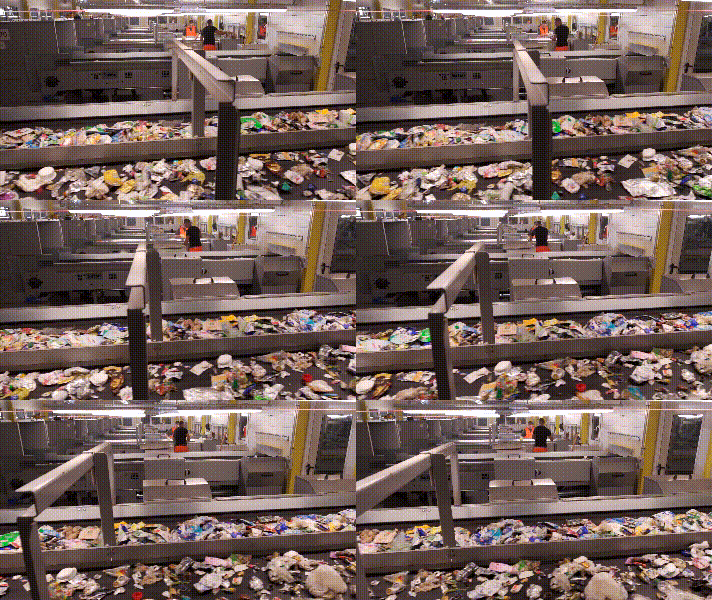
Belt ConveyorManual Sorting Room
For countries with low labor costs, a combination of mechanical and manual sorting can be used, which is a cost-effective waste sorting and recycling solution.
Read More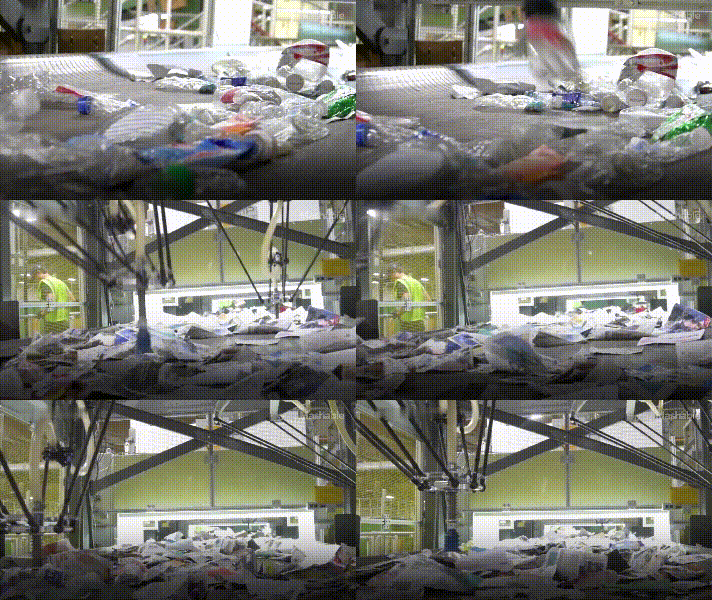
AI SortingSorting Robot
The artificial intelligence sorting robot with autonomous learning can practice and accumulate sorting data. It can effectively sort various high-value recyclables.
Read More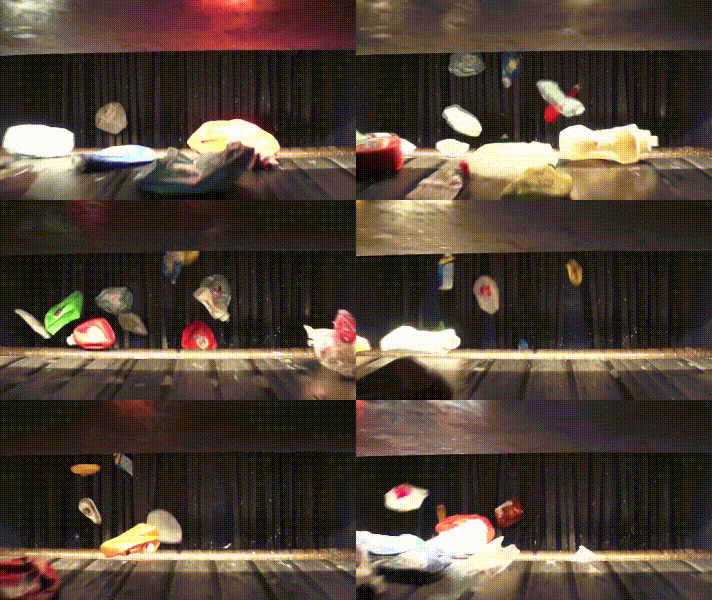
Optical Sorting
Optical sorter is a automatic sorting device based on sensors, high-speed ejector valve has large processing capacity. It is a good choice for bulk handling project of waste recycling.
Read More