Jaw Type Waste Crusher
Based on MSW crushing solutions
Waste Crusher is designed to reduce waste volume, enhance recycling efforts, and contribute to a cleaner, greener environment.

Waste Crusher is a machine designed to reduce the volume of waste materials by crushing or shredding them into smaller, more manageable pieces. These machines are commonly used in waste management systems to process various types of waste, such as C&D waste, organic waste, plastic, paper, metal, and other recyclable or non-recyclable materials. By breaking down waste into smaller fragments, waste crushers make it easier to handle, transport, and dispose of waste, while also improving recycling efficiency.
With the growing emphasis on sustainability and circular economy practices, waste crushers have become indispensable tools for businesses and communities aiming to minimize landfill use and maximize resource recovery.
Waste crushers operate using powerful mechanical systems to break down waste materials. The process typically involves:
Feeding: Waste materials are fed into the crusher through a hopper or conveyor system.
Crushing: High-speed blades, hammers, or rollers crush the waste into smaller fragments.
Sorting: Some advanced crushers include sorting mechanisms to separate recyclable materials like metals, plastics, and paper.
Discharge: The crushed waste is discharged for further processing, recycling, or disposal.
Modern waste crushers are equipped with advanced features such as automation, safety sensors, and energy-efficient motors, making them highly effective and user-friendly.
Waste crushers are available in various types, each designed for specific waste materials and applications:
These heavy-duty crushers are designed for large-scale waste processing in industries such as construction waste crushing , and mining. They can handle materials like metal scraps, concrete, and bulk waste.
Ideal for food waste, garden waste, and other biodegradable materials, organic waste crushers are commonly used in composting and biogas production facilities.
These crushers are specifically designed to process plastic waste, breaking it down into smaller pieces for easier recycling and repurposing.
Compact and mobile, portable crushers are perfect for on-site waste processing at events, construction sites, and remote locations.
Waste crushers are used across a wide range of industries and sectors, including:
Manufacturing: To manage production waste and reduce disposal costs.
Hospitality: For processing food waste and packaging materials.
Municipal Waste Management: To handle household and commercial waste more efficiently.
Recycling Centers: To prepare materials for recycling by crushing and sorting.
Construction: To manage construction and demolition waste.
Waste crushers offer numerous advantages, making them a valuable investment for businesses and communities:
Waste Volume Reduction: Significantly reduces the size of waste, saving storage space and lowering transportation costs.
Improved Recycling Efficiency: Crushed waste is easier to sort and process, enhancing recycling rates.
Cost Savings: Reduces waste disposal expenses and operational costs.
Environmental Sustainability: Promotes eco-friendly waste management practices and reduces landfill dependency.
Versatility: Can handle a wide range of waste materials, from organic waste to industrial debris.
The waste crusher industry is evolving rapidly, driven by technological advancements and sustainability goals. Key trends include:
Automation: Integration of AI and IoT for smarter, more efficient waste processing.
Energy Efficiency: Development of crushers with lower energy consumption and carbon footprints.
Modular Designs: Customizable crushers tailored to specific waste management needs.
Circular Economy Focus: Increased emphasis on recycling and resource recovery.

Based on MSW crushing solutions

Based on MSW crushing solutions

Based on MSW crushing solutions
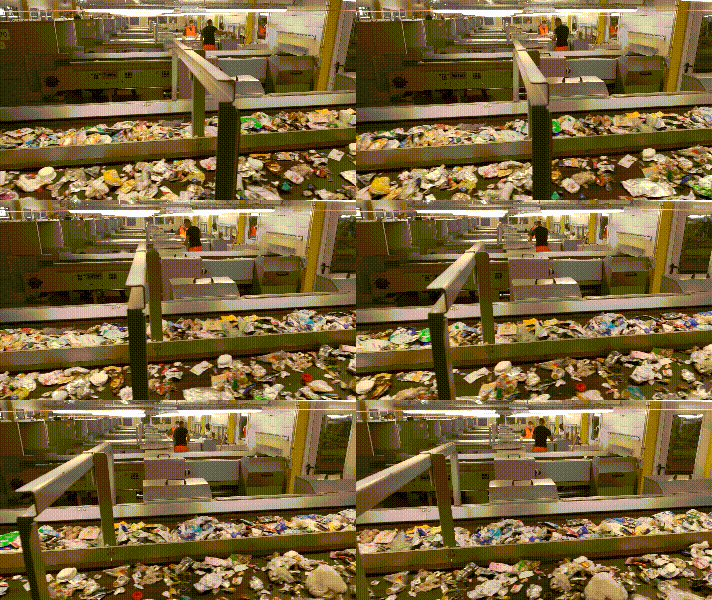
Belt ConveyorManual Sorting Room
For countries with low labor costs, a combination of mechanical and manual sorting can be used, which is a cost-effective waste sorting and recycling solution.
Read More
AI SortingSorting Robot
The artificial intelligence sorting robot with autonomous learning can practice and accumulate sorting data. It can effectively sort various high-value recyclables.
Read More
Optical Sorting
Optical sorter is a automatic sorting device based on sensors, high-speed ejector valve has large processing capacity. It is a good choice for bulk handling project of waste recycling.
Read More