Length 2.2 meter Spiral Screen Splitter
Based on MSWsorting sorting solutions
Splitter Screen / Spiral Shaft Separator / Screw Screen

Waste Spiral Screen,also named Screw Screen. It can separate the waste in three directions: large-sized waste across the spiral shaft separator, medium-sized waste moves along the direction of the spiral shaft, Small-sized garbage falls from the gap of the spiral shaft.
A Waste Spiral Screen, also commonly known as a Screw Screen or Spiral Screw Separator, is a crucial piece of mechanical equipment used in modern Material Recovery Facilities (MRFs) and waste sorting plants. Its primary function is to efficiently separate mixed municipal solid waste into distinct streams based on the size of the materials. Unlike flat screens, it utilizes a rotating helical shaft, or screw, enclosed within a trough or drum to gently but effectively move and sift waste. This process is a fundamental early-stage step in automated recycling, preparing different waste fractions for more precise sorting by other technologies like optical sorters or magnets.
The design of the Spiral Screen is ingeniously simple yet highly effective for handling the unpredictable and often tangled nature of household and commercial waste. As the waste is fed into the system, the rotating action of the spiral shaft creates a tumbling motion. This action helps to break apart light bundles of materials like plastic bags or cardboard, a process known as "fluffing," which exposes more surface area for subsequent sorting. By providing an initial size-based separation, it significantly increases the efficiency and purity of the downstream recovery processes for valuable recyclables such as plastics, metals, and paper.
The core mechanism of the Waste Spiral Screen is its long, rotating helical shaft, which is engineered for durability to withstand abrasive materials and heavy loads. The spacing between the spiral flights is carefully calibrated to determine the size of the separation. Another key feature is its variable speed drive, which allows operators to control the retention time of the waste inside the screen, optimizing separation for different types of input material. The entire assembly is typically housed in a robust, sealed casing to contain dust and debris, maintaining a cleaner and safer working environment within the facility.
Modern Spiral Screens are built with maintenance and operational efficiency in mind. They often incorporate heavy-duty bearings and drive systems designed for continuous 24/7 operation with minimal downtime. Many models feature modular designs, allowing for easy replacement of worn spiral sections without dismantling the entire machine. Furthermore, integration with plant control systems is standard, enabling real-time monitoring of performance metrics like motor load and throughput, which helps in predictive maintenance and process optimization.
The operation of a Waste Spiral Screen begins when pre-shredded or loose municipal solid waste is conveyed onto the infeed section of the machine. The central helical shaft begins to rotate, typically at a controlled, steady speed. The waste materials are caught by the spiral flights and are progressively carried forward along the length of the trough. During this transportation, a critical sifting action occurs. Smaller items, such as glass shards, dirt, organic fines, and small plastic fragments, fall through the gaps between the spiral flights and the stationary outer screen or through the spaces between the flights themselves, depending on the design.
This process results in a highly efficient three-way separation. The smallest materials, known as "fines," fall through first and are collected in a hopper or conveyor beneath the screen. Medium-sized objects, which are too large to fall through the gaps but small enough to be carried by the spiral, travel the full length of the shaft and are discharged at the opposite end. The largest items, such as large plastic containers, textiles, or pieces of wood, cannot be enveloped by the spiral and simply ride over the top of the rotating shaft, effectively being "rejected" at the beginning. This creates three distinct output streams: oversize, midsize, and undersize material, each routed to different stages of the sorting line for further processing.
Waste Spiral Screens are versatile workhorses found in numerous waste management settings. Their most prominent application is in Material Recovery Facilities (MRFs), where they serve as a primary size classifier after initial bag opening and rough shredding. Here, they are essential for removing contaminants like dirt and sand (fines) from valuable recyclables and for creating a more uniform midsize stream that feeds into advanced sorting systems like air classifiers, eddy current separators, and AI-powered optical sorters. This pre-sorting dramatically improves the accuracy and recovery rates of these downstream technologies.
Beyond standard MRFs, Spiral Screens are integral to Composting and Organic Waste Processing plants. In these facilities, they are used to separate oversized, non-compostable contaminants (like plastics and metals) from the organic waste stream before it enters the composting digester or windrow. They are also employed in Construction and Demolition (C&D) waste recycling to separate fine debris from larger pieces of wood, metal, and concrete. Furthermore, in Mechanical Biological Treatment (MBT) plants, they play a dual role in both preparing waste for material recovery and for stabilizing organic fractions.
Incorporating a Waste Spiral Screen into a sorting line offers significant operational and economic benefits. Firstly, it provides a highly reliable and low-energy method for continuous size separation. The mechanical action is straightforward, requiring less complex technology and lower maintenance compared to some vibrating or ballistic screens, especially when dealing with wet or sticky waste that can clog other screen types. By removing fines early in the process, it reduces wear and tear on more sensitive and expensive downstream equipment, such as optical sorters and conveyor belts, extending their lifespan and reducing operational costs.
From a quality and output perspective, the benefits are equally compelling. The screen enhances the purity of recovered material streams by removing contaminating fines and oversized non-target materials. This leads to higher-quality recyclables that command better prices in the market. The efficient separation also increases the overall throughput capacity of the plant by ensuring that each subsequent sorting stage receives material optimized for its function. Ultimately, the use of a Spiral Screen contributes to a higher recovery rate of valuable resources from the waste stream, supporting the principles of a circular economy and reducing the amount of waste sent to landfill.

Based on MSWsorting sorting solutions

Based on MSWsorting sorting solutions

Based on MSWsorting sorting solutions
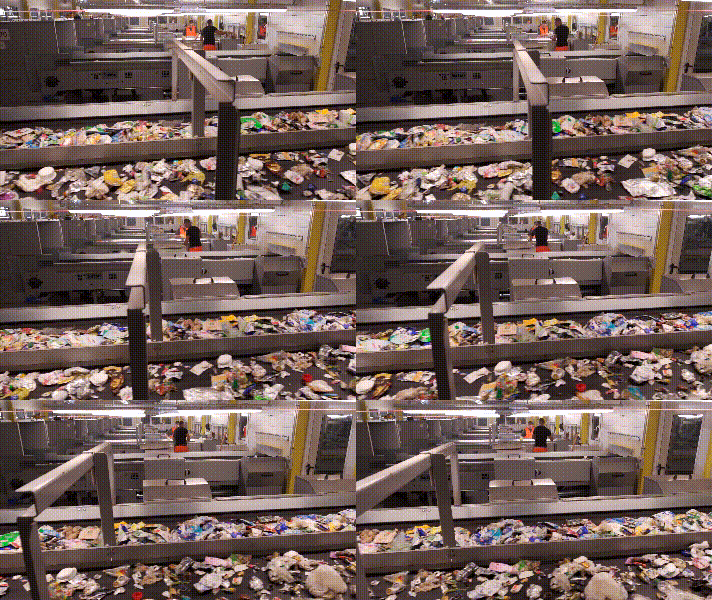
Belt ConveyorManual Sorting Room
For countries with low labor costs, a combination of mechanical and manual sorting can be used, which is a cost-effective waste sorting and recycling solution.
Read More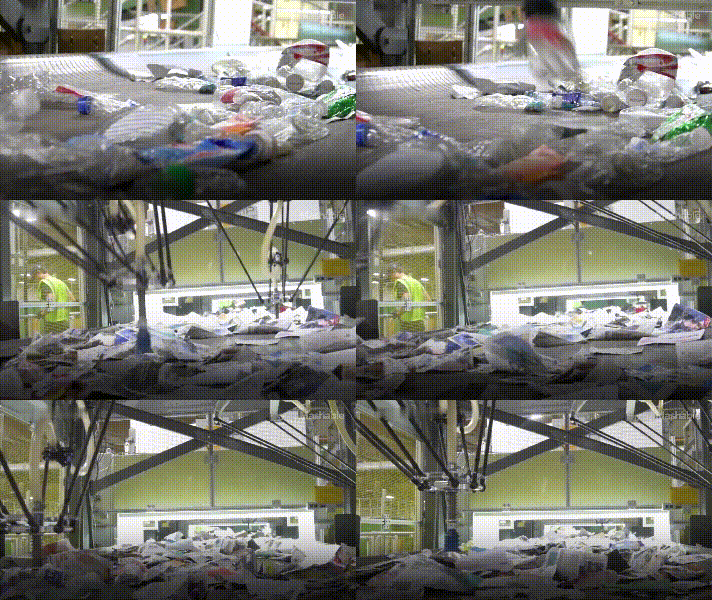
AI SortingSorting Robot
The artificial intelligence sorting robot with autonomous learning can practice and accumulate sorting data. It can effectively sort various high-value recyclables.
Read More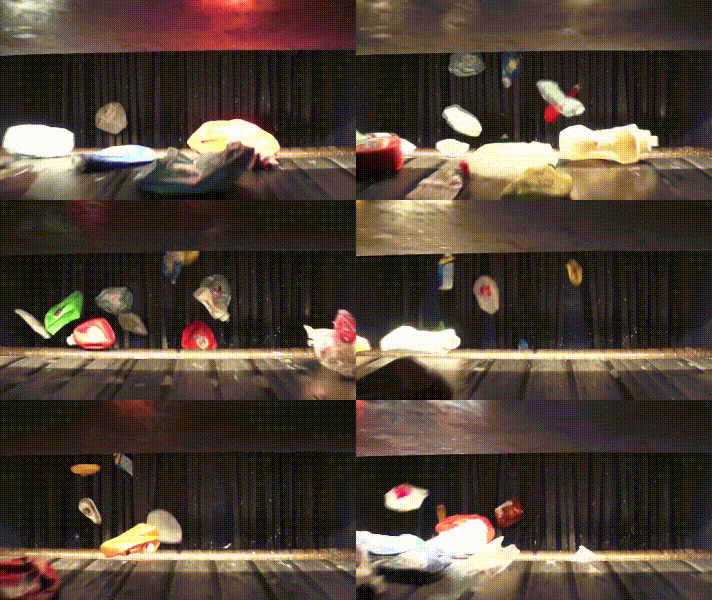
Optical Sorting
Optical sorter is a automatic sorting device based on sensors, high-speed ejector valve has large processing capacity. It is a good choice for bulk handling project of waste recycling.
Read More