Rotary drum dryer with a diameter greater than 2 meter
Based on MSWsorting sorting solutions
MUNICIPAL SOLID WASTE SORTING EQUIPMENT
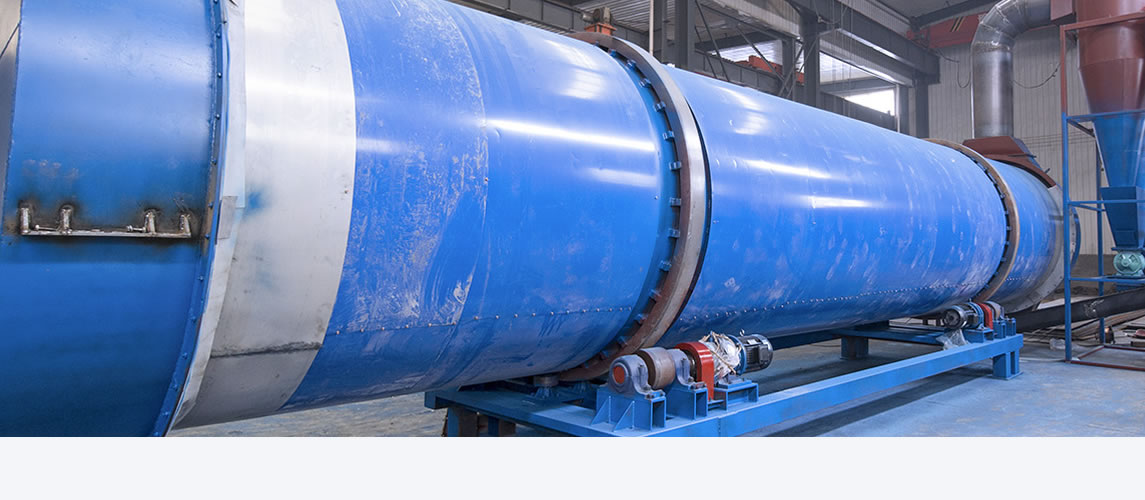
The wet material is sent to the hopper by the belt conveyor and enters the drum from the feed port. The main body of the drum dryer is a slightly inclined and rotatable cylinder. When the material enters the cylinder, it is dried by coming into direct contact or countercurrent with the hot air passing through the cylinder, or effectively contacting the heating wall. After drying, the product is discharged from the lower part of the other end. During the drying process, the material is dried by the cylinder. The slow rotation, moving from the higher end to the lower end under the action of gravity. The inner wall of the cylinder is equipped with board, which continuously picks up and sprinkles the material, which greatly increases the thermal contact surface of the material, increases the drying rate and promotes the material to move forward. After the heat carrier (hot air, flue gas) dries the materials, the entrained dust is collected by the cyclone dust collector and then emptied.
Rotary drum dryer usually use for waste drying or RDF drying , reducing moisture content is beneficial for subsequent processing or disposal. The choice of the appropriate type of waste drying machine depends on factors such as the type and composition of the waste, contact MSWsorting engineer team to get right solutions.
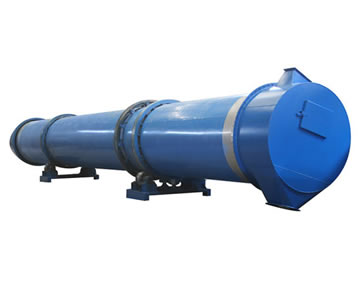
A Rotary Drum Dryer is a large, industrial-scale machine designed to remove moisture from wet or damp materials. In the context of waste management, it is a crucial piece of equipment used primarily for drying Municipal Solid Waste (MSW) or processed Refuse-Derived Fuel (RDF). The machine consists of a long, cylindrical drum that rotates slowly. This drum is slightly tilted and is heated internally, creating an efficient environment for evaporation. By significantly reducing the water content of waste streams, the dryer prepares the material for more effective subsequent processing, such as sorting, compaction, or energy recovery through incineration.
The operation is continuous, allowing for high-volume treatment which is essential in modern waste management facilities. The design is robust to handle heterogeneous and often abrasive materials found in MSW. Its key function is thermal drying, where heat is transferred to the wet material, causing water to evaporate. The resulting dried product is more stable, has a higher calorific value if used as fuel, and is easier to handle and transport, making the rotary drum dryer a foundational technology in advanced mechanical-biological treatment (MBT) and waste-to-energy plants.
Rotary drum dryers are characterized by their high capacity and reliability in harsh operating conditions. A primary feature is the rotating cylinder itself, which ensures constant tumbling and mixing of the waste material. This action exposes new surfaces to the heat source, promoting uniform and efficient drying. The interior of the drum is often fitted with lifting flights or boards. These attachments pick up the material as the drum rotates and cascade it through the hot air stream, dramatically increasing the surface area for heat transfer and preventing the material from clumping together.
Another significant feature is the flexible heat source system. The dryer can utilize various heat carriers, such as hot air or flue gas, which can flow concurrently or counter-currently to the material's movement, optimizing energy efficiency for different waste types. Integrated dust collection systems, like cyclone separators, are essential features that capture fine particles entrained in the exhaust gas, controlling air pollution and recovering valuable dust. The entire system is designed for automation, with controlled feed rates, rotation speed, and temperature to ensure consistent output quality.
The drying process begins when wet MSW or RDF is fed into the system. A belt conveyor typically carries the material to a hopper, which then channels it into the feed port at the elevated end of the slightly inclined drum. As the drum begins to rotate, the material enters the main cylinder. Inside, it is immediately exposed to the heat source. This heat can be applied through direct contact with a stream of hot air or flue gas, or indirectly through the heated walls of the drum. The direct-contact method is common for waste drying, where hot gases flow through the drum, transferring heat directly to the tumbling waste.
Gravity and rotation work together to move the material through the dryer. The incline of the drum causes the material to gradually travel from the higher feed end to the lower discharge end. The installed lifting flights on the inner wall play a critical role by lifting the material and then showering it through the hot air stream as the drum turns. This cascading action ensures every piece is thoroughly dried. Finally, the dried product exits at the lower end, while the moisture-laden exhaust gas, now carrying fine dust, is directed to a cyclone dust collector. The cyclone removes the particulate matter, allowing cleaner gas to be released, and the collected dust can be further processed or disposed of safely.
The most prominent application of the rotary drum dryer in environmental technology is within Material Recovery Facilities (MRFs) and Mechanical-Biological Treatment (MBT) plants. Here, it is used to dry mixed municipal solid waste or organic-rich fractions. Reducing moisture is a vital pre-treatment step before mechanical sorting, as dry materials are less likely to clog screens and separators, and items like plastics and papers become more distinguishable and easier to sort using optical or air classification systems. This leads to higher purity and recovery rates of recyclables.
Another critical application is in the production of Refuse-Derived Fuel (RDF) or Solid Recovered Fuel (SRF). For waste to be a efficient fuel source for cement kilns or dedicated power plants, it must have a high and consistent calorific value. Drying removes inert water, directly increasing the energy content per kilogram of material. This makes the RDF more valuable, stable for storage and transport, and cleaner-burning. Beyond MSW, these dryers are also applicable in drying sewage sludge, biomass, and other industrial wastes, showcasing their versatility in the broader waste processing and resource recovery industry.
Implementing a rotary drum dryer in a waste management line offers substantial operational and environmental benefits. The primary advantage is the significant enhancement of downstream processes. By delivering a consistently dried material, the efficiency of all subsequent sorting equipment—such as screens, magnets, and optical sorters—is greatly improved. This results in higher recovery rates of metals, plastics, and paper, and produces a better-quality RDF. The process also reduces the overall volume and weight of waste, leading to lower transportation costs if the material needs to be shipped to a disposal site or an energy recovery facility.
From an energy recovery and environmental perspective, drying waste to create RDF transforms a disposal problem into a resource. The high-calorific fuel can replace fossil fuels in industrial processes, reducing greenhouse gas emissions and landfill dependence. Furthermore, the drying process itself can be made energy-efficient by utilizing waste heat from other plant operations, such as flue gases from an on-site generator. The robust and continuous design of the rotary drum dryer ensures high throughput and reliability, providing a scalable solution for municipalities and waste processors aiming to modernize their waste management infrastructure and move towards a circular economy model.
Based on MSWsorting sorting solutions

Based on MSWsorting sorting solutions

Based on MSWsorting sorting solutions
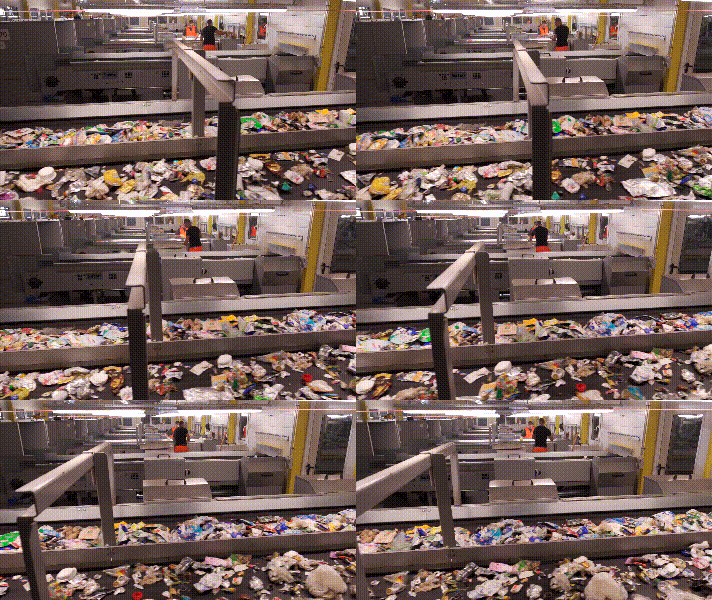
Belt ConveyorManual Sorting Room
For countries with low labor costs, a combination of mechanical and manual sorting can be used, which is a cost-effective waste sorting and recycling solution.
Read More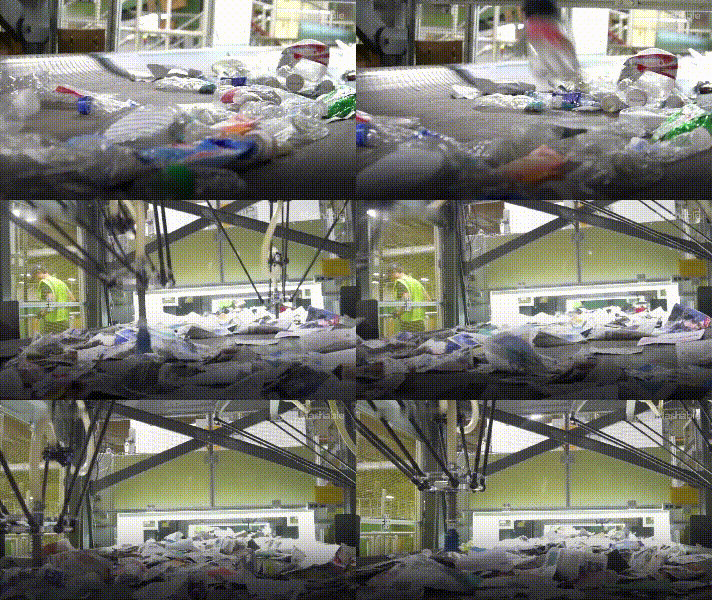
AI SortingSorting Robot
The artificial intelligence sorting robot with autonomous learning can practice and accumulate sorting data. It can effectively sort various high-value recyclables.
Read More
Optical Sorting
Optical sorter is a automatic sorting device based on sensors, high-speed ejector valve has large processing capacity. It is a good choice for bulk handling project of waste recycling.
Read More