100TPD MSW sorting Plant Polluted Air Filtration Treatment
Based on MSWsorting sorting solutions
MUNICIPAL SOLID WASTE SORTING EQUIPMENT

Commonly used malodorous air treatment methods include: masking method, dilution diffusion method, chemical liquid absorption method, combustion method, adsorption method, biological filter deodorization method, multi-media catalytic degradation process, low temperature plasma technology and UV photodeoxidation method. Based on the project site conditions, develop a deodorization plan and carry out a deodorization design. By selecting a reasonable odor purification process and designing a reasonable odor treatment system, the exhaust gas after treatment can meet the China "Odor Pollutant Emission Standard" (GB14554-93).
A polluted air filtration treatment system is a specialized installation designed to clean and deodorize the air within a waste sorting facility, also known as a Material Recovery Facility (MRF). During the sorting process of municipal solid waste, various organic materials decompose and release unpleasant odors and potentially harmful gases. This system acts as a large-scale air purifier for the industrial plant, capturing these emissions from areas like the tipping floor, conveyor belts, and sorting cabins. Its primary goal is to treat this contaminated air before it is released into the atmosphere, ensuring the surrounding environment remains clean and that the facility complies with strict air quality regulations.
These systems are engineered to handle complex mixtures of pollutants, including volatile organic compounds (VOCs), ammonia, hydrogen sulfide, and dust particles. They are a critical component of modern, responsible waste management infrastructure, transforming what would be a source of nuisance and pollution into an operation with minimal environmental impact. By integrating such a system, a waste sorting plant demonstrates its commitment to operational hygiene, worker safety, and being a good neighbor in the community.
A comprehensive air treatment system for a waste sorting plant is characterized by its multi-stage purification approach. It typically does not rely on a single method but combines several technologies in sequence to achieve the highest cleaning efficiency. Key features include robust intake systems that collect air from all critical points in the facility, pre-filters to remove large dust and particulate matter, and a series of core treatment stages targeting different types of gaseous pollutants. The system is controlled by advanced automation that monitors air flow, pollutant concentration, and treatment efficiency in real-time.
Furthermore, these systems are built for durability and continuous operation in harsh industrial environments. They feature corrosion-resistant materials to withstand aggressive chemical compounds, high-capacity fans to move large volumes of air, and safety mechanisms to prevent any risk of fire or system failure. The design is often modular, allowing for future expansion or upgrades as waste volumes increase or emission standards become more stringent. Effective systems are also designed with energy efficiency in mind, incorporating heat recovery or optimizing airflow to reduce operational costs.
The process begins with the collection of contaminated air. A network of ducts and hoods strategically placed over conveyor belts, shredders, and storage bunkers captures odorous air directly at the source, preventing it from spreading through the facility. This captured air is then transported by powerful fans to the central treatment unit. The first stage usually involves physical filtration, where air passes through bag filters or scrubbers that remove dust, moisture, and larger particulate matter. This pre-cleaning is essential to protect the more sensitive chemical or biological treatment stages that follow and to improve their overall effectiveness.
Following pre-treatment, the air enters the core deodorization phase. Here, one or more advanced technologies are applied. For instance, in a biological filter, air is humidified and passed through a bed of organic material (like peat or bark) where microorganisms naturally break down the odor-causing compounds. Alternatively, chemical scrubbers might spray a neutralizing solution that absorbs and reacts with specific gases like ammonia or hydrogen sulfide. For a broader spectrum of volatile organic compounds, technologies like activated carbon adsorption, UV photolytic oxidation (which uses ultraviolet light to break down molecules), or low-temperature plasma may be employed. The treated, clean air is then monitored to ensure it meets standards before being safely discharged through a tall stack.
The primary application is, of course, within the waste sorting plant itself. These systems are vital for treating air from the initial waste reception area (tipping floor), which has intense and variable odors. They are also crucial for enclosed sorting cabins where workers manually or robotically separate materials, ensuring a safe and tolerable working environment. Beyond the basic MRF, this technology is equally critical in facilities that handle organic waste, such as Mechanical Biological Treatment (MBT) plants or composting sites, where biological activity generates significant amounts of methane, ammonia, and other strong odors.
Furthermore, air filtration systems find application in associated waste processing areas. This includes facilities that further process recovered materials, such as plastic washing and recycling lines, which can emit fumes. They are also used in wastewater treatment plants often located within larger waste management complexes, and in the ventilation systems for waste transfer stations. Essentially, any node in the waste management chain where concentrated organic or chemical activity occurs is a candidate for installing dedicated or integrated air pollution control technology to mitigate environmental and social impact.
The most significant benefit is environmental protection and regulatory compliance. By effectively removing odorous and harmful pollutants, these systems prevent air quality degradation in the surrounding community, helping the facility meet stringent national and local emission standards like China's "Odor Pollutant Emission Standard" (GB14554-93). This compliance is not just legal; it fosters positive community relations. Neighbors are less likely to complain about foul smells, which removes a major social barrier to waste management infrastructure and supports the principles of a circular economy by making recycling plants more publicly acceptable.
Operational and human health benefits are equally important. Inside the plant, cleaner air drastically improves working conditions, leading to better employee health, reduced absenteeism, and higher morale and productivity. It also protects sensitive machinery from corrosive gases, potentially reducing maintenance costs. From a broader perspective, by controlling emissions of greenhouse gases like methane and volatile organic compounds that contribute to smog, these systems play a direct role in combating climate change and improving regional air quality, turning a waste processing site from a potential pollutant into a responsible environmental steward.

Based on MSWsorting sorting solutions

Based on MSWsorting sorting solutions

Based on MSWsorting sorting solutions
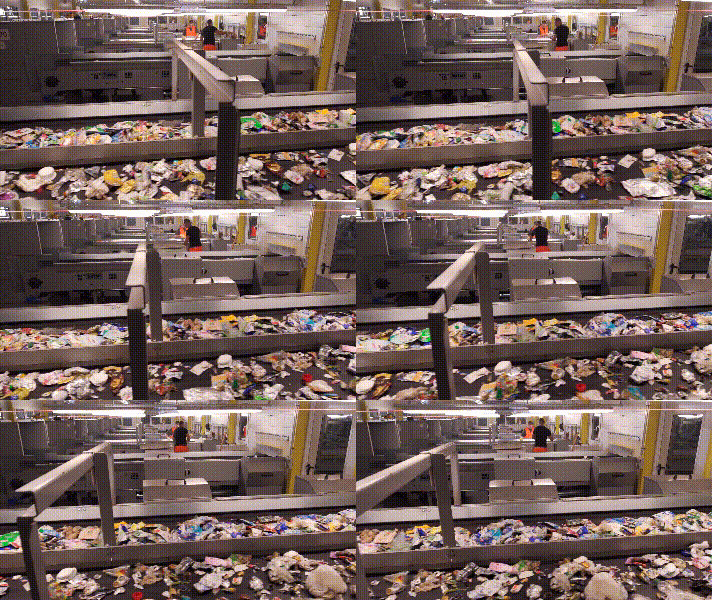
Belt ConveyorManual Sorting Room
For countries with low labor costs, a combination of mechanical and manual sorting can be used, which is a cost-effective waste sorting and recycling solution.
Read More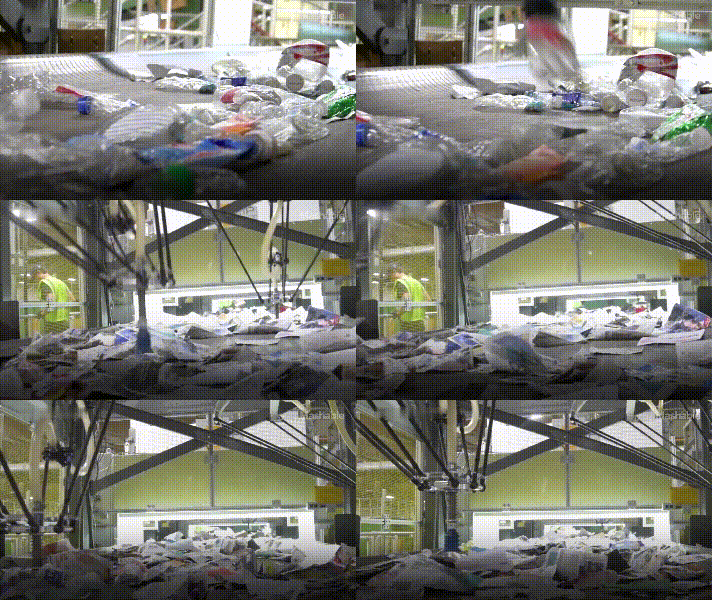
AI SortingSorting Robot
The artificial intelligence sorting robot with autonomous learning can practice and accumulate sorting data. It can effectively sort various high-value recyclables.
Read More
Optical Sorting
Optical sorter is a automatic sorting device based on sensors, high-speed ejector valve has large processing capacity. It is a good choice for bulk handling project of waste recycling.
Read More