100 TPD MSW sorting Plant PLC Systems
Based on MSWsorting sorting solutions
MUNICIPAL SOLID WASTE SORTING EQUIPMENT

Use programmable control system (plc module), with loss of pressure, over pressure, over current, short circuit, overheat protection, anti-blocking function, electronic control with inverter, touch screen, pLC unit, remote operation.
An Electric Control System is the central nervous system of a modern waste sorting facility. It is a sophisticated network of electronic components and software that manages, monitors, and automates the entire operation of the plant. At its core, it uses a Programmable Logic Controller (PLC), which acts as the brain, receiving data from sensors throughout the system and sending precise commands to motors, conveyors, and sorting equipment. This system ensures that the complex sequence of processes—from receiving raw waste to outputting sorted recyclables—runs smoothly, efficiently, and safely without constant manual intervention.
Beyond basic automation, this control system integrates various human-machine interfaces (HMIs) like touch screens, allowing operators to oversee the plant's status in real-time. It enables remote operation and monitoring, meaning technicians can diagnose issues or adjust settings from a control room or even off-site. The primary goal of this intelligent system is to maximize sorting accuracy, equipment uptime, and material recovery rates while minimizing energy consumption and the risk of human error or equipment failure.
The system is built with robust protective features to ensure operational safety and longevity. It includes comprehensive protection against electrical faults such as loss of pressure, over-pressure conditions, over-current, and short circuits. These safeguards prevent damage to sensitive motors and drives. Furthermore, it incorporates overheat protection for critical components and anti-blocking functions that can automatically detect jams in conveyors or screens and either reverse the mechanism or shut it down to prevent serious damage, thereby avoiding costly repairs and downtime.
Advanced control is achieved through key electronic components. The use of inverters allows for precise speed control of motors, leading to significant energy savings and gentler handling of materials. The touch screen provides an intuitive graphical interface for operators to view process flows, alarm statuses, and performance data. The central PLC unit coordinates all these elements, executing the programmed logic that defines the plant's operation. Together, these features create a resilient, efficient, and user-friendly control environment.
The system operates on a continuous loop of input, processing, and output. It starts with input from a vast array of sensors installed on every major piece of equipment. These sensors constantly feed data back to the PLC module—information such as motor speed, conveyor belt tension, bin fullness, optical sorter recognition rates, and electrical current draw. The PLC, programmed with the specific logic for the waste sorting process, processes this data thousands of times per second. It compares the incoming sensor values against pre-set parameters to determine the state of the plant.
Based on its analysis, the PLC then sends output signals to control devices. For instance, if a metal detector senses ferrous material on a conveyor, the PLC will activate the corresponding magnet. If the feed to the ballistic separator is too low, it might signal the upstream conveyor to increase speed via its inverter. The touch screen HMI displays this entire process visually, showing real-time animations of machine states and logging all events and alarms. This seamless integration allows for automated optimization and immediate response to any process deviation.
In a Material Recovery Facility (MRF), the electric control system is indispensable. It synchronizes the entire line, from the moment waste is dumped onto the infeed conveyor through all stages: pre-shredding, bag opening, screening (by trommel, star, or ballistic screens), and the final sorting stages using magnets, eddy currents, air classifiers, and optical sorters. It ensures that each machine activates at the right time and that material flow is balanced to prevent overloading or bottlenecks at any single point, which is crucial for achieving high purity in sorted output streams like plastics, paper, and metals.
The system's application extends to more advanced facilities like Mechanical Biological Treatment (MBT) plants. Here, it not only manages the mechanical sorting line but also integrates control over the biological treatment phases, such as composting or anaerobic digestion. It can monitor and regulate factors like temperature, aeration, and moisture levels in bio-reactors. Furthermore, with the rise of artificial intelligence and robotic sorting, the control system acts as the integration platform, taking signals from AI vision systems and coordinating the precise movements of robotic arms to pick specific items from the fast-moving waste stream.
The implementation of such a system brings substantial operational benefits. First and foremost, it dramatically increases plant efficiency and throughput. Automated control allows the plant to run at optimal speeds 24/7 with minimal supervision. The protective functions greatly enhance equipment safety and lifespan, reducing unexpected breakdowns and maintenance costs. Energy efficiency is another major advantage, as inverters allow motors to run only at the needed speed, and the system can power down non-essential equipment during low-feed periods, leading to lower electricity bills.
From a quality and economic perspective, the benefits are equally significant. Consistent, automated control leads to higher purity and recovery rates of recyclable materials, directly improving the plant's revenue. The remote operation and detailed data logging capabilities facilitate better management, predictive maintenance, and process optimization based on historical performance data. Ultimately, this smart automation makes waste sorting plants more reliable, profitable, and sustainable, contributing to broader circular economy goals by ensuring more materials are successfully recovered and diverted from landfills.

Based on MSWsorting sorting solutions

Based on MSWsorting sorting solutions

Based on MSWsorting sorting solutions
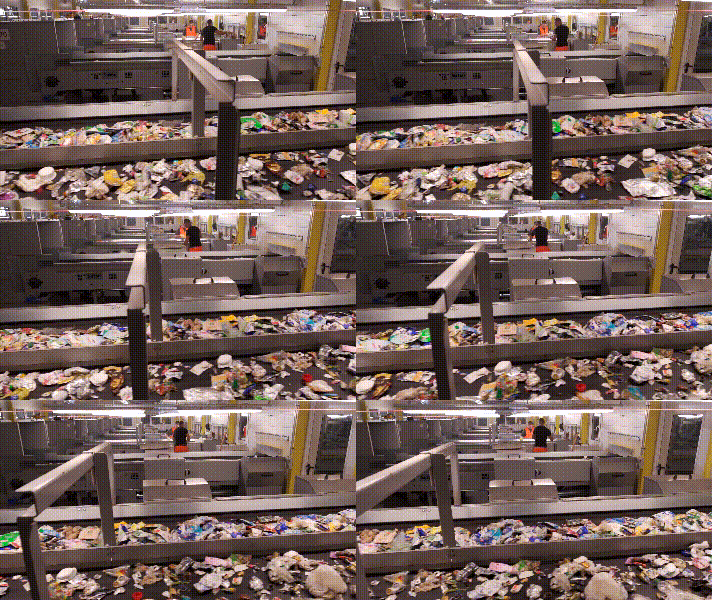
Belt ConveyorManual Sorting Room
For countries with low labor costs, a combination of mechanical and manual sorting can be used, which is a cost-effective waste sorting and recycling solution.
Read More
AI SortingSorting Robot
The artificial intelligence sorting robot with autonomous learning can practice and accumulate sorting data. It can effectively sort various high-value recyclables.
Read More
Optical Sorting
Optical sorter is a automatic sorting device based on sensors, high-speed ejector valve has large processing capacity. It is a good choice for bulk handling project of waste recycling.
Read More