100TPD MSW sorting Plant Waste Leachate Treatment
Based on MSWsorting sorting solutions
MUNICIPAL SOLID WASTE SORTING EQUIPMENT

The landfill leachate has high BOD5 and COD concentrations, high metal content, large changes in water quality, high ammonia nitrogen content, and imbalanced microbial nutrient element ratio. Common treatment processes mainly include the following three categories: biological treatment + membrane treatment process , Full-membrane adsorption filtration treatment process, low consumption evaporation + ion exchange treatment process. Choose the appropriate process according to the project situation, and the wastewater discharge standard meets the Chinese national standard (GB16889-2008).
Waste Leachate Treatment is a specialized process designed to clean the contaminated liquid that drains or "leaches" from waste materials, particularly in landfills and waste sorting facilities. This liquid, called leachate, is formed when water percolates through piles of decomposing garbage, picking up a complex mix of dissolved and suspended pollutants. In the context of a modern Waste Sorting Plant, treating this leachate is a critical environmental responsibility. It prevents harmful substances from seeping into the surrounding soil and groundwater, protecting ecosystems and public health. The treatment transforms this toxic byproduct into water that is safe for discharge or even reuse, closing the loop in responsible waste management.
A robust Waste Leachate Treatment system is characterized by its ability to handle a highly challenging and variable wastewater stream. The key challenge lies in the leachate's composition, which includes high concentrations of organic pollutants measured as BOD and COD, significant amounts of ammonia nitrogen, various heavy metals, and a constantly shifting quality. Therefore, effective systems are engineered for resilience and multi-stage processing. They typically combine different technological approaches—biological, physical, and chemical—in sequence to tackle specific groups of contaminants. Furthermore, a defining feature is its strict compliance framework; the system must be designed to meet stringent national discharge standards, ensuring the treated water is environmentally safe.
The treatment of waste leachate is a multi-stage journey that purifies the water step-by-step. While specific processes are chosen based on the leachate's characteristics, a common and effective approach begins with biological treatment. In this stage, specially cultivated microorganisms are introduced in controlled tanks. These microbes consume and break down the organic pollutants (high BOD/COD) and convert toxic ammonia into less harmful nitrogen gas, significantly reducing the overall pollutant load. This biological step is crucial for dealing with the bulk of the organic contamination in a relatively cost-effective manner.
Following biological treatment, the water often undergoes advanced physical separation processes to remove remaining fine solids, dissolved salts, and persistent organic molecules. This is frequently where membrane technology comes into play. Systems like ultrafiltration or reverse osmosis use extremely fine filters that act as a barrier, allowing only clean water molecules to pass through while rejecting contaminants. For leachate with very high salinity or specific hard-to-treat components, alternative or additional processes like evaporation (which boils off clean water) or adsorption filters (which trap pollutants on a material like activated carbon) are employed. The final stage ensures the treated effluent consistently meets all regulatory requirements for safe discharge.
The primary and most critical application of Waste Leachate Treatment is in integrated waste management facilities, directly supporting the operations of Waste Sorting Plants and landfills. As these facilities process municipal solid waste, rainwater and moisture from the waste itself generate leachate that must be managed on-site. The treatment system acts as an essential environmental safeguard, ensuring the plant's operations do not lead to downstream pollution. Without such treatment, the environmental footprint of recycling and recovery efforts would be severely compromised by the uncontrolled release of this contaminated liquid.
Beyond standard landfills, this treatment technology is vital for "bioreactor" landfills, which actively recirculate leachate to accelerate waste decomposition. Here, treatment is used to condition the leachate before recirculation. Furthermore, as regulations globally become stricter, older landfill sites that were closed without proper lining systems often require retrofitted leachate collection and treatment solutions to mitigate ongoing environmental impact. In essence, any facility where concentrated waste is stored or processed for extended periods is a potential application site for this specialized water treatment technology.
Implementing a dedicated Waste Leachate Treatment system delivers profound environmental and regulatory benefits. The most significant advantage is the prevention of soil and groundwater contamination. By removing heavy metals, toxic organic compounds, and excess nutrients like ammonia, the treatment protects local water supplies and preserves ecological balance. This directly translates to compliance with environmental laws, such as China's National Standard GB16889-2008, helping facility operators avoid legal penalties and contribute to national environmental protection goals. It turns a major pollution liability into a managed, controlled process.
From an operational and sustainability perspective, these treatment systems offer long-term security and potential resource recovery. They future-proof waste management facilities against increasingly stringent regulations. Some advanced processes allow for the recovery of clean water that can be reused within the plant for cleaning or dust control, reducing the facility's freshwater demand. Additionally, by effectively managing leachate, the treatment system enhances the public perception and social license of the waste sorting plant, demonstrating a commitment to full-cycle environmental stewardship beyond just sorting and recycling materials.

Based on MSWsorting sorting solutions

Based on MSWsorting sorting solutions

Based on MSWsorting sorting solutions
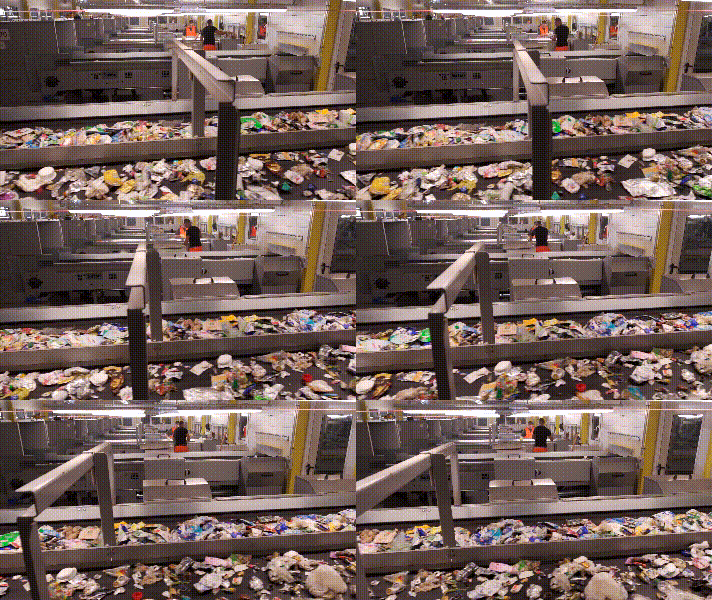
Belt ConveyorManual Sorting Room
For countries with low labor costs, a combination of mechanical and manual sorting can be used, which is a cost-effective waste sorting and recycling solution.
Read More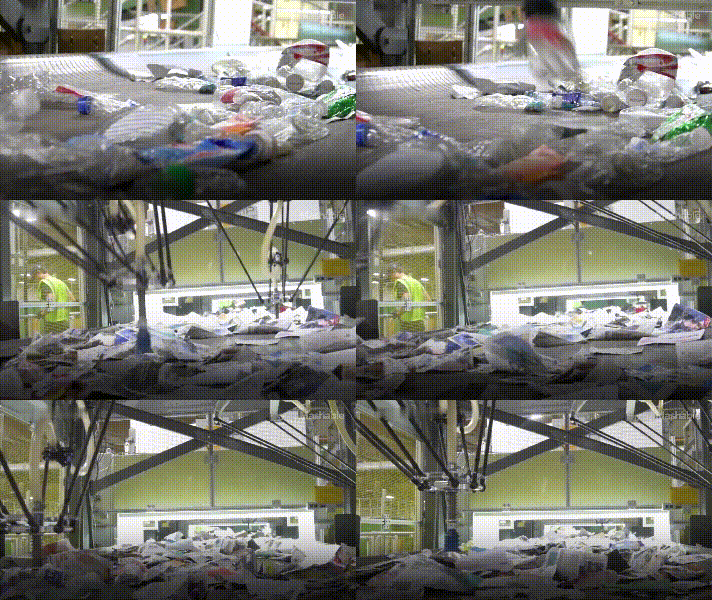
AI SortingSorting Robot
The artificial intelligence sorting robot with autonomous learning can practice and accumulate sorting data. It can effectively sort various high-value recyclables.
Read More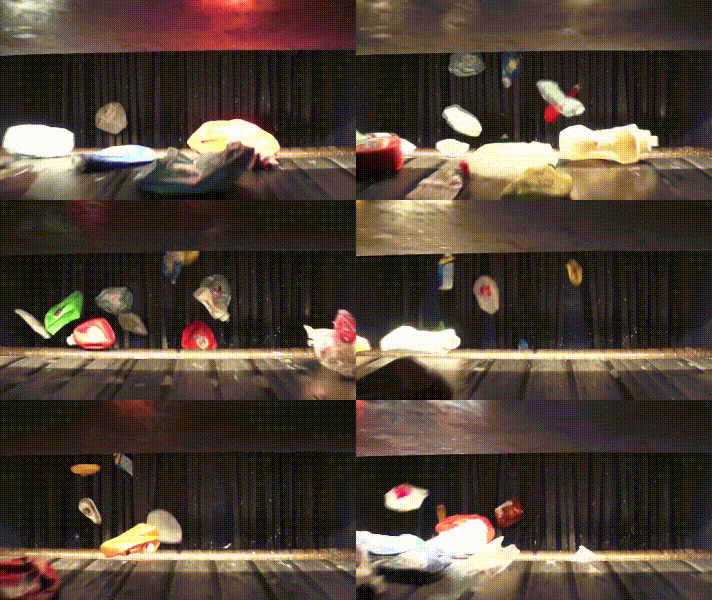
Optical Sorting
Optical sorter is a automatic sorting device based on sensors, high-speed ejector valve has large processing capacity. It is a good choice for bulk handling project of waste recycling.
Read More