10 pcs/hour Waste Wrapping Machine
Based on MSWsorting sorting solutions
Wrapping solutions for small size waste(SRF) compression and baling

Waste wrapping machine, usually use together with baling machine, is used to compress and bind samll size waste materials into compact, manageable bales. These machines play a crucial role in reducing the volume of waste, facilitating storage, transportation, and recycling processes.
A Waste Wrapping Machine is an industrial device designed to securely package and seal compressed bales of waste material. It is a key component in modern waste management and recycling facilities, typically operating in sequence with a baling press. After materials like cardboard, paper, plastic film, or non-ferrous metals are compacted into dense, rectangular bales by a baler, the wrapping machine takes over. Its primary function is to apply a protective and stabilizing layer of stretch film or netting around the bale, creating a tight, uniform package.
This process transforms loose, bulky collections of recyclables or refuse-derived fuel (RDF) into neat, standardized units. The resulting wrapped bales are robust, weather-resistant, and ready for efficient handling. The machine ensures the integrity of the bale is maintained, preventing it from unraveling or absorbing moisture during storage and transit. By doing so, it bridges the gap between the compaction process and the final logistics chain, making the entire recycling and recovery operation more streamlined and professional.
Modern waste wrapping machines are equipped with advanced features for reliability and ease of use. A common feature is a rotating turntable or a rotating arm mechanism that precisely spins the bale while dispensing the wrapping material, ensuring consistent tension and complete coverage without manual intervention. Many models incorporate programmable logic controllers (PLCs) that allow operators to set the number of wrapping layers, film tension, and rotation speed, tailoring the wrap to the specific material's needs. This automation guarantees a repeatable, high-quality result for every bale.
Additional key features focus on durability and integration. These machines are built with heavy-duty steel frames to withstand the harsh industrial environment of a waste processing plant. They often include pre-stretch systems for the film, which elongate the plastic before application. This technology maximizes material efficiency, using less film to achieve the required strength and stability, thereby reducing operational costs. Furthermore, they are designed for seamless integration with conveyor systems and balers, enabling a continuous, automated production line from loose waste to shipment-ready bales.
The operation of a waste wrapping machine is a systematic, automated process that begins once a bale is positioned on its platform. Typically, a conveyor system transfers the newly pressed bale from the baler onto the wrapping machine's turntable. An operator or an automated sensor then initiates the wrapping cycle. The core mechanism involves a film carriage or dispenser that holds a large roll of stretch film or netting. As the turntable begins to rotate the bale, the dispenser moves vertically up and down, or the arm rotates around a stationary bale, applying the film in a spiral pattern.
This simultaneous rotation and vertical movement ensure that every part of the bale's surface is covered evenly. The machine's pre-stretch unit carefully elongates the film just before it contacts the bale, which activates the film's elastic recovery properties. This creates a powerful, shrink-wrap effect that tightly binds the bale's contents together. The process continues for a pre-programmed number of layers, building a strong, protective skin. Once the cycle is complete, the film is cut and sealed, the turntable stops, and the securely wrapped bale is ejected, often onto another conveyor for palletizing or direct loading onto a truck.
Waste wrapping machines are indispensable in material recovery facilities (MRFs) and recycling centers. Their most prominent application is in packaging bales of sorted recyclable materials such as cardboard (OCC), newspaper (ONP), plastic bottles (PET, HDPE), and aluminum cans. By wrapping these bales, the facilities protect the valuable commodities from contamination, moisture, and damage, which is crucial for meeting the quality standards demanded by re-processors and achieving higher market prices. A clean, well-packaged bale is a premium product in the recycling commodity market.
Beyond traditional recycling, these machines are vital in the production of Refuse-Derived Fuel (RDF) and Solid Recovered Fuel (SRF). In waste-to-energy plants, processed municipal solid waste that has a high calorific value is compacted into bales. Wrapping these fuel bales is essential to preserve their dry-basis heating value, prevent leaching, and reduce odor and pest attraction during storage and transportation to cement kilns or dedicated power plants. The machines also find use in industrial settings for managing production scrap, such as wrapping bales of textile off-cuts, non-woven materials, or synthetic fibers, ensuring efficient waste handling directly at the source.
Implementing a waste wrapping machine delivers significant logistical and economic benefits. The most immediate advantage is the dramatic improvement in handling and storage efficiency. A tightly wrapped bale has a stable, uniform shape that can be easily stacked using forklifts, maximizing the use of vertical space in warehouses and shipping containers. This stability also makes the bales much safer to transport, as they are far less likely to shift, collapse, or spill during loading and unloading, reducing the risk of workplace accidents and product loss.
The benefits extend to material preservation and quality control. The wrapping acts as a robust barrier against environmental factors like rain, snow, and dust, which is critical for maintaining the quality of paper, cardboard, and plastic recyclables. For RDF/SRF, it locks in the calorific value by preventing moisture absorption. This preservation leads to less material degradation and higher resale values. Furthermore, automation reduces labor costs and increases throughput, allowing facilities to process more material consistently. The professional appearance of wrapped bales also enhances a company's reputation with buyers, signaling a commitment to quality and operational excellence.

Based on MSWsorting sorting solutions

Based on MSWsorting sorting solutions

Based on MSWsorting sorting solutions
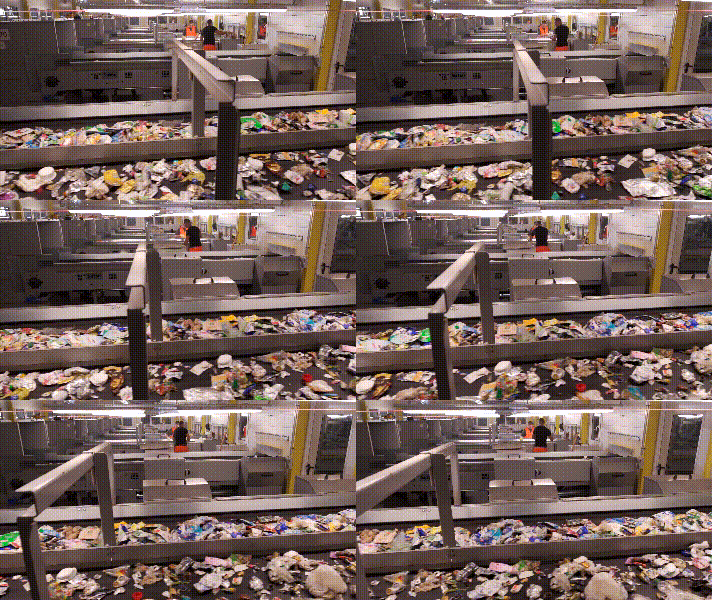
Belt ConveyorManual Sorting Room
For countries with low labor costs, a combination of mechanical and manual sorting can be used, which is a cost-effective waste sorting and recycling solution.
Read More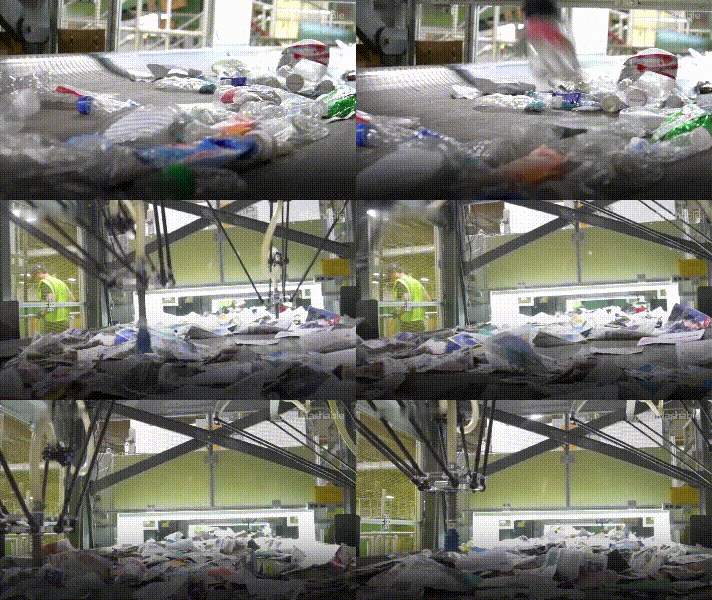
AI SortingSorting Robot
The artificial intelligence sorting robot with autonomous learning can practice and accumulate sorting data. It can effectively sort various high-value recyclables.
Read More
Optical Sorting
Optical sorter is a automatic sorting device based on sensors, high-speed ejector valve has large processing capacity. It is a good choice for bulk handling project of waste recycling.
Read More