Double shaft shredder with shaft length more than 1 meter
Based on MSWsorting sorting solutions
MUNICIPAL SOLID WASTE SORTING EQUIPMENT
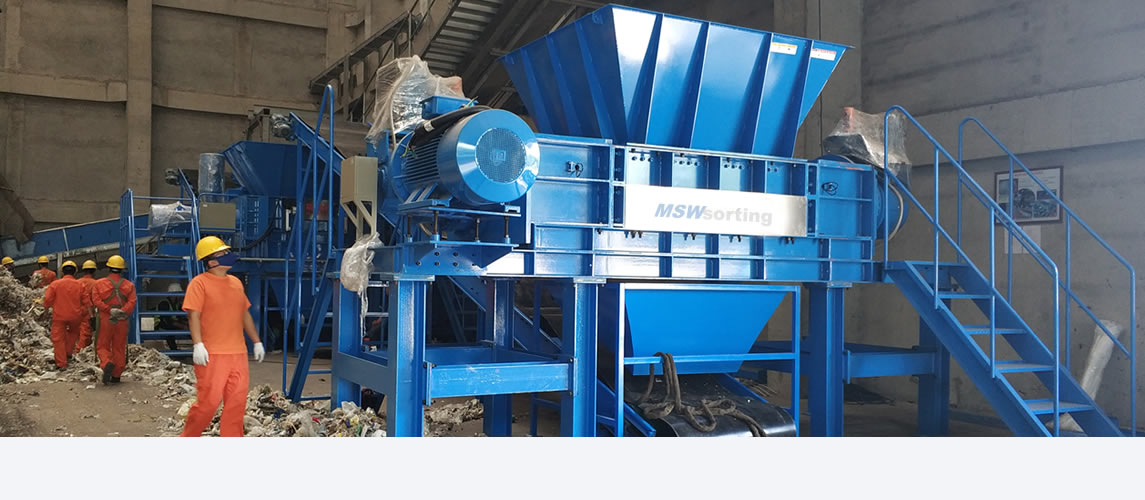
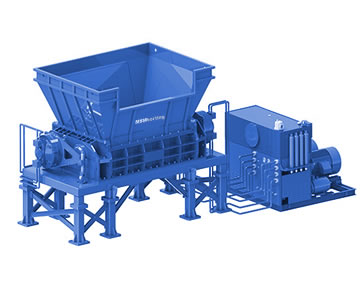
The pre-shredder is a dual-shaft design, and the feed is pulled by two knife rollers. The two shafts rotate inward or outward alternately. Each shaft is equipped with a row of shredding knives. The built-in fixed knife scraper can prevent the material from winding or sticking. During the crushing process, the two shafts automatically run in reverse. When the material reaches the tool gap size, it will be automatically discharged.
A pre-shredder is a heavy-duty industrial machine that acts as the first and most aggressive stage in a modern waste sorting system. Its primary job is to take in large, bulky, and mixed waste items—such as furniture, appliances, construction debris, and unopened garbage bags—and break them down into smaller, more manageable pieces. This initial size reduction is crucial because it prepares the waste for the more delicate and precise sorting processes that follow. By creating a more uniform material stream, the pre-shredder ensures that subsequent equipment like screens and optical sorters can work much more efficiently and accurately.
Unlike simple crushers, a pre-shredder is engineered to handle extreme conditions and unpredictable materials. It is built with robust components to withstand shocks from hard objects like metals or stones that are often hidden within the waste. The machine's design prioritizes durability and raw power, allowing it to tackle the toughest part of the waste stream and protect the rest of the sorting line from damage. Think of it as the system's powerful jaws, chewing up large chunks so the rest of the "digestive" system can process the material effectively.
A defining feature of many industrial pre-shredders is their dual-shaft design. This configuration involves two parallel, horizontally mounted shafts that rotate. Each shaft is fitted with a series of strong, interlocking cutting knives or teeth. The strategic placement and shape of these knives create a powerful shearing and tearing action, which is far more effective for reducing tough, fibrous, and composite materials than simple crushing. This design is exceptionally good at preventing large items from simply bouncing on top of the machine without being processed.
Another critical feature is the intelligent drive and control system. Modern pre-shredders are equipped with high-torque, low-speed drives that provide immense rotational force to overcome jams. Sophisticated control systems monitor the load on the shafts. If a blockage is detected or if the material is particularly tough, the system can automatically reverse the rotation of the shafts. This reverse action helps to clear jams, re-feed the material, and protect the drive train from damage, ensuring continuous operation with minimal manual intervention.
The operation of a dual-shaft pre-shredder is a continuous and powerful mechanical process. Waste material is fed into a large hopper, typically by a conveyor or a front-end loader. Inside the machine, the two main shafts, each armed with rows of cutting tools, rotate. In a common configuration, they rotate inward toward each other at the top of their arc. This motion grabs the incoming waste, pulls it down between the shafts, and subjects it to intense shearing, tearing, and crushing forces. The spacing between the shafts and the design of the knives determine the final output size of the shredded material.
As the material is shredded, it falls through the gap between the shafts onto a discharge conveyor or into the next stage of the process. Built-in features like fixed knife scrapers or combs work alongside the rotating shafts to clean the knives and prevent materials like plastics or wires from wrapping around them, which could cause downtime. The entire process is contained within a heavy steel housing for safety and noise reduction. The result is a steady flow of homogenized waste fragments, ready for the next step in the sophisticated journey of recovery and recycling.
Pre-shredders are fundamental in Material Recovery Facilities (MRFs) and Waste-to-Energy plants. In MRFs, their role is to liberate and mix the waste, breaking open bags and reducing large items so that valuable recyclables like metals, plastics, and paper are exposed and can be effectively separated by downstream equipment like magnets, eddy current separators, and optical sorters. Without pre-shredding, many recyclables would remain trapped inside larger items and be lost to landfill.
Beyond standard municipal solid waste, pre-shredders are vital in specialized waste streams. They are used in construction and demolition (C&D) waste recycling to reduce concrete, wood, and drywall. They process bulky waste like mattresses and sofas. In commercial and industrial settings, they handle pallets, packaging, and production waste. They also serve as a primary size-reduction step before composting organic waste or preparing Refuse-Derived Fuel (RDF) for energy production, making them a versatile workhorse across the waste management and resource recovery industry.
The most significant benefit of incorporating a pre-shredder into a waste processing line is the dramatic increase in overall system efficiency and recovery rates. By creating a consistent and smaller particle size, it optimizes the performance of all subsequent sorting machinery. Screens can separate materials by size more accurately, air classifiers can separate light from heavy materials more effectively, and robotic or optical sorters can identify and eject target materials with much higher precision. This leads to cleaner, higher-value output streams of recyclables and less contamination.
From an operational and economic standpoint, pre-shredders offer substantial advantages. They protect downstream equipment from damage caused by large, hard, or unexpected objects, reducing maintenance costs and unplanned downtime. Their ability to handle a wide variety of materials in a single stream simplifies the initial waste handling process. Furthermore, by reducing the volume of waste, they can lower transportation and storage costs. Ultimately, the pre-shredder transforms a chaotic, unpredictable waste stream into a controlled, processable feedstock, which is the essential first step toward a circular economy.

Based on MSWsorting sorting solutions
Based on MSWsorting sorting solutions
Based on MSWsorting sorting solutions
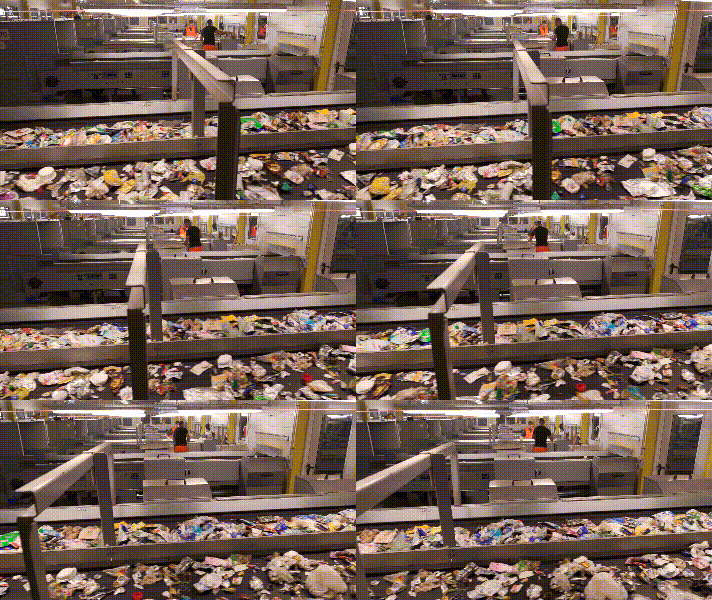
Belt ConveyorManual Sorting Room
For countries with low labor costs, a combination of mechanical and manual sorting can be used, which is a cost-effective waste sorting and recycling solution.
Read More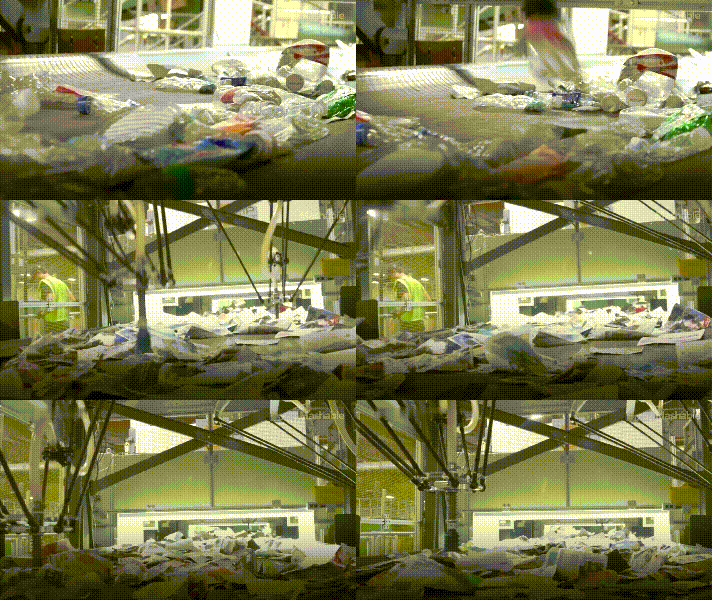
AI SortingSorting Robot
The artificial intelligence sorting robot with autonomous learning can practice and accumulate sorting data. It can effectively sort various high-value recyclables.
Read More
Optical Sorting
Optical sorter is a automatic sorting device based on sensors, high-speed ejector valve has large processing capacity. It is a good choice for bulk handling project of waste recycling.
Read More